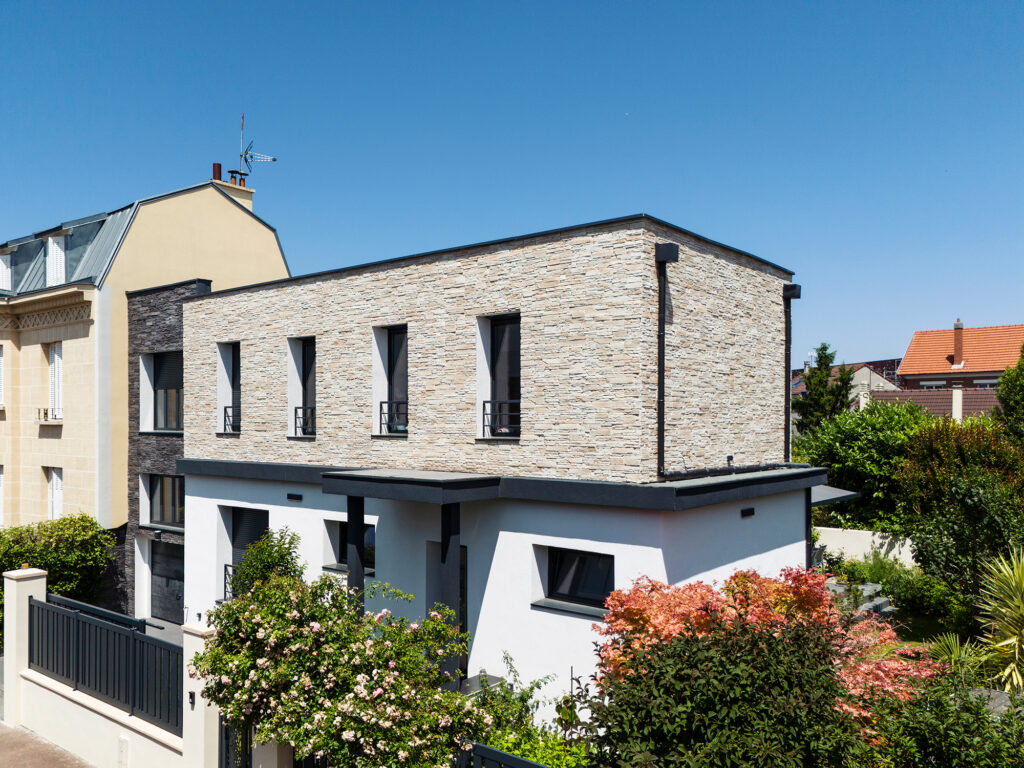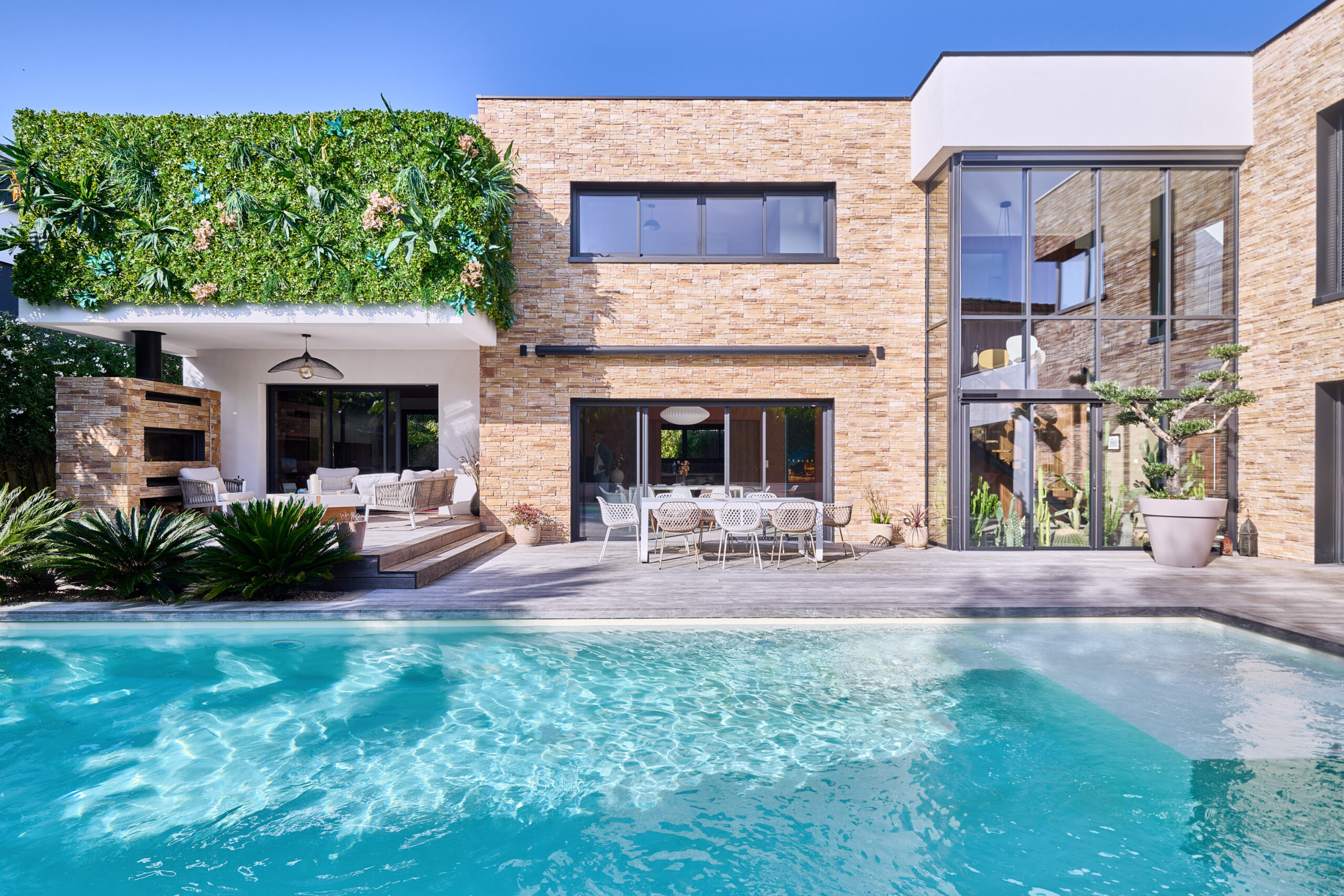
In 2026, two popular types of facing stone account for the vast majority of orders on French construction sites, whether for a new facade, an exterior renovation, or an interior design project. Each addresses a specific constraint: structural weight, compatibility with exterior thermal insulation, budget, or local regulations. This guide details these three categories, their practical applications, and the reasons why they are now the preferred choices.
Limestone, the standard for heritage projects
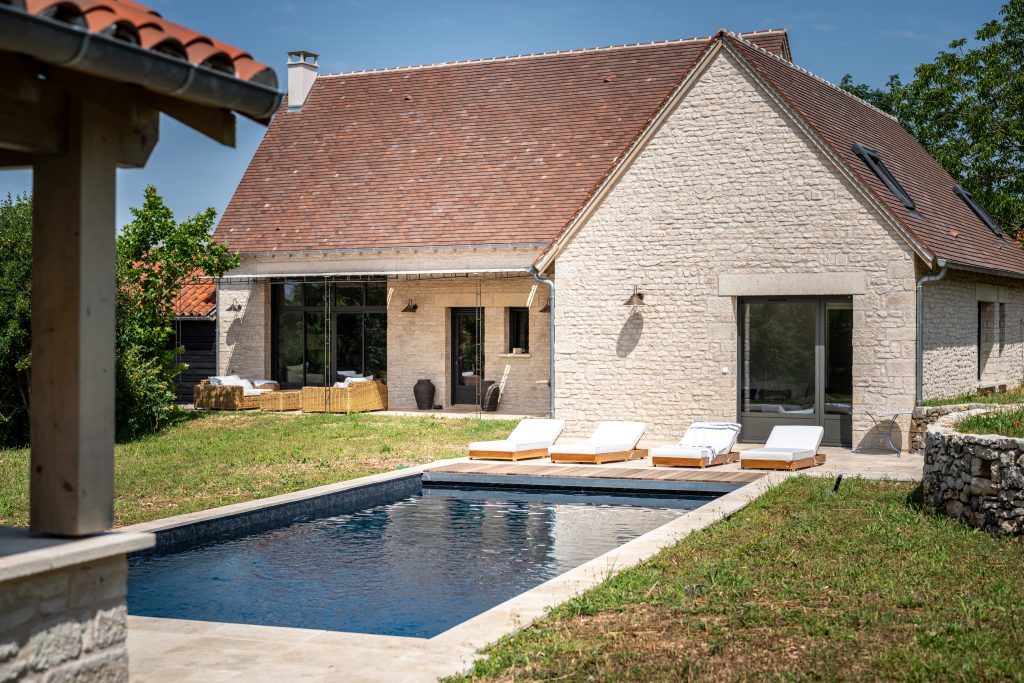
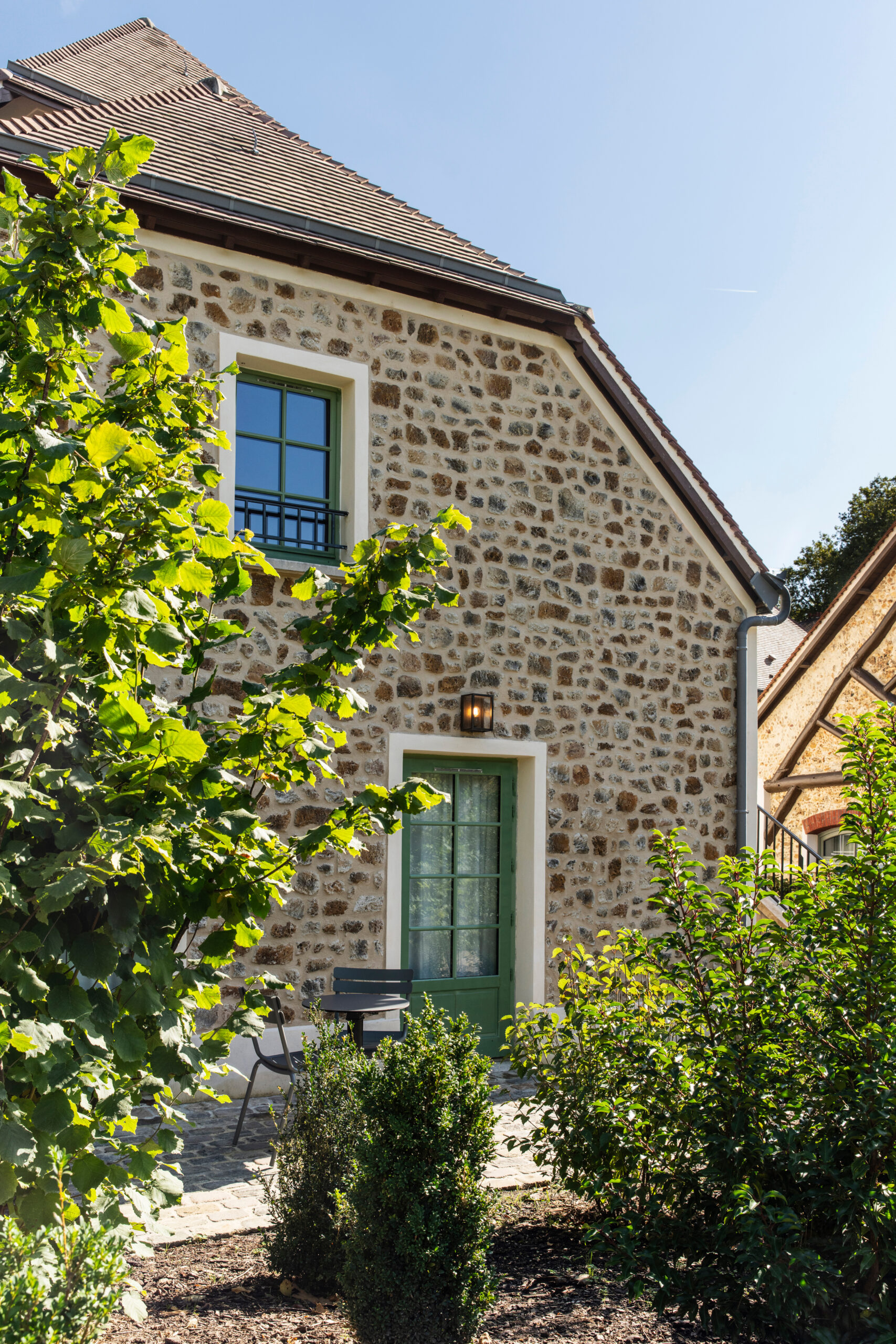
For both interior and exterior renovations, limestone cladding remains the gold standard.
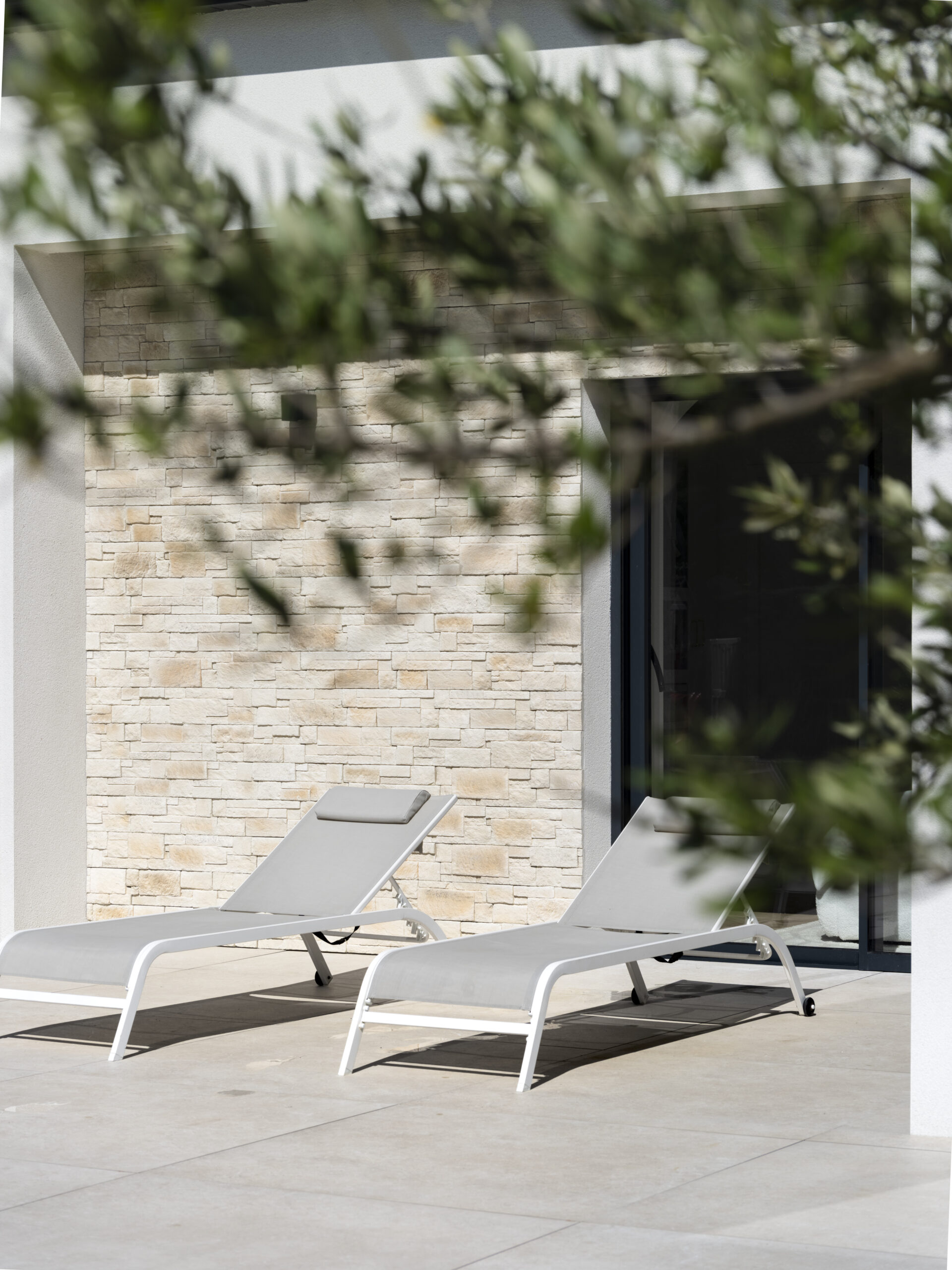
Varieties such as Causse and Meulière remain the flagship facing stones, as few alternatives faithfully reproduce their veining and patina.
Natural limestone weighs between 25 and 30 kg per square meter, depending on its thickness, which complicates renovation projects. Reconstituted stone, which is lighter and more affordable, is better suited for routine projects. Thanks to NEOMINERAL technology, ORSOL reconstituted stones meet technical and aesthetic requirements while offering a look that closely resembles natural stone.
A composition that ensures color consistency
Reconstituted stone, produced by molding natural aggregates bound with cement, has become the standard choice for apartment buildings and housing developments where visual uniformity takes precedence over the authenticity of the material.
Each slab guarantees a consistent color across the entire facade. That is the hallmark of the Orsol facing stone collections, designed to replicate the nuances of natural stone with this level of manufacturing consistency.
Slate and schist: a traditional stone with decorative character
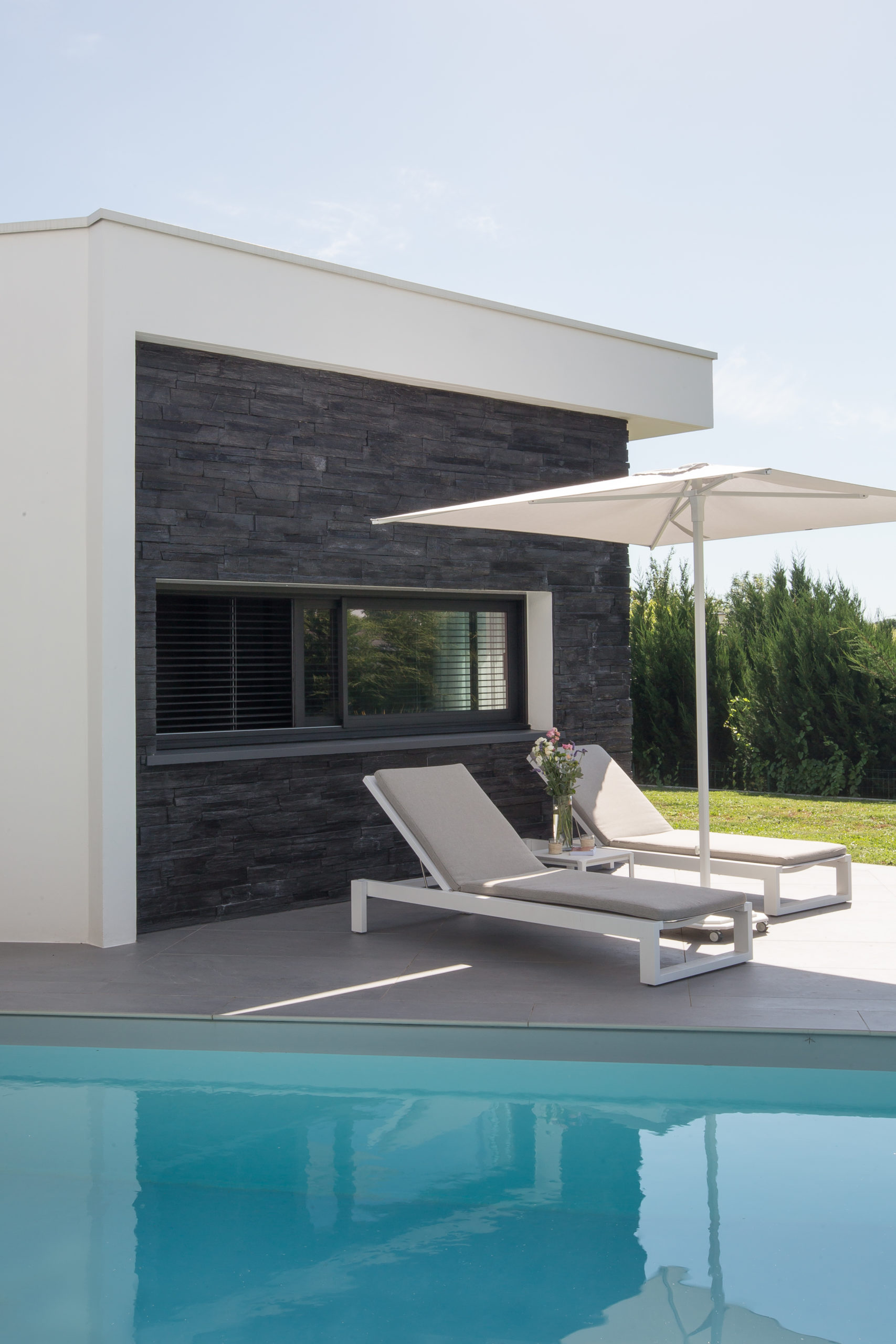
Schist-look stone—and slate more broadly—has a strong and unique character. Its fine-layered structure gives it a light, airy appearance, while its anthracite hue adds depth and creates visual interest, whether on an exterior facade or as an accent wall in a living room.
Strong regional roots
Slate and schist are part of the architectural heritage of Brittany, Anjou, and certain Pyrenean valleys, where they have long been used to clad facades and low walls. Their layered appearance and hues ranging from bluish-gray to anthracite give walls a distinct texture and understated elegance, which today find their place in both contemporary projects and homes with character.
Technical advantages and genuine decorative charm
Non-combustible and highly water-repellent, these stones are a valuable asset against the elements, particularly on facades exposed to rain and sea spray. Their dark hue creates a striking contrast with light wood, glass, or white stucco, and highlights an accent wall in the living room or around a fireplace.
One caveat, however: it also absorbs more heat in the summer, a factor to consider depending on the facade’s exposure.
To recreate this dark ambiance with a more lightweight installation, ORSOL facing stone offers anthracite shades in the STRATA, Rocky Mountain, and Yosemite collections. These thin stone slabs can be adhered to standard substrates, both indoors and outdoors, at a generally more affordable price.

The same installation, indoors and outdoors
ORSOL facing stone is installed the same way indoors and outdoors, whether for a facade or an accent wall in a living room or bedroom, thanks to exterior thermal insulation (ETI). In both cases, the adhesive mortar is spread with a trowel onto the substrate; a 1- to 2-mm layer is applied to the back of each tile (double gluing), then the tiles are laid from bottom to top after the corners, pressing firmly to remove air pockets. For collections that require grouting, the joints are filled 24 hours later and brushed as soon as the mortar begins to set. These steps are within the capabilities of most DIYers, provided they follow the ORSOL Installation Tips, with surface preparation required as needed. Both outdoors and in the bathroom, a water-repellent treatment completes the installation and should be reapplied approximately every 5 years.