
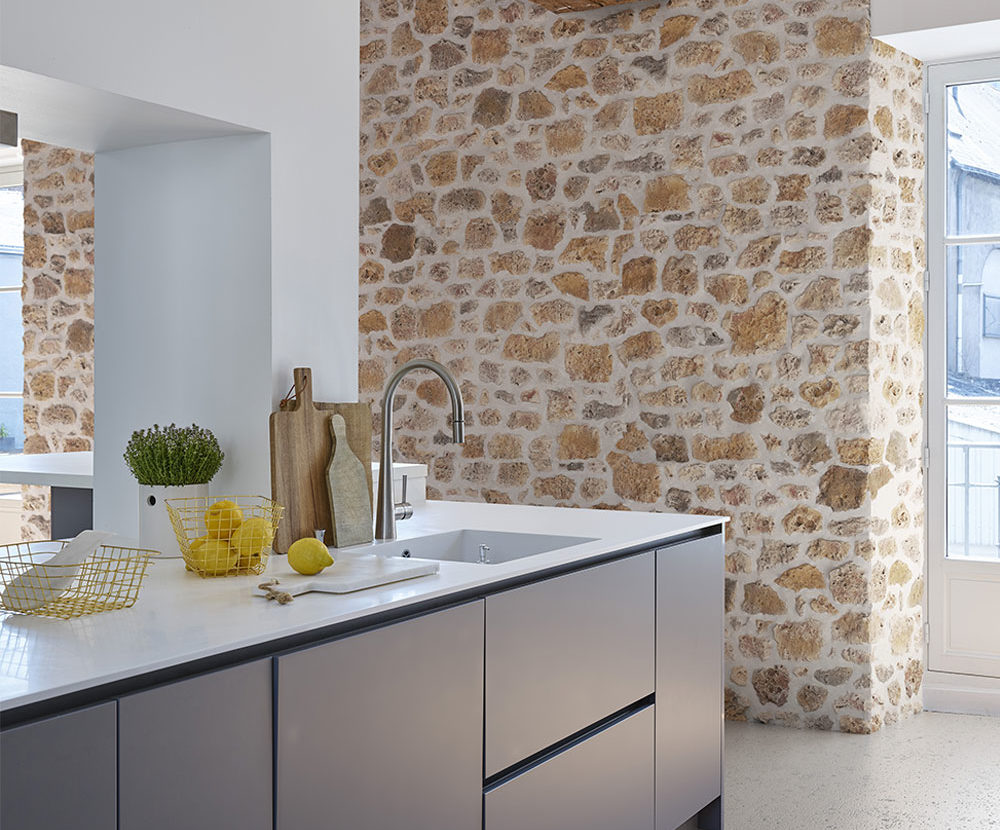
An open kitchen makes the living space feel larger and encourages interaction, but it can also blur the lines between different areas. How can you create a separation between the living room and kitchen without installing a partition? With its texture, depth, and variations in color, the wall cladding creates a visual break between the spaces while maintaining their continuity. A solution that separates the kitchen and living room without isolating them.
Why define the boundaries of a kitchen that opens onto the living room?
In an open-concept space, each area should retain its function without feeling isolated from the rest. The kitchen houses the appliances and dining area, while the living room is dedicated to relaxation and socializing.
A kitchen-living room divider helps make this layout clearer. It can be achieved through furniture, color, lighting, or even wall coverings.
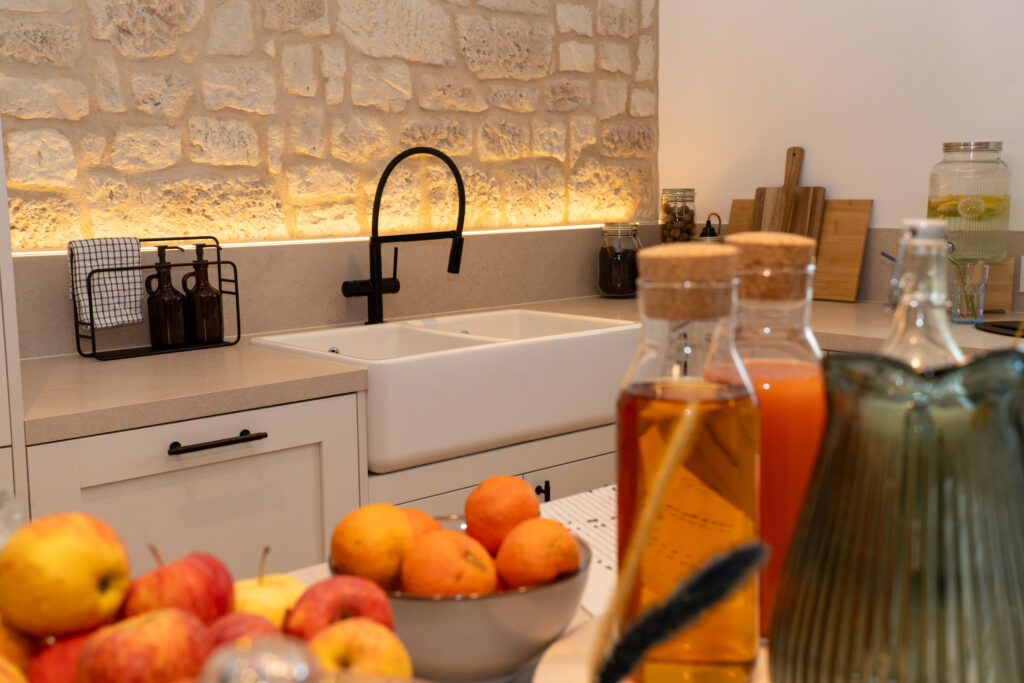
To define these spaces, wainscoting offers an alternative to a partition wall. Installed on a section of the wall, it draws the eye and creates a boundary between the two areas. The kitchen and living room remain open to one another, but each has its own distinct character.
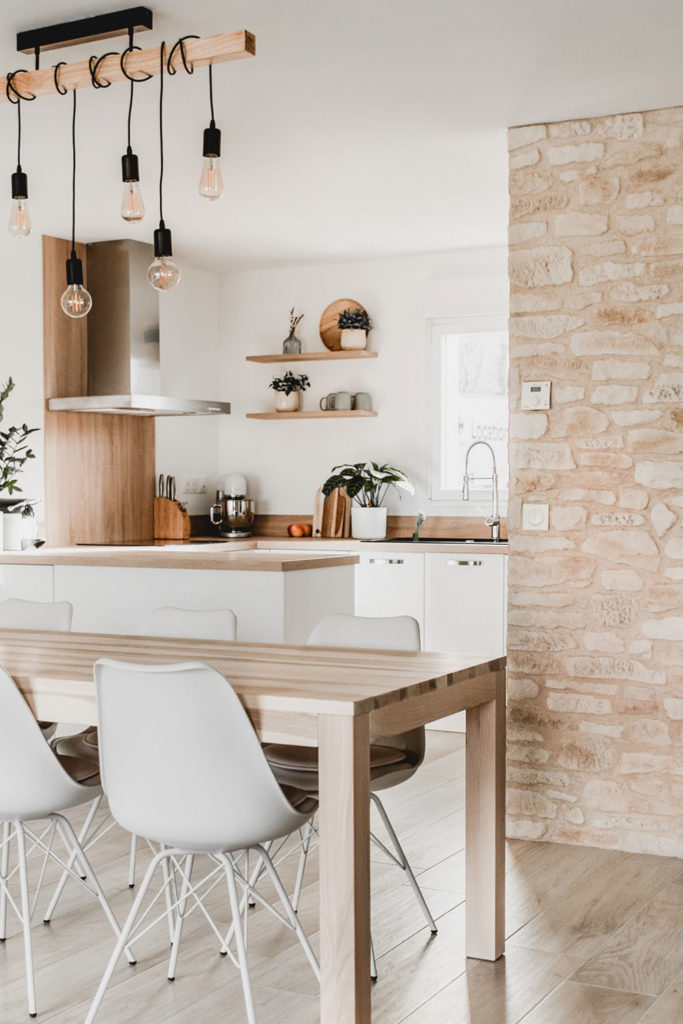
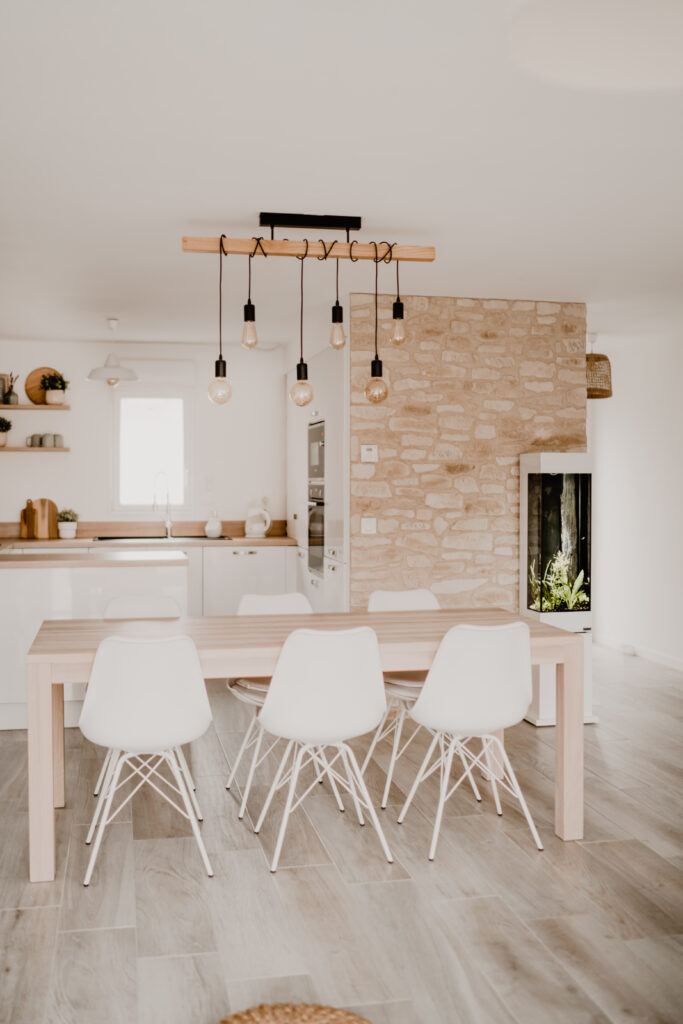
Stone: A Visual Divider Without Walls
The principle is simple: rather than building a physical partition, we play with materials.
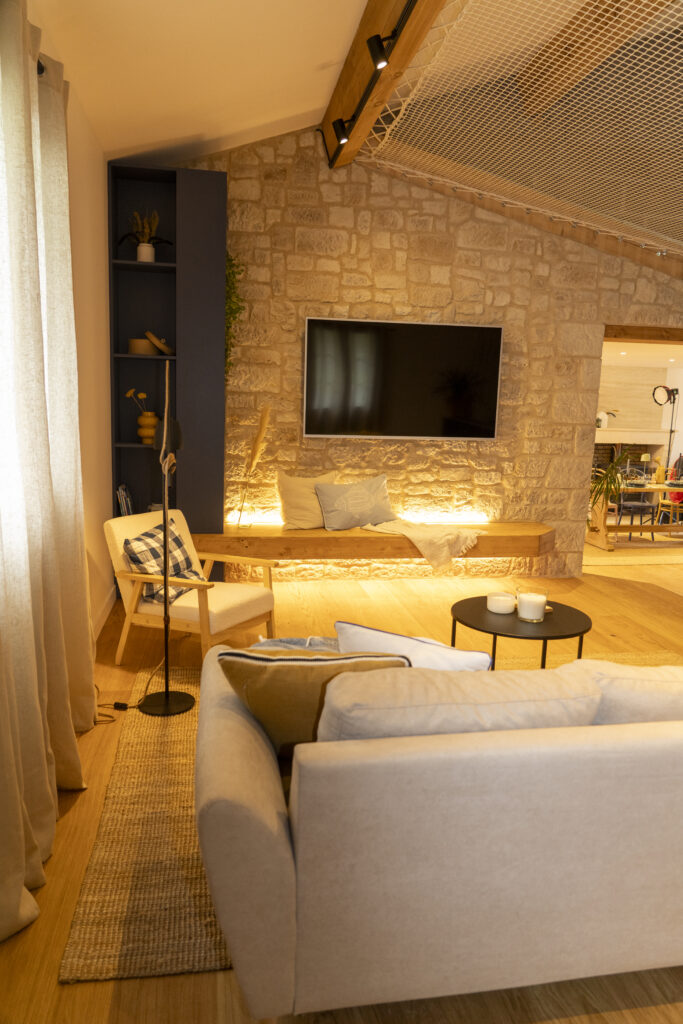
A wall made of stone, brick, or with a distinct texture catches the eye. It becomes a focal point in the room and can signal the transition from one area to another. This difference in texture is enough to create a visual separation between the kitchen and living room.
The result depends on the choice of wall and the area covered. It isn’t necessary to install wainscoting throughout the entire room. A portion of a wall may be enough to create a contrast with a solid-color paint, a floor, or furniture with simpler lines.
This approach also preserves the qualities of an open kitchen: light flows freely, the views remain unobstructed, and the two spaces continue to form a single living area.
Where should the cladding be installed for the best separation?
The choice of location is key: the wainscoting should reinforce the room’s structure without creating too stark a contrast.
On the living room wall
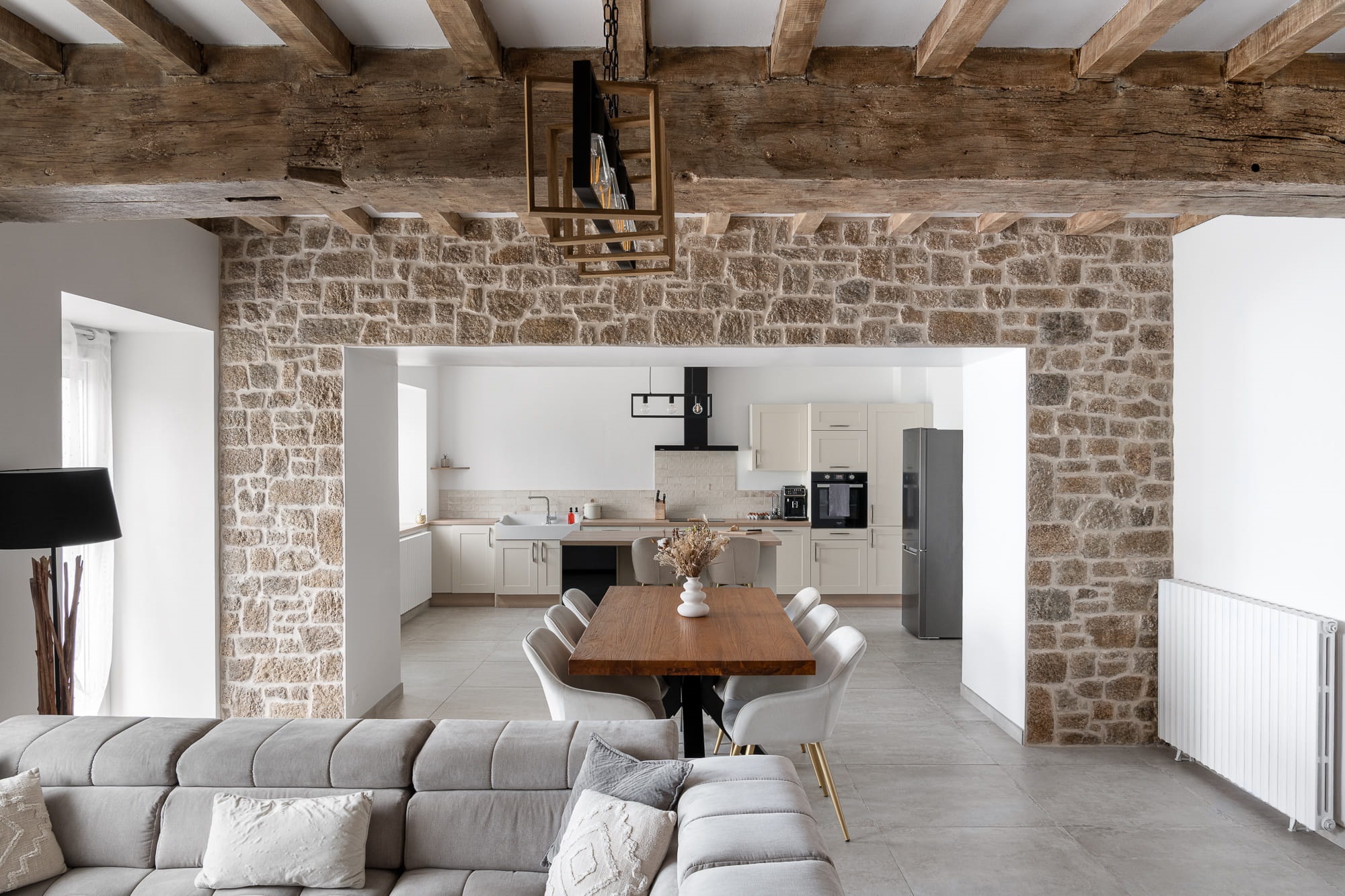
In a living room open to the kitchen: the wall behind the sofa, the TV, or a low cabinet can become a focal point. Stone adds character to this surface and clearly defines the area designated for the living room. To find the right inspiration, the various living room cladding options let you envision a wall tailored to the room’s layout.
An accent wall can also extend an existing architectural feature, such as a wall return or a pillar. The cladding then appears to be an integral part of the room’s structure.
On a wall projection between the two spaces
When a section of wall already partially separates the kitchen from the living room, the wall covering accentuates this transition: it adds a decorative finish to the surface without further enclosing the space.
This solution works well in large open-concept rooms, where the different areas can sometimes lack definition. It thus highlights a boundary that is already present in the architecture.
On a wall section on the kitchen side
The wall paneling can also be incorporated into the kitchen. A section of the wall located behind the dining area or on the side of the kitchen island can serve as a visual focal point.
In an open-concept kitchen, it helps distinguish the area dedicated to meal preparation from the rest of the room, without adding more partitions. When choosing a wall covering, however, you should take into account the existing decor and the specific constraints of that space.

What style should you choose to create an elegant room divider?
The choice of wall covering should complement the room’s overall style. In a contemporary interior, a stone with clean lines can add texture without overwhelming the decor. In a cozier setting, a finish that resembles natural stone or brick can enhance the character of the living room.
Color also affects the perception of space: a light shade maintains a sense of brightness, while a richer shade draws the eye more and defines the division.
Texture is just as important, as a highly textured stone becomes a focal point of the decor. In such cases, it may be best to limit other patterns and materials to maintain a balanced overall look.
To compare different materials, shades, and finishes, the choice of wall cladding should coordinate with the furniture, colors, and other finishes in the room.