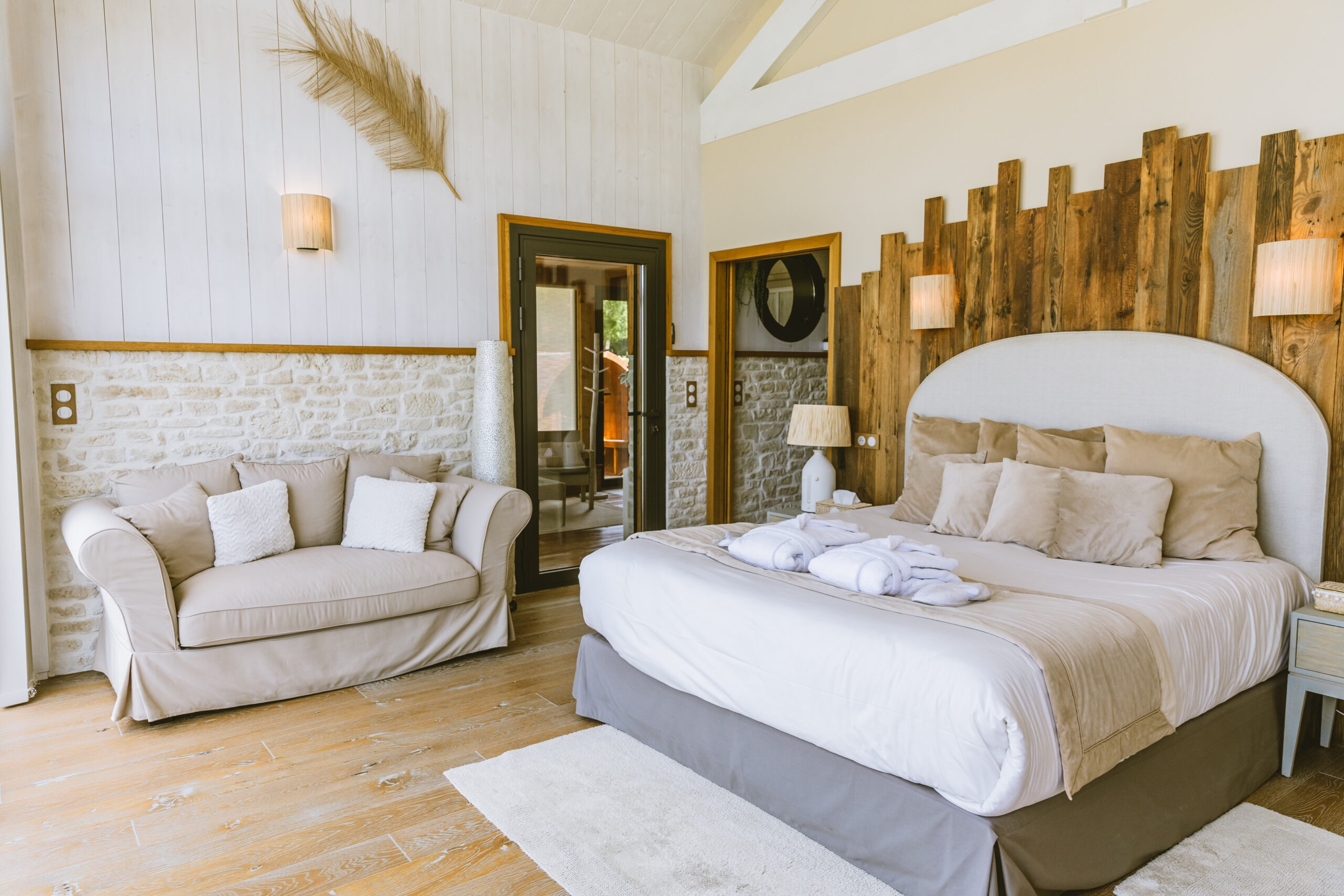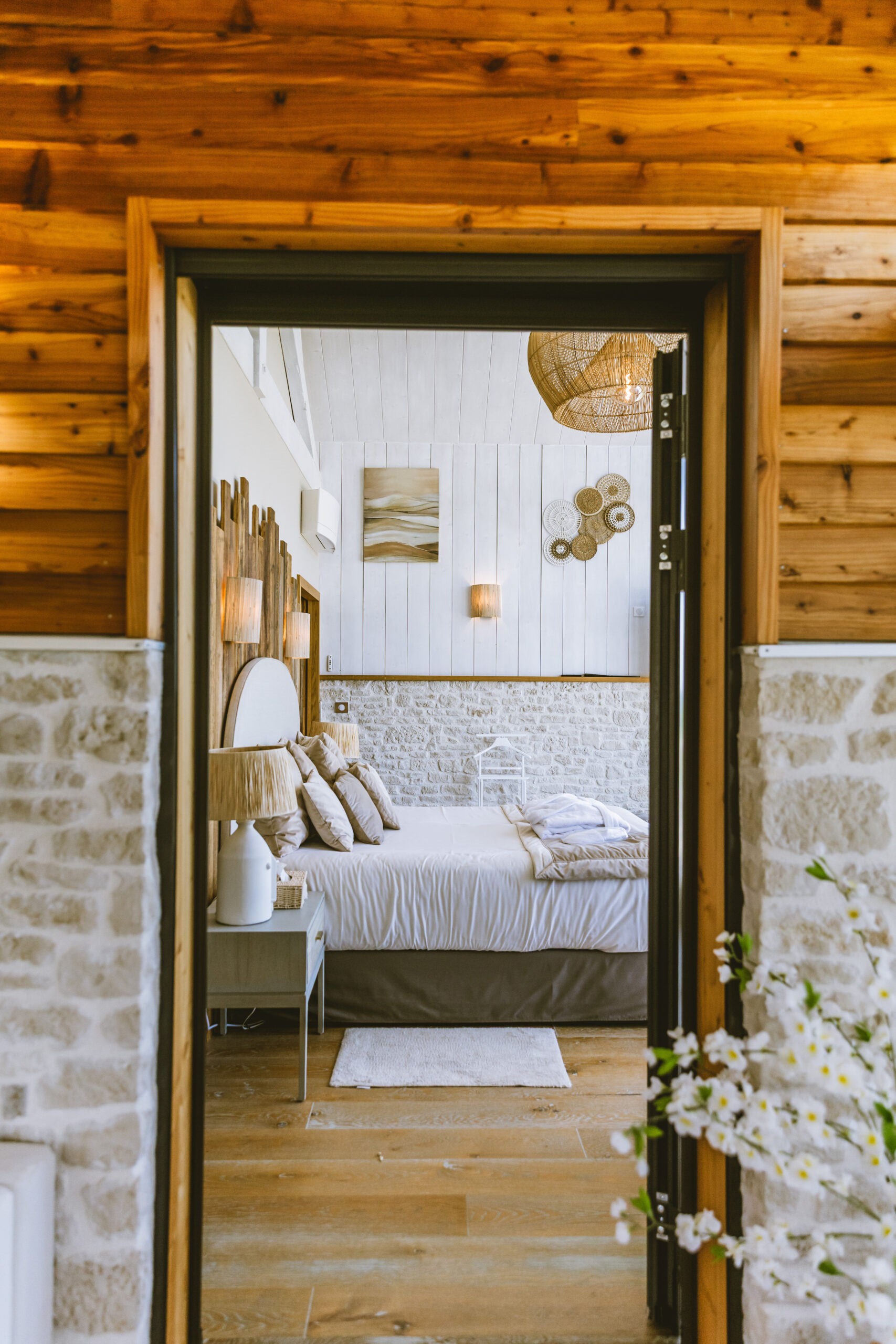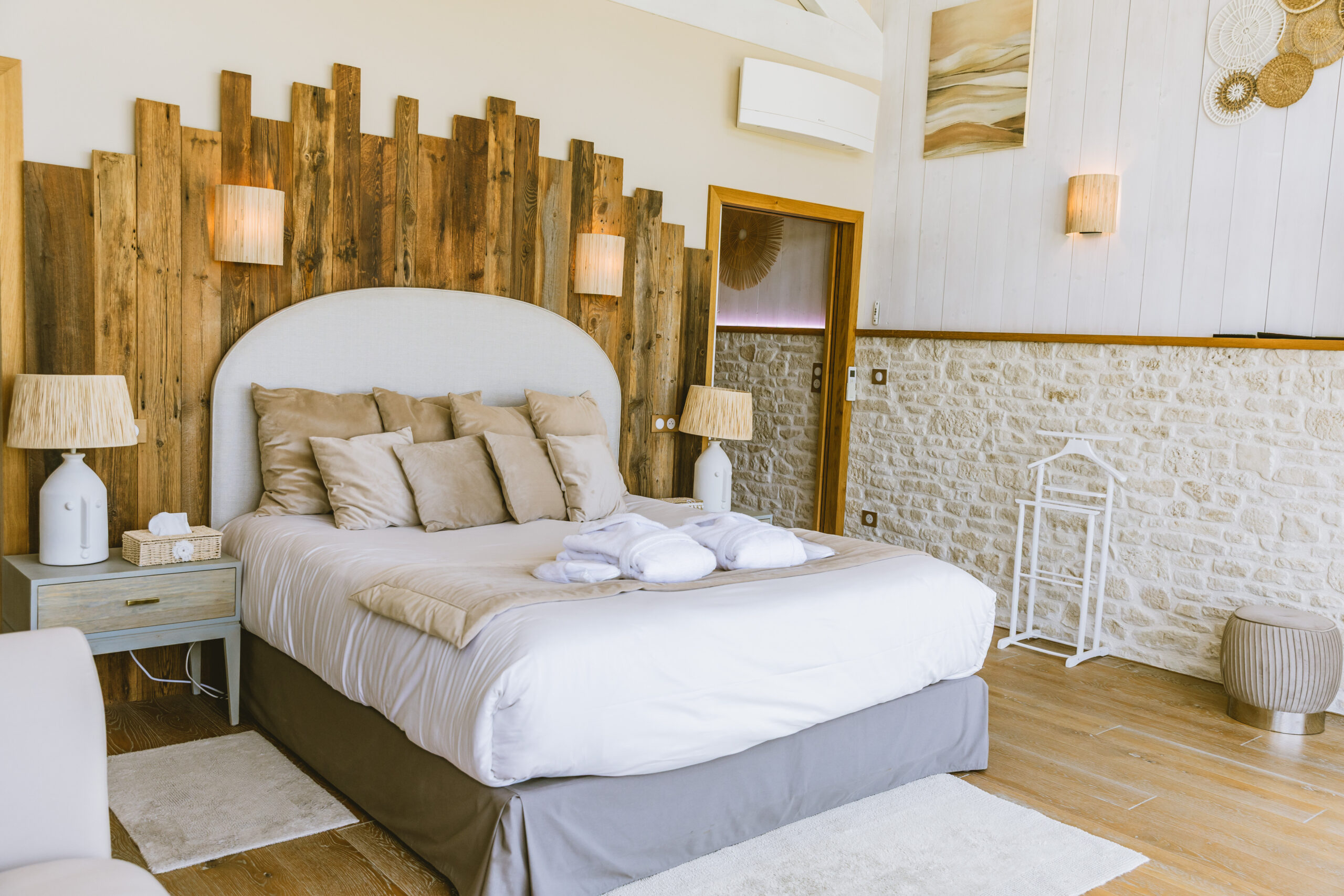
In a hotel, the decor directly contributes to the guest experience. Beyond the comfort of the bedding and the quality of the amenities, the atmosphere of the room contributes to a sense of well-being. To create a welcoming setting, stone cladding adds a natural touch, texture, and character. Whether incorporated behind the headboard or on an accent wall, stone transforms the decor of a hotel room without adding too many decorative elements.
Why choose a stone wall in a hotel room?
Stone adds a mineral element that contrasts with the smooth surfaces and clean lines of contemporary bedrooms. Its textured surface creates a play of light and shadow that lends depth to the room. It also helps define a specific area—such as the sleeping area—without partitioning off the bedroom.
The wall behind the headboard is a prime spot. It catches the eye as soon as you enter and frames the decor around the bed. A stone or brick accent wall can thus become the centerpiece of the design, while minimizing the need for accessories.
This choice works equally well for boutique hotels and urban properties seeking a strong visual identity.
Which stone should you choose for a warm hotel room design?
The choice of cladding depends on the atmosphere the establishment wishes to create.
Natural tones for a soothing atmosphere
Beige, sand, and light stone tones enhance the brightness and create a soft, soothing atmosphere. Paired with white bedding, wood, and natural textiles, they come together to create a setting that promotes rest.
Deeper shades, such as gray or earth tones, add contrast and highlight the wall’s character. To maintain the room’s balance, it’s best to pair these shades with more neutral colors.
Brick for an Urban and Industrial Style
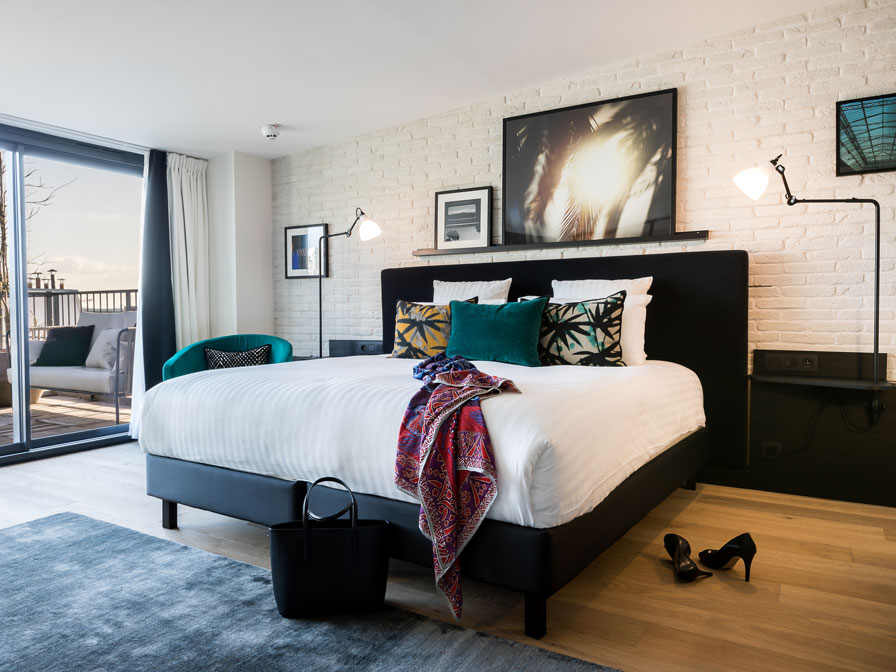
Exposed brick creates a more distinctive look. In an industrial-style hotel, it pairs well with black metal, wood, and lighting fixtures with clean, geometric lines. A white finish creates a brighter, more contemporary look, while dark brick adds depth to the decor.
The Laz’ Hôtel project—an urban, industrial-style hotel—illustrates these possibilities. Interior designer Stéphanie Cayet chose black bricks for the bar and lounge areas, and white bricks for the guest rooms and meeting room.
How can you combine stone with other materials?
To successfully decorate a hotel room, the combination of materials is just as important as the choice of finish. Wood softens the mineral look of stone, while heavy fabrics, curtains, and rugs enhance the feeling of comfort.
Lighting also plays a key role. Wall sconces on either side of the bed or lamps with warm light highlight the wall’s contours and create a more intimate atmosphere. However, it’s important to maintain functional lighting for reading and moving around.
It’s best to avoid using too many bold textures. A stone wall is often enough to give a room its own character: the other surfaces can remain understated to maintain a cohesive design.
ORSOL Wall Cladding to Customize Hotel Rooms
To tailor the decor to the establishment’s style, stone wall cladding is available in a variety of textures, sizes, and colors. Depending on the collection chosen, it can be used to create classic, contemporary, or industrial atmospheres.
Using them on an accent wall offers a way to personalize guest rooms and reinforce the hotel’s visual identity. Before selecting a model, it is essential to verify its compatibility with the substrate, installation conditions, and the specific requirements of the project.
Stone thus becomes a true decorative asset: it adds depth to the room, highlights its architecture, and helps create an atmosphere in which guests feel at ease.