
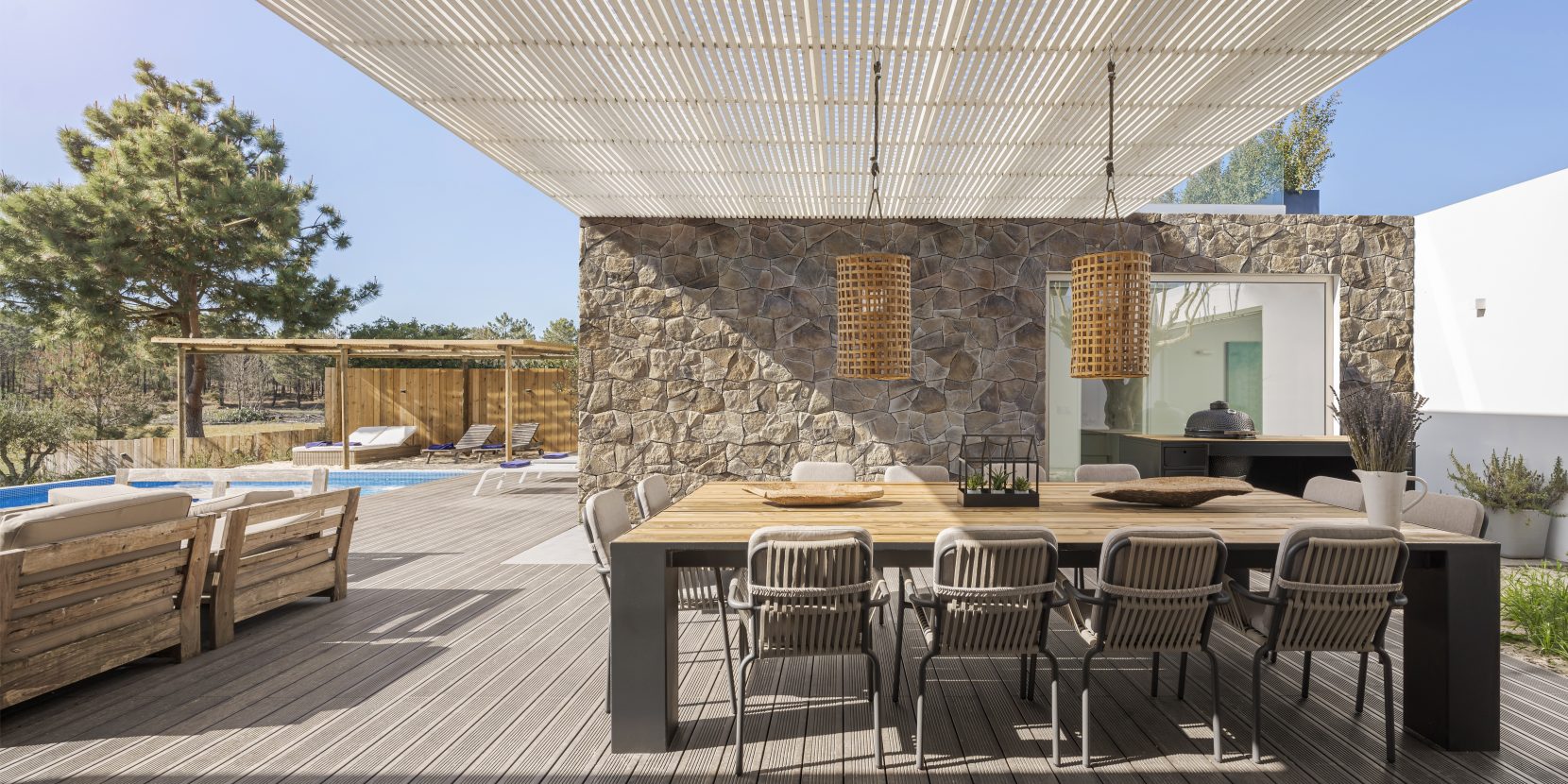
A Mediterranean pool house is instantly recognizable, with its warm-toned stone, light-colored lime plaster, arched openings, and the generous shade of a trellis. More than just a pool shelter, this small structure extends the home and is enjoyed from morning to night, in tune with the southern light. Its charm lies in a few deliberate choices made during the design or renovation phase, and it is often near the water that the difference is made between an annex that ages well and a structure that becomes overgrown with vegetation as the seasons change.
Four Choices That Give the Pool House Its Southern Charm
The Mediterranean spirit arises from the harmony between light, materials, and the way we live around the pool. Each of the four must-haves below influences one of these elements, from the color of the walls to the placement of the lunch table.
A warm color palette, tailored to the orientation
The bright southern light brings out colors with an intensity that dulls cool grays and enhances warm tones. Golden beige, ochre, and sienna capture the low-angled light of morning and evening, when shadows stretch across the terrace and the walls take on an almost golden glow.
For a pool house, the color palette works best when built around three levels. A light shade dominates the stucco and reflects light; a beige or ochre accent highlights the stonework; and a few touches of lavender blue or olive green enliven the woodwork, shutters, and textiles in the relaxation area. This subtle interplay of contrasts adds depth to the overall design.
On a south-facing facade, rich colors remain harmonious because the sun softens them as the day goes on. A north-facing wall quickly appears dull and calls for lighter shades to maintain a bright atmosphere.
What texture should you choose for facing stone near the water?
Under the midday sun, the irregular masonry is covered with shadows that shift throughout the day, much like the terraces and dry-stone walls that line Provençal gardens. These raw textures find their place on the large, light-drenched walls, at the back of the terrace or facing the pond.
Right next to the pool, a very uneven surface traps water, chlorine, and limescale in its crevices. These areas dry slowly and promote the growth of moss or greenish stains, especially in the shade. A smoother stone with fine joints requires only a simple rinse to maintain and retains a clean appearance from one summer to the next.
Surfaces that are touched or get wet—such as an outdoor shower, a low beach wall, or the countertop of an outdoor kitchen—are therefore given a smooth finish, while rougher textures are reserved for walls that won’t get splashed. As for the shower, a smooth mineral wall and brass faucets are all it takes to create a space worthy of a hotel—provided it’s installed on the sunny side, where it dries quickly.

The alternation of smooth plaster and exposed masonry, from the facade to the arcades
In Provençal farmhouses, the facade alternates between smooth lime-washed surfaces and masonry sections. On a pool house, the stone cladding is concentrated on the elements that anchor the structure to the ground—such as the foundation, pillars, corners, and window and door frames—while the intermediate sections remain plastered. Cladding in soft hues blends naturally with light-colored plaster.
A single clad section facing the pool creates a focal point visible from the water, whereas full cladding would make the annexe appear heavy, darken the spaces, and blur the contrast between smooth and textured surfaces. This balance allows the light to reveal the material’s character.
An arcade on the facade, a semicircular opening, or a vault above the entrance are hallmarks of the Mediterranean style and cast curved shadows on the ground that change from hour to hour. A niche carved into the masonry holds a lantern or a pottery vessel. To emphasize these lines, the use of stone is limited to the framing, with regularly shaped stones that precisely define the arch.
How can you arrange the living spaces around the pond?
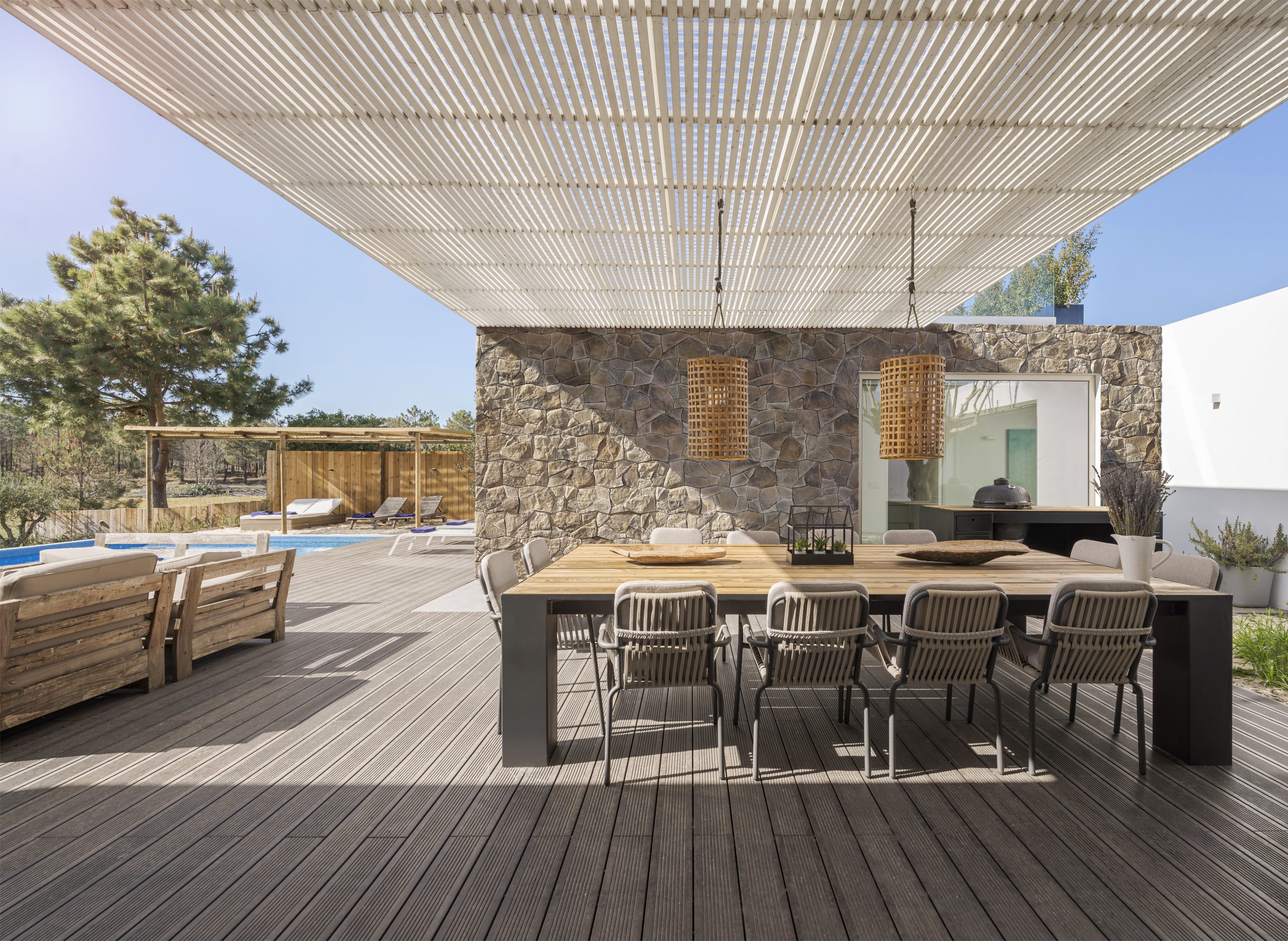
Adorned with bamboo screens, wisteria, or Virginia creeper, a rough-hewn wooden pergola transforms the covered patio into a relaxing retreat during the hottest hours of the day and casts a dappled shadow on the ground—a sight typical of the South. Facing west, it provides protection from the scorching late afternoons. Its posts can rest on masonry pillars topped with caps that protect them from water seepage.
The dining area is situated in the shade, near an outdoor kitchen designed to match the foundation to maintain a consistent look, with a smooth, easy-to-clean countertop. When the layout of the lot allows, a small patio enclosed on two or three sides provides shelter from the wind and offers welcome privacy. The flow between the house, the pond, the shower, and the annex is designed upstream, with clear, level pathways that avoid detours with wet feet.
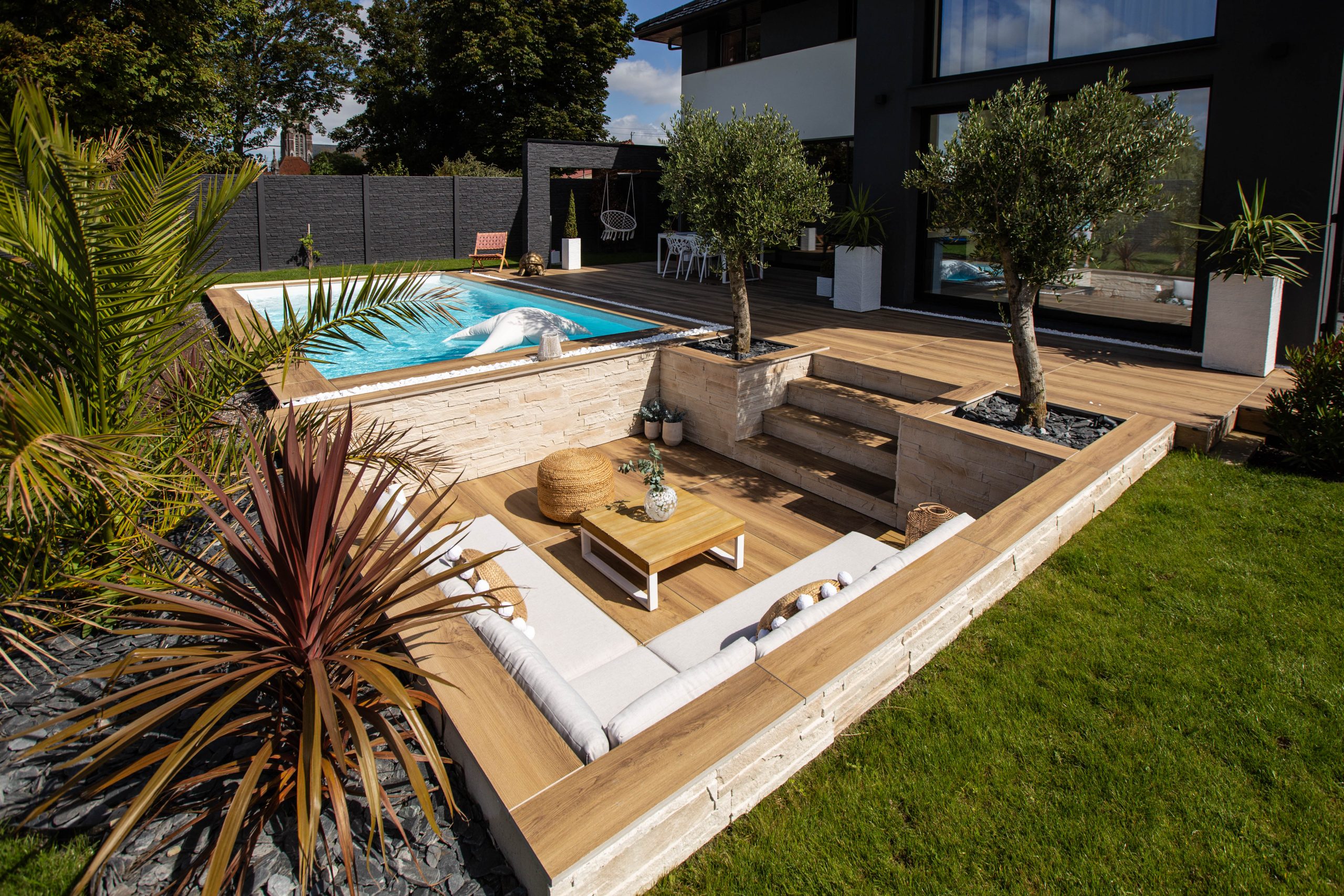
Olive trees, lavender, rosemary, and cypress trees define the surroundings; jasmine perfumes the pergola; and low walls delineate the flower beds. At dusk, the outdoor lighting takes over with lanterns in the niches, wall-mounted spotlights that highlight the contours of the landscape, and discreet lighting along the paths.
How do you install a retaining wall around a pool?
A properly installed cladding will last for years near a pool as long as four key points are followed.
- A sound, clean, and level surface made of cinder block, concrete, or plaster in good condition.
- An exterior-grade adhesive mortar suitable for wet areas.
- A texture suited to each area, with a raised surface to prevent splashing and a smooth surface where water runs off.
- A water-repellent treatment, to be reapplied approximately every 5 years.
Your Questions About the Mediterranean-Style Pool House
What materials go well with stone siding in a pool house?
Reconstituted stone complements traditional southern materials. Lime plaster, the raw wood of a pergola, terracotta floor tiles or pottery, and brass faucets all share the same warm color palette and develop a beautiful patina when used outdoors. Around the pool’s edge, paving in shades similar to the walls extends the continuity of the material all the way to the water.
What budget should you plan for when building a stone pool house?
The cost depends primarily on the surface area to be clad and the collection chosen. ORSOL reconstituted stone cladding ranges from 39 to 100 € per m² depending on the line, with most collections falling between 56 and 80 € per m². In addition to this material cost, you’ll need to factor in adhesive mortar, a water-repellent treatment, and, if necessary, the labor of an installer. Limiting the cladding to a single wall, the base, and the window and door frames significantly reduces the area to be covered and, therefore, the total cost.
Can an existing pool house be renovated with cladding?
Yes, and this is often the simplest way to give a mundane addition a Mediterranean feel. The cladding panels, a few centimeters thick, are glued directly onto the existing facade, eliminating the need for major structural work. Any plaster that sounds hollow or is crumbling should be removed before installation to ensure a sound substrate. The renovation is an opportunity to repaint the window and door frames in blue or olive green, add a pergola, or redesign an opening with a semicircular arch.
What type of cladding should you choose for a facade that is heavily exposed to the sun?
Light colors—such as beige, sand, or off-white—reflect more sunlight and limit the wall’s temperature rise, a significant advantage for south- or west-facing exposures. ORSOL reconstituted stone is dyed throughout and retains its color when exposed to UV rays. Its moderate texture creates beautiful cast shadows. When it comes to installation, it’s best to work during the cool morning hours, as adhesive mortar applied to a hot surface dries too quickly and adheres less effectively.
An extension that expands the house
A successful Mediterranean pool house depends more on the overall coherence of the design than on the amount of decor. A warm color palette tailored to the orientation, materials chosen for their resistance to water, an architectural design that alternates between smooth surfaces and stone, and spaces designed to provide shade are all it takes to bring the spirit of the South to the poolside. Before making a decision, placing a sample in direct sunlight helps you assess the shade at different times of the day.