
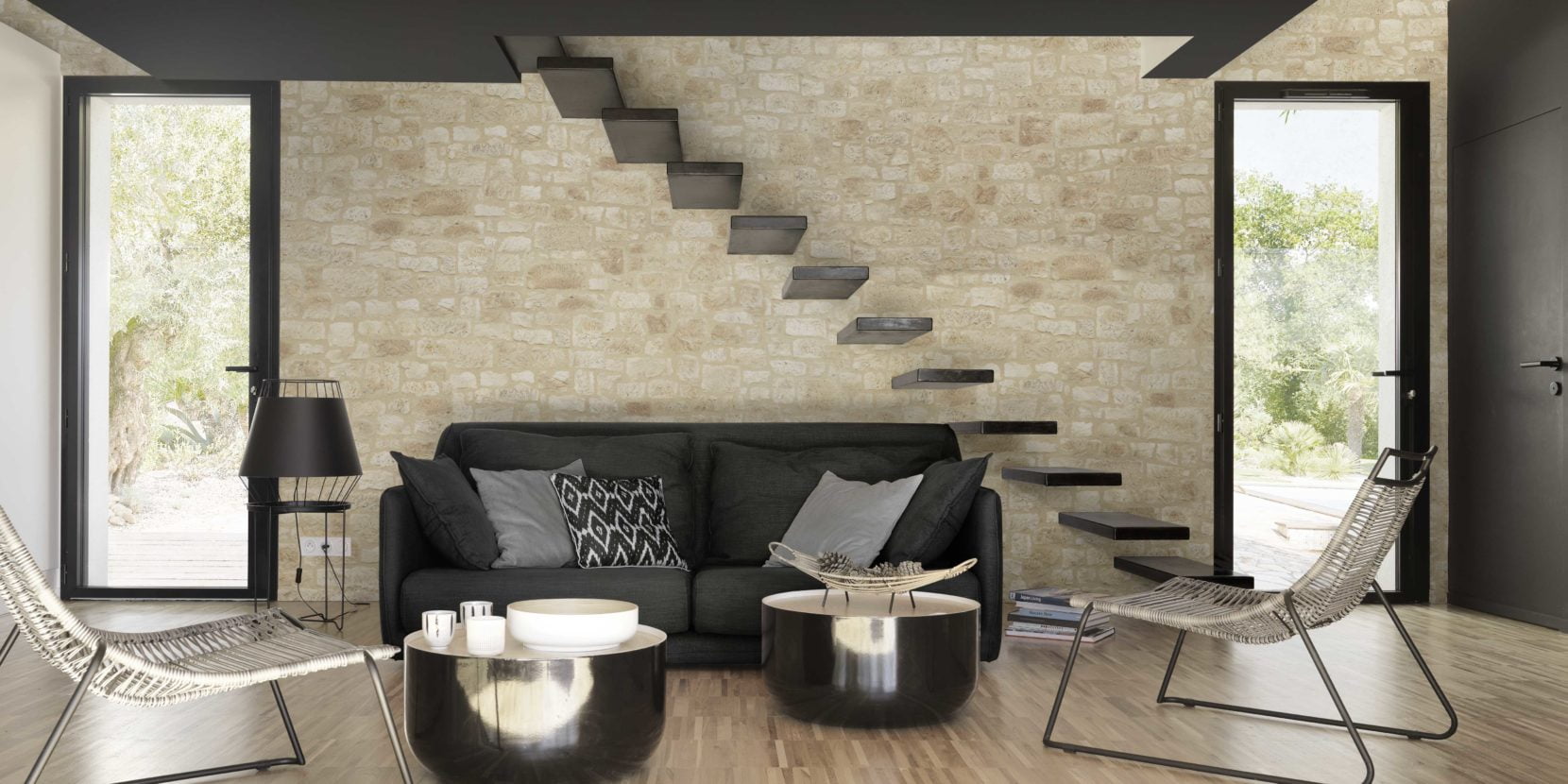
A living room with large windows benefits from natural light that highlights the space and materials. To give it character, wall cladding offers an interesting decorative solution. Stone with pronounced texture, brick, or more minimalist finishes: the choice depends on the desired atmosphere, as well as the room’s exposure and layout. So, which interior wall cladding should you choose to make the most of a light-filled living room?
What colors should you choose for a living room bathed in light?
The color of the wall covering influences the perception of space and the balance of the decor.
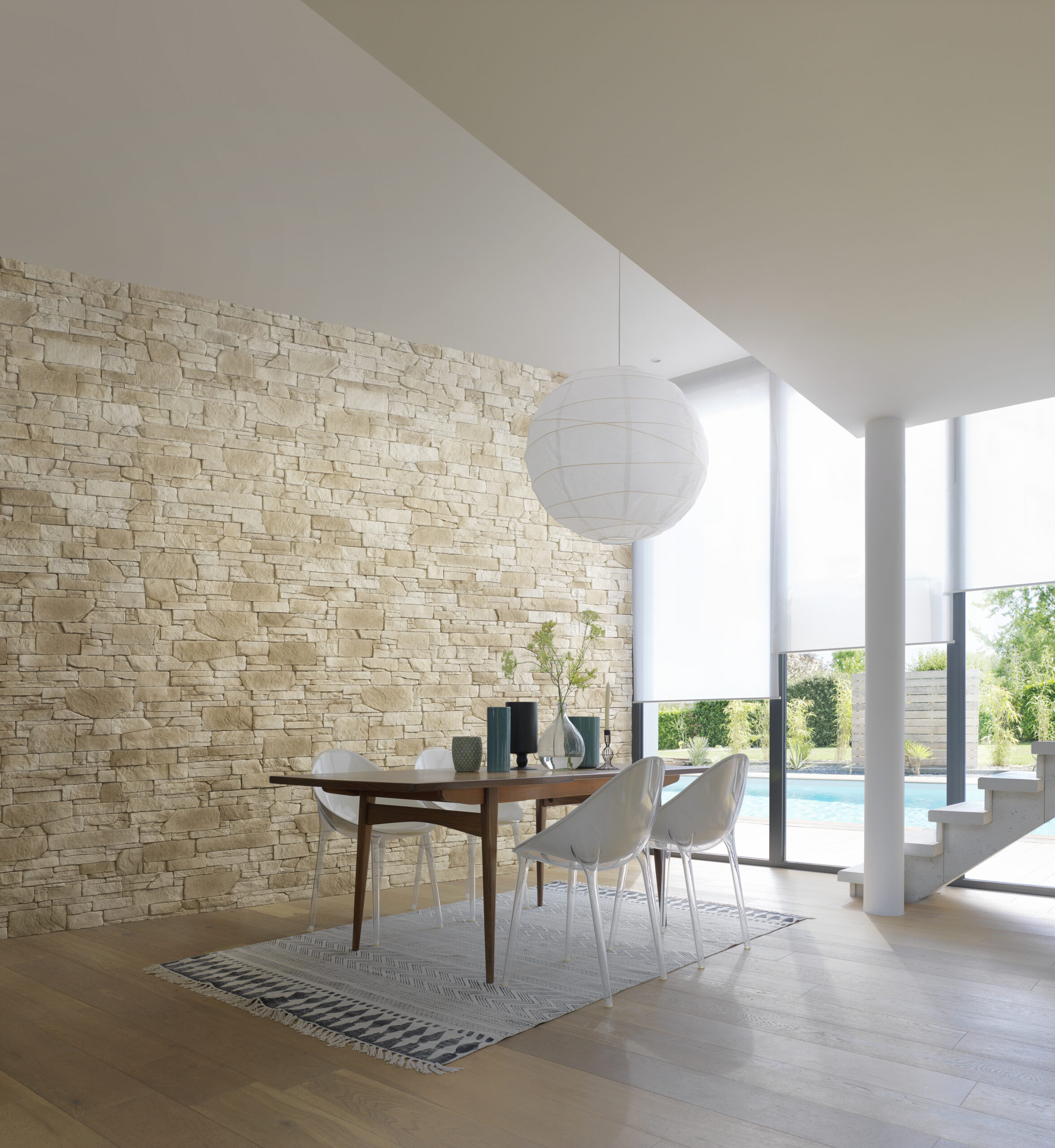
Light tones for a soft, soothing atmosphere
Beige, sand, and natural stone tones enhance the brightness of a room and create a soothing atmosphere. They work well in both contemporary interiors and more rustic decor. Paired with light wood, natural textiles, and furniture with clean lines, they create a warm, inviting look without making the room feel heavy.
Dark Tones to Create Contrast
An anthracite gray or deeper-toned wall covering creates contrast with white walls and adds structure to the living room. Natural light highlights its texture and emphasizes the variations in material. To maintain a balanced look, it’s best to use these shades on just one wall rather than covering multiple surfaces with dark colors.
The orientation of the windows also matters: take a look at the colors at different times of the day before making your choice. Morning light doesn’t reveal the nuances in the same way as late-afternoon light does.
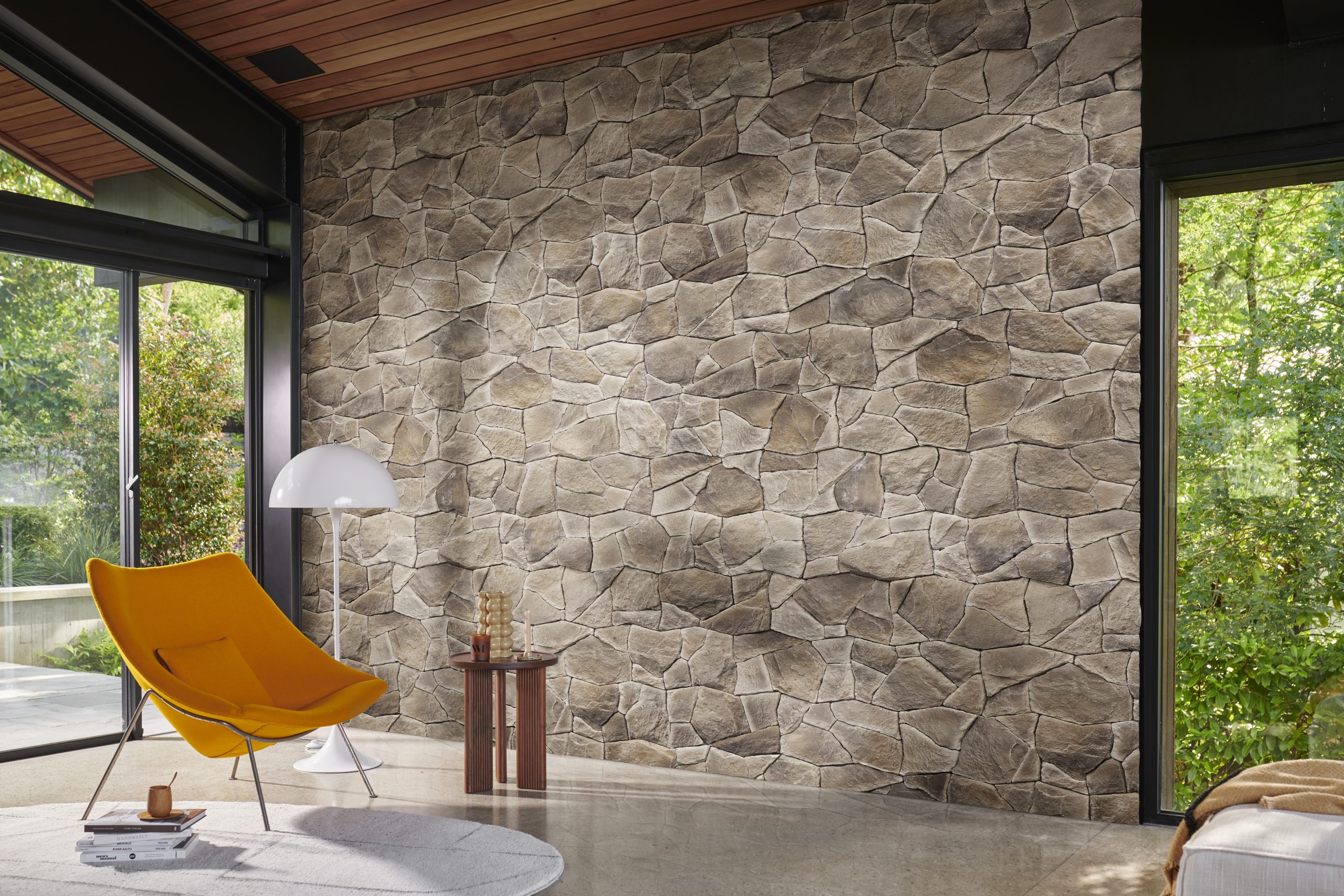
What texture should you choose for a living room with large windows?
Natural light highlights textures. A wall covering with pronounced texture creates shadows that shift throughout the day and add depth to the wall. This option is ideal for interiors seeking a strong, mineral-like presence.
Conversely, regular shapes and more subtle textures create a understated look that’s well-suited to minimalist decor. Brick can also add an industrial touch, while stone evokes a more natural feel.
However, the accent wall must be chosen carefully. A large, unobstructed wall allows the texture to stand out and lets you fully appreciate its decorative effect. Conversely, a wall with several windows can fragment the cladding and diminish its visual impact.
On which wall should you install the wall covering to make the most of the light?
The wall behind the sofa is an ideal location: it defines the relaxation area and highlights the furniture. The wall opposite the entryway can also immediately catch the eye. In both cases, opt for a fairly uncluttered surface to let the material shine.
In an open-concept space, wall paneling can also create a visual separation between the living room and the kitchen. Covering a section of wall helps distinguish the spaces without installing a partition or blocking the flow of light.
The key is to tailor the size of the paneled area to the room’s proportions. Often, a single wall is enough to give the living room its own identity.
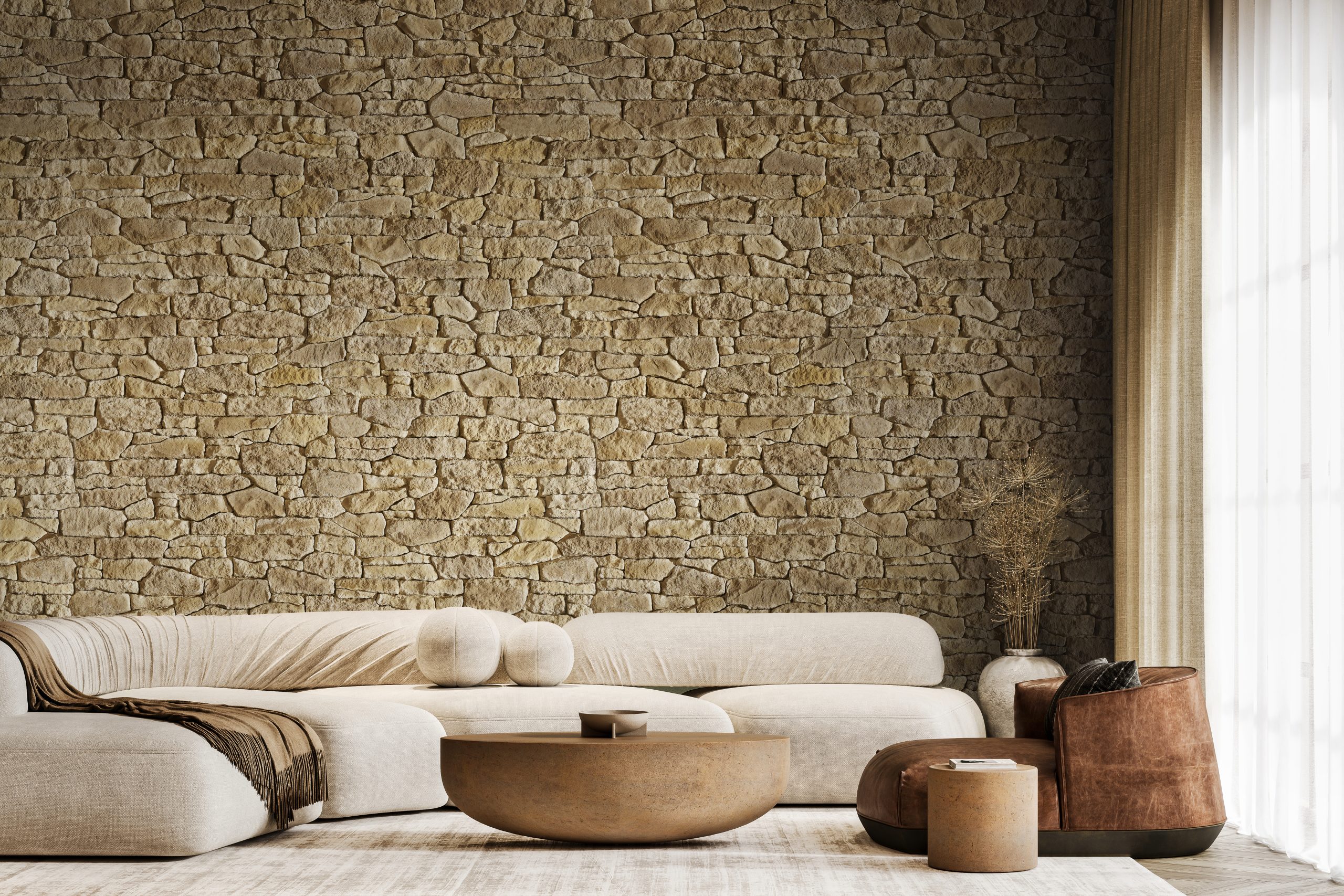
How can you coordinate the siding with the rest of the decor?
To achieve a cohesive look, pair stone or brick with complementary materials. Wood adds warmth, glass maintains a sense of visual lightness, and metal enhances a contemporary or industrial style. Rugs, curtains, and throw pillows can echo the tones of the wall cladding to create a subtle visual connection.
Also, be careful not to overdo it with patterns and bold textures. When a wall has a pronounced texture, furniture with simple lines helps maintain visual balance.
The ORSOL collections offer a variety of stone and brick cladding styles to customize interior walls. The final choice depends on the amount of light, the wall’s dimensions, and the desired ambiance.
A bright living room thus offers many decorative possibilities. By combining the right colors, the appropriate texture, and a well-chosen location, the wall covering transforms a wall into a true architectural feature, without detracting from the qualities of light that give the room its charm.