
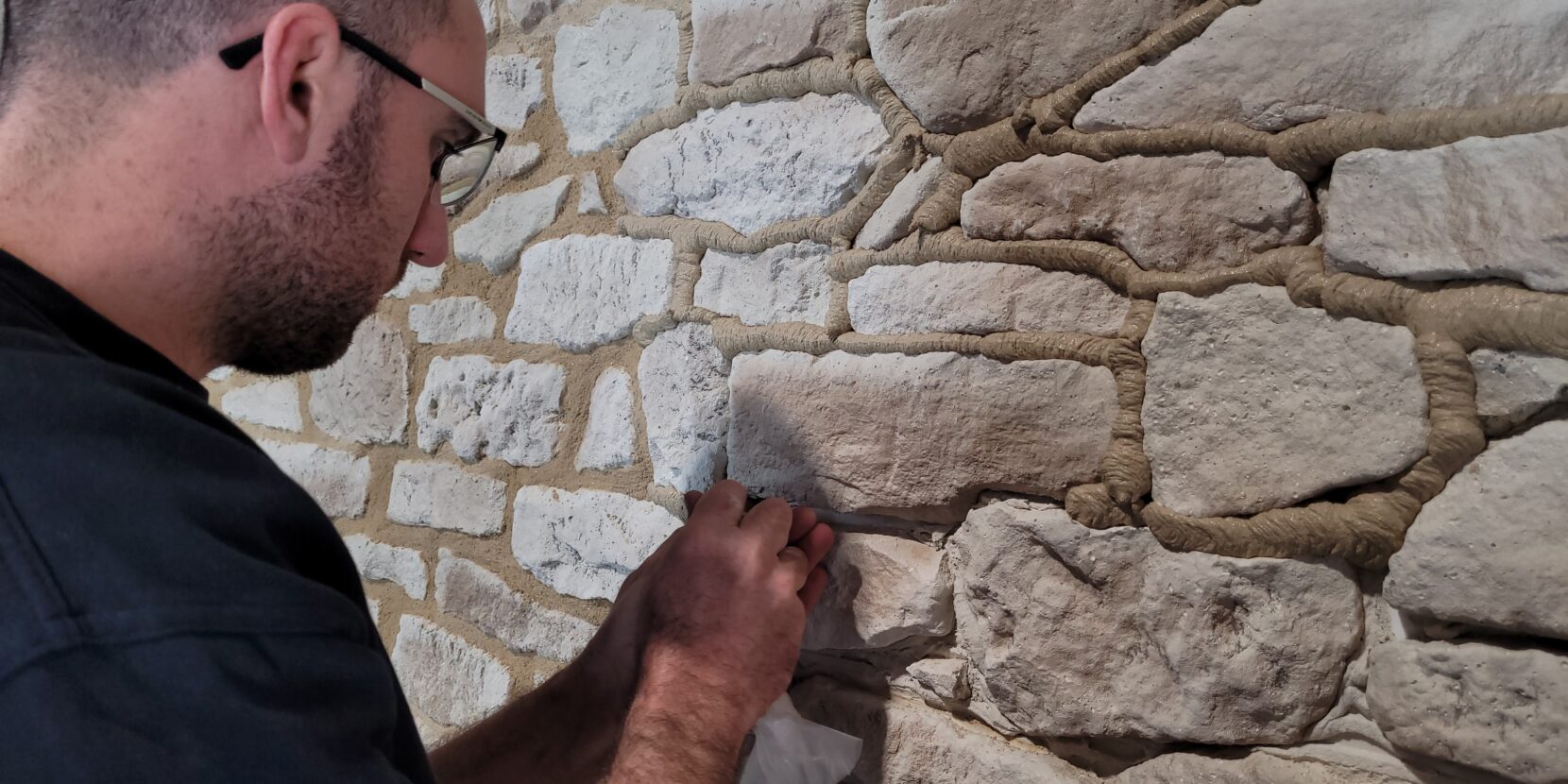
The right joint color for stone cladding depends on the desired effect: a shade similar to the stone for a uniform wall (blended joint), a distinct shade to highlight the stone’s pattern (contrasting joint), or recessed mortar for a dry-stone look (recessed joints). For ORSOL cladding that requires grouting, Mortier Joint Mur is available in 5 shades: white, beige, ochre, gray, and black, suitable for both interior and exterior use.
This mortar line outlines each stone across the entire surface of the wall. Its color therefore affects the final look just as much as the choice of facing itself. Here’s how to choose, collection by collection, and how to refresh a damaged finish without altering the facing.
Flat, contrasting, or recessed joints: which effect is right for your stone wall?
There are three options for grouting a stone facade. They hinge on two factors: the color of the mortar and the depth of the joint.
A blended grout is the safest choice. It smooths out minor installation imperfections and ages without leaving marks. It’s the recommended option when you’re unsure.
Contrasting grout accentuates the pattern. White grout on warm-toned stone brightens the wall; a dark shade on light-colored stone creates a sharper contrast. It requires careful installation: any variation in width will be noticeable.
The recessed joint is created during the brushing process. When the mortar begins to set, brush it with a soft steel brush, hollowing it out by a few millimeters, as described in our installation guidelines for cladding that requires grouting. The shadow created in this way highlights the stone’s texture, even with a subtle color.
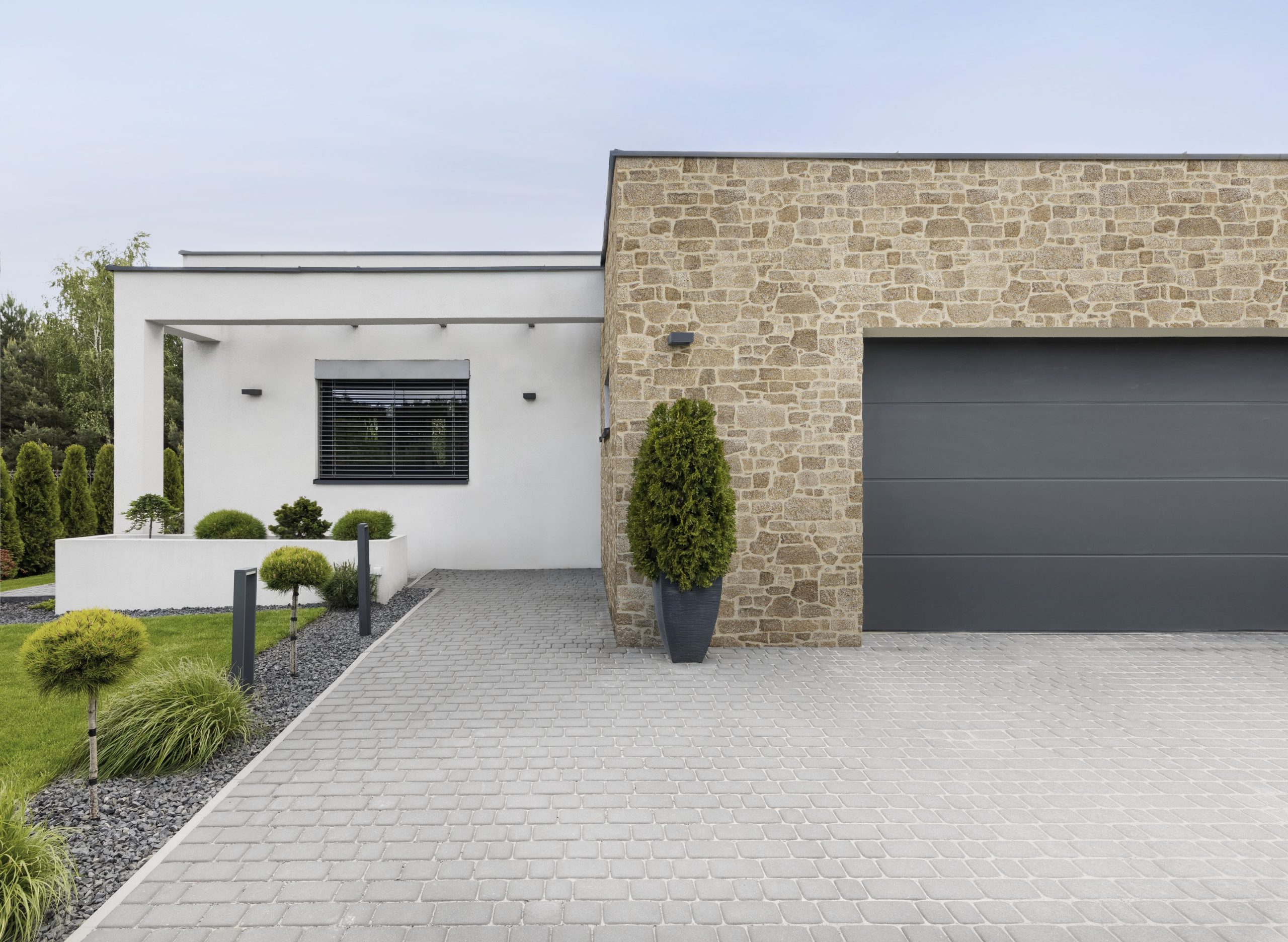
The 5 Colors of ORSOL Wall Joint Mortar
Wall Joint Mortar is specially formulated for ORSOL cladding. It can be applied to interior and exterior walls, for joint widths ranging from 5 to 50 mm, and is available in 25-kg bags. Its modulus of elasticity, which is lower than that of traditional cement mortar, minimizes cracking and preserves the appearance of the facade.
| Color | Effect Type | Recommended Combinations |
| White | High contrast on warm stone, blended on very light stone | Stone-toned manor; ochre or golden beige stones for a graphic effect |
| Beige | Blended with natural tones, the most versatile | Manoir Natural Tone; nuanced and natural beige tones from the collections |
| Ochre | Warm, regional architectural style | Yellow or brown ochre millstone; sienna-colored stones |
| Grey | Blended on dark stones, soft contrast on light stones | Ash-gray manor; gray tones from the ORSOL collections |
| Black | High contrast, contemporary feel | Industrial-style brick tiles; anthracite stones in a gradient effect |
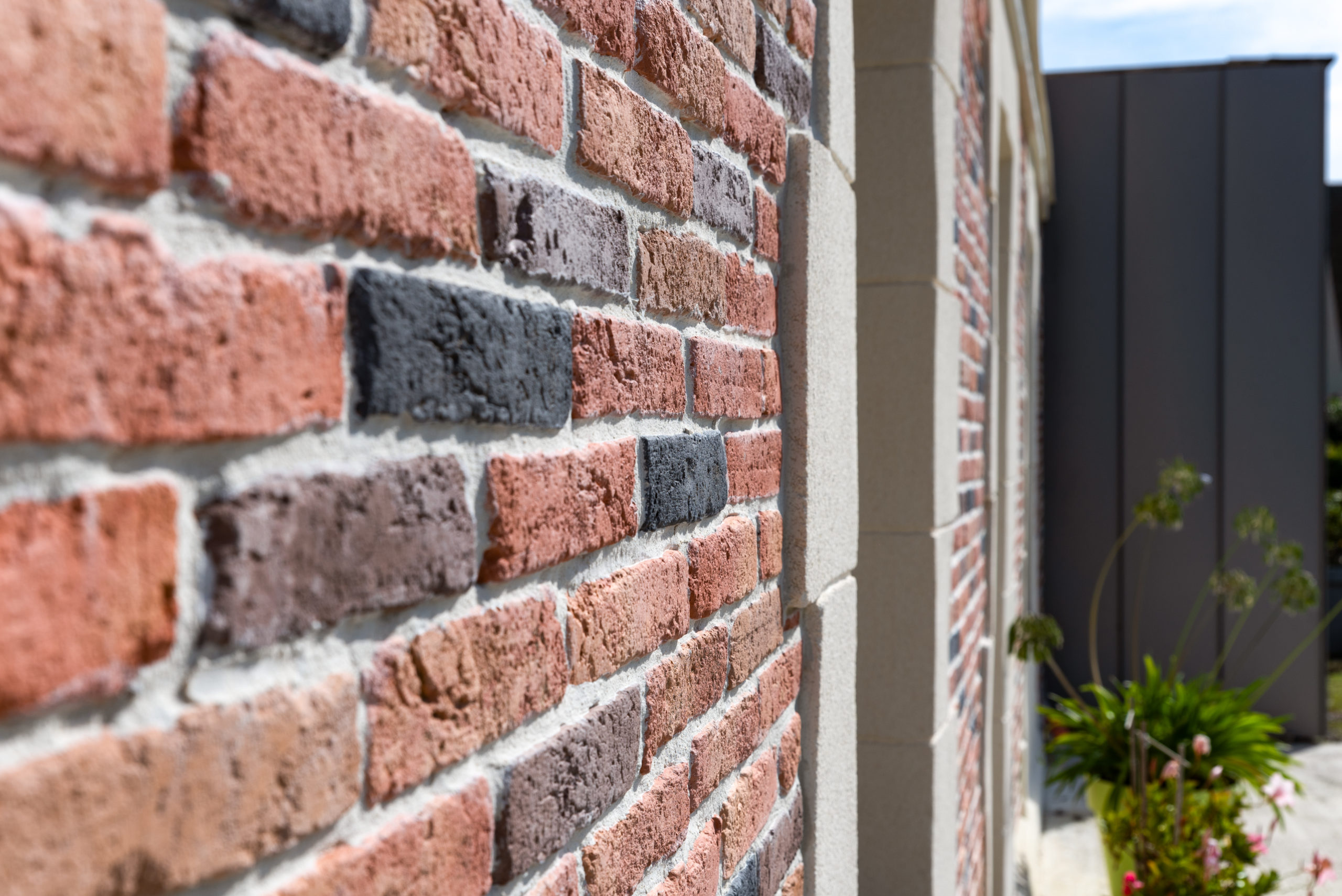
Find the Mortier Joint Mur, its technical data sheet, and the coverage chart on our “Preparation and Installation Products” page.
Choose Your Finish Based on the Collection and Intended Use
Depending on the cladding collection
Not all ORSOL cladding is grouted. Some tiles are installed edge-to-edge, with no visible joints. The “grouted” collections, such as Manoir, Meulière, or Roca, are installed stone by stone and then finished with mortar. It is with these collections that the color of the mortar matters.
- Manoir: The collection guide recommends beige mortar for the natural shade, white for the stone shade, and gray for the ash-gray shade.
- Millstone: Its yellow ochre and brown ochre tones call for an ochre shade to create a blended look faithful to the walls of Île-de-France, or beige to lighten the overall appearance.
- Roca: Its dry-stone appearance lends itself to a recessed joint in a shade similar to the stone.
Stones of various shapes and sizes, such as Manoir, work well with contrasting elements: the mortar creates an irregular pattern, reminiscent of an old wall.

Can a worn joint be replaced without removing the facing?
Yes. A cracked, powdery, or loose joint can be repaired without removing the facing, as long as the stones remain firmly attached to the substrate. This is also an opportunity to change the color or finish.
- Check that the stones are secure. Tap each area: a hollow sound indicates a loose stone, which must be reattached before any further work is done.
- Remove the old mortar. Use a scraper or fine chisel to remove the damaged section to a depth of 1 to 1.5 cm, taking care not to damage the edges of the stones or the adhesive.
- Remove dust. Brush and then blow out the gaps: the surface must be clean, dry, and of uniform depth.
- Moisten the surface and the edges of the stones (using a spray bottle or brush) without leaving any standing water.
- Fill with Wall Joint Mortar. Mix the 25-kg bag with 4.25 to 5 L of water and use within one hour. Fill the gaps with a jointing bag in dry weather, at temperatures between 5 and 30 °C. The substrate temperature must be below 35°C
- Brush for the finish. When the mortar begins to set, brush with a soft steel brush; indent a few millimeters to create a recessed effect.
- Protect outdoors. Once drying is complete, apply ORSOL colorless water repellent to the entire wall.
FAQ
What grout color should I choose if I’m not sure?
A shade similar to that of the stone (blended grout). It highlights the material and hides minor installation imperfections.
Is a white grout on a stone wall a good idea?
Yes, on light-colored or warm-toned stone, to brighten up the wall. Outdoors, it gets dirty faster than a beige or gray shade.
What joint width should you use?
Wall Joint Mortar is designed for joint widths ranging from 5 to 50 mm. Outdoors, regulations (NF DTU 52.2) require a minimum joint width of at least 6 mm (for stone slabs) to 10 mm (for stones): refer to the cladding installation instructions.
How long should you wait between installing the siding and caulking the joints?
At least 24 hours after installation. The surface will then be dry to the touch in 4 to 6 hours (protect from direct sunlight and heavy rain while drying).
Is a recessed joint suitable for outdoor use?
Yes, provided you cut the joints very shallowly (2 to 3 mm maximum), without creating a horizontal ledge that traps rainwater. Applying a water-repellent finish is essential to prevent water infiltration.
Where can I buy ORSOL Wall Joint Mortar?
At ORSOL retailers, building supply stores, and partner distributors. Find the one nearest you on the Contact page.