
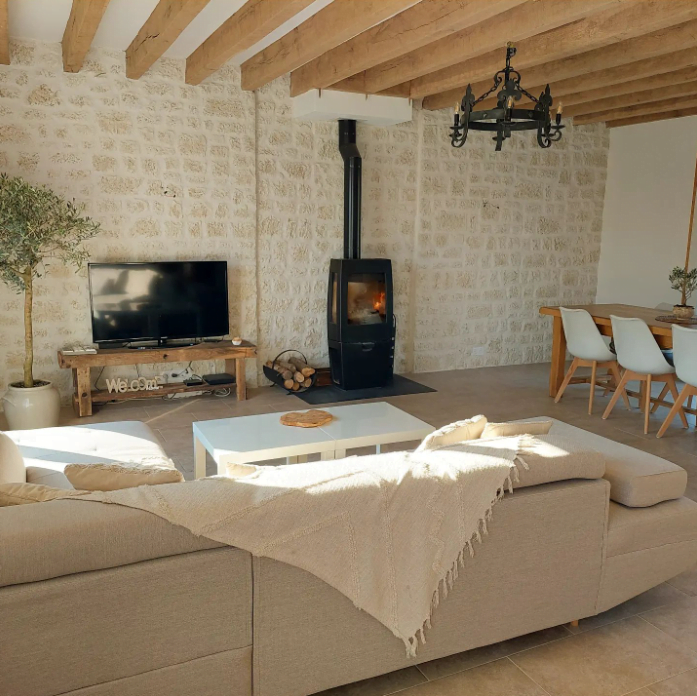
Facing stones are part of the resurgence of the neo-rustic style in interior design. In a living room, entryway, or open-concept kitchen, they add texture to spaces that are often white, smooth, or very minimalist. This trend reflects a clear goal: to recapture the warmth of natural materials without replicating the decorative styles of older homes.
What is the neo-rustic style?
The neo-rustic style, or new rustic style, adds a contemporary decorative touch to the traditional charm of rural homes. This modern approach reinterprets the material palettes found in 19th-century barns and old farmhouses.
From decor featuring elegant furniture to the choice of cotton, linen, or wool fabrics to drape over the sofa, the neo-rustic style reimagines the distinctive lifestyle that once animated spaces of yesteryear, infusing it with modern, brighter, and softer elements.
Where should you install a stone accent wall in a neo-rustic interior?
A stone accent wall makes a stronger statement when it serves a specific purpose. In a neo-rustic interior, it can define the living room, add character to an entryway, or bring warmth to an open-concept kitchen. Its placement should reflect how the room is used on a daily basis.
Stone works best when it remains visible from the main thoroughfares. A wall placed opposite the entrance, behind a seating area, or near a table immediately catches the eye. It serves as a focal point in the space and prevents the material from being scattered across several secondary areas.
In the living room to define the space
The living room remains one of the best places for a stone accent wall. Behind a sofa, around a stove, or on the main wall of the living room, stone creates a sense of depth that paint alone cannot achieve. It also provides a warmer backdrop for low-profile furniture, light-colored textiles, and lighting fixtures made from natural materials.
In an open-concept living area, wall finishes can help define different zones without using partitions. A textured wall behind the relaxation area defines the living room, while the kitchen and dining room feature smoother surfaces. This layout works well in contemporary homes, where open floor plans sometimes call for stronger visual anchors.
In an entryway to highlight the home’s identity
A stone entryway sets the tone right from the threshold. Whether on a side wall, around a door, or near a staircase, the stone cladding makes an immediate impact in a space that is often narrow and functional. The rustic style becomes more apparent here, as the material catches the eye even before you enter the living areas.
The stone should be well lit in this area. Low-angle lighting, a wall sconce, or a pendant light placed near the textured surface helps highlight its texture. In a dark entryway, light-colored stone or subtle grout helps prevent the space from feeling too dark.
In a kitchen or dining room to create a warm, inviting atmosphere
Stone wainscoting can also be incorporated into a kitchen or dining room, provided it’s used in a specific area. A wall behind a table, a feature wall in an open-concept kitchen, or the back of a niche can accommodate this material without interfering with daily use. The stone cladding then creates a cohesive backdrop for mealtimes, in a space where wood, ceramic, and metal already come together.
Around a fireplace or stove, stone further enhances this feeling of warmth. ORSOL has dedicated an article to fireplace surrounds, a design that fits perfectly with the neo-rustic style. Here, stone serves as a mineral backdrop that complements the light of the fire and adds depth to the space.
Why do facing stones fit so naturally into this trend?
Facing stones lend the neo-rustic style a visible yet controlled material quality. They add depth to a wall, capture the play of light, and introduce a mineral texture into interiors that are often designed around simple lines. Their appeal lies in their ability to warm up a room without making it feel cluttered.
In a modern rustic design, stone serves as a focal point, placed in a specific location. This choice helps keep the room bright while creating a visual anchor that is immediately noticeable.
Add depth without making the space feel cluttered
Wall cladding adds depth to a room when the other surfaces are kept more understated. On a white wall, stone cladding creates a contrast in texture. Paired with a wood floor or furniture with clean lines, it introduces a more raw material that brings the space to life.
The balance is key. In a living room, a stone wall behind the sofa is often enough to change the feel of the room. In a dining room, a stone feature behind a large table creates a warm backdrop, especially when paired with a low-hanging pendant light and natural materials.
Incorporating a mineral material into a contemporary design
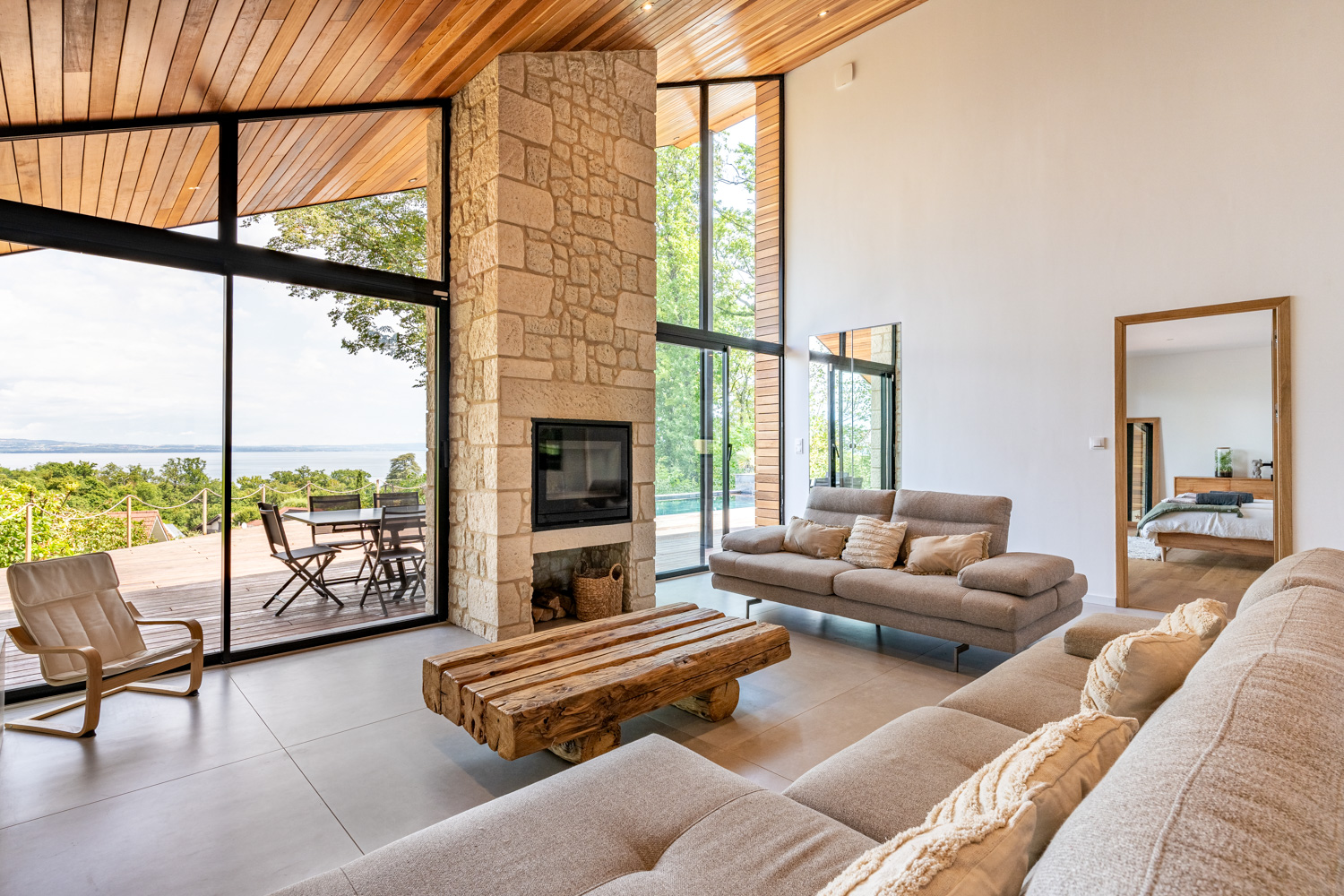
Stone wainscoting adds depth to contemporary interiors. It balances large windows, light-colored floors, low-profile furniture, and white walls. Its texture prevents the space from looking too sterile, especially in newly built homes or open-concept renovations.
This mineral quality also works well with more modern materials. Black metal, glass, sleek light fixtures, and anthracite-colored woodwork give the stone a more contemporary feel. The neo-rustic style lies precisely in this interplay between an expressive material and a more understated architectural setting.
Which ORSOL collections are best for a neo-rustic interior?
The choice of an ORSOL cladding depends on the level of texture, the dominant color, and the desired interplay with other materials. A neo-rustic interior might call for a light, luminous stone, a more traditional stone, or a more contemporary dry-stone look.
Collections should therefore be chosen based on the room’s ambiance. A living room with white walls and light wood flooring does not call for the same wall covering as a renovated historic home or a contemporary living room with black metal accents and large picture windows.
More pronounced contours for a bold look
A more textured finish immediately adds character to a room. The irregular texture, visible joints, and more contrasting shades evoke the look of old walls, while still fitting into a modern interior when used in a specific area.
The Manoir wall panel fits this description perfectly. Its look, inspired by character stones, is well-suited to renovated homes, living rooms with fireplaces, or rooms seeking a more traditional feel. Paired with furniture featuring clean lines, it adds a striking visual interest without making the overall decor feel too cluttered.

Mineral-inspired designs suited to contemporary interiors
The neo-rustic style can also take on a more contemporary look. In this case, dry-stone walls, grayish tones, or more graphic textures help give the space a modern feel. The natural materials remain prominent, but the room’s lines retain their simplicity.
Roca cladding fits perfectly into this aesthetic. Its dry-stone look and installation on mesh allow for a textured wall with a more uniform appearance. It is particularly well-suited to interiors where stone complements light wood, black metal, mineral flooring, or large glass windows.
How can you avoid the traditional rustic look?
The traditional rustic look emerges when stone is the dominant element or when it is paired with overly predictable materials. In a neo-rustic interior, stone should retain its texture, but the overall design benefits from a understated approach: a limited color palette, furniture with simple lines, and well-designed lighting.
Limit the stone to a wall or a specific area
A single stone wall is often enough to transform the atmosphere of a room. In a living room, the stone cladding can cover the main wall, the fireplace area, or a feature wall visible from the entryway. In a kitchen, it can be placed behind a table or in a niche, rather than covering all available surfaces.
This concentration makes the stone stand out more clearly. It also prevents the space from appearing smaller, especially in medium-sized rooms. The neo-rustic style works best when the material draws the eye without overwhelming the space.
Combine stone with more understated materials
The understated materials give the stone a more contemporary look. The anthracite woodwork creates a striking contrast with the texture of the stone cladding. The stone remains striking, but the room retains a modern feel.
The neo-rustic style offers an interesting direction for contemporary interiors: rediscovering the power of materials without reverting to a rigid design aesthetic. Facing stone plays a specific role in this style. It adds texture, captures light, and gives the room a tangible sense of grounding—provided it is paired with clean lines, subdued tones, and materials chosen with care.