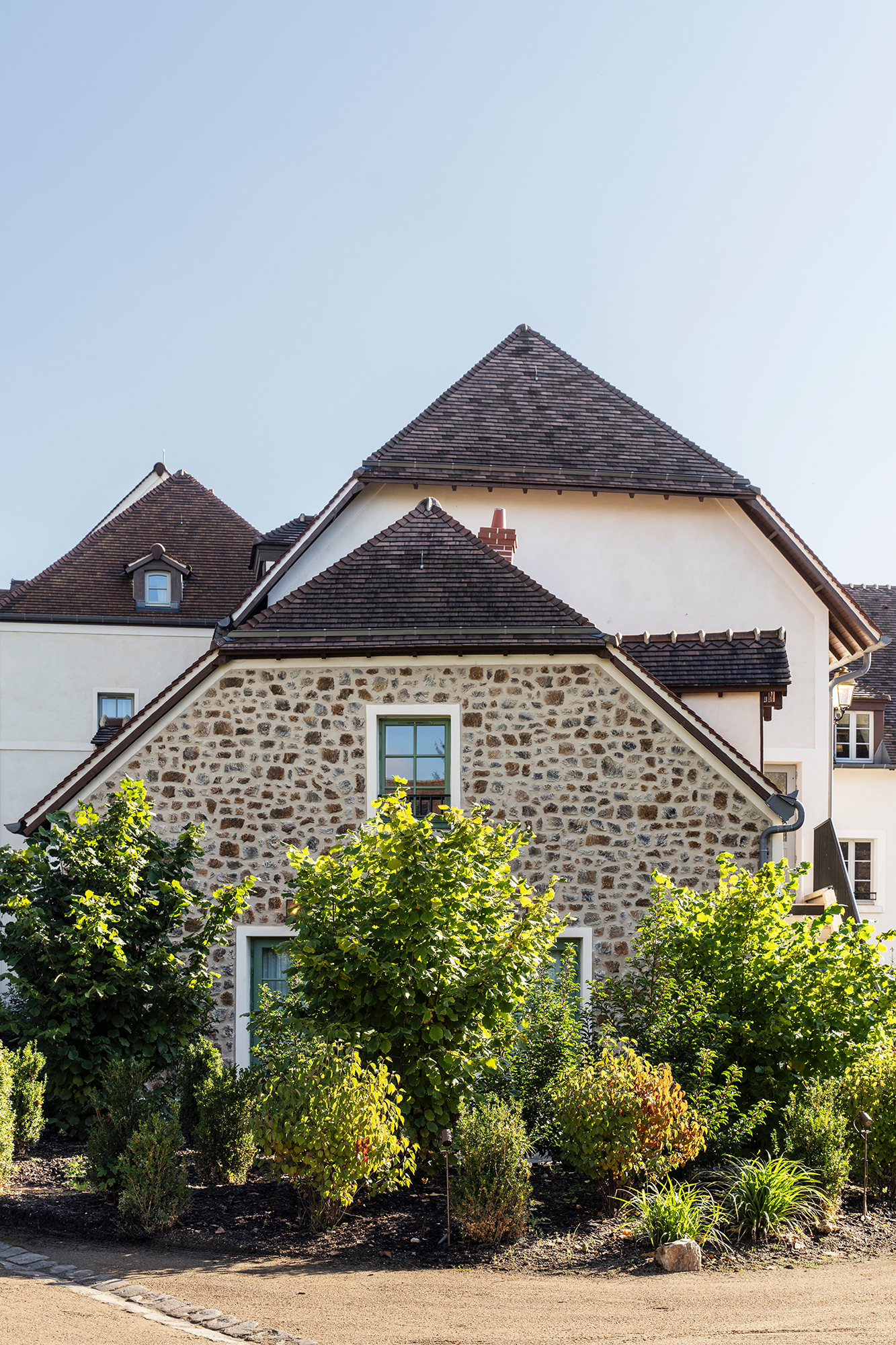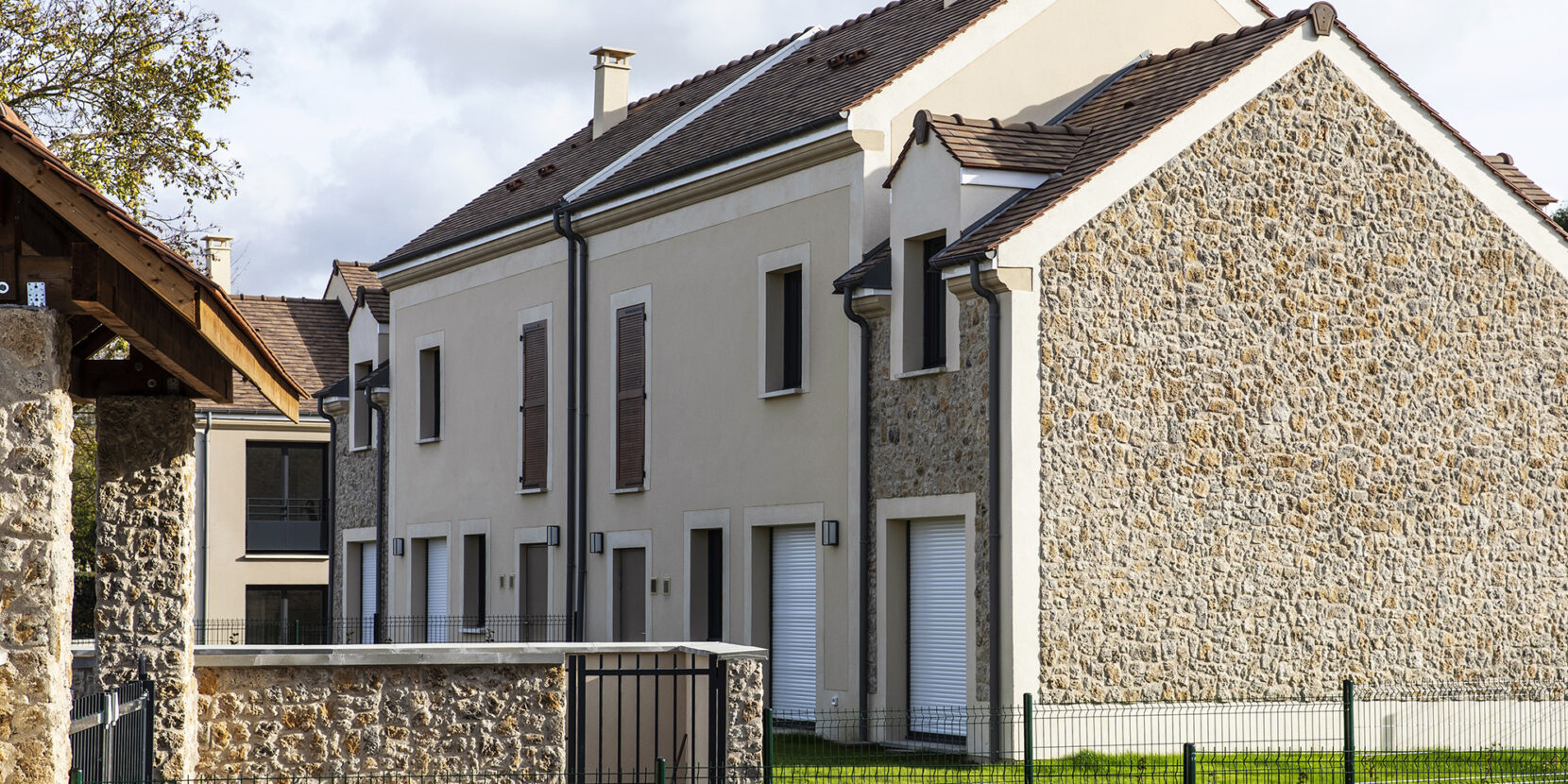
Photo credits: Thomas Behuret
Recognizable by their irregular facades in shades of ochre and brown, millstone houses are part of the architectural heritage of the Île-de-France region. Their charm lies in a blend of materials, textures, and decorative details. It’s possible to recreate this aesthetic in a new construction or renovation project using millstone-effect siding. However, it’s essential to choose the right shades and adhere to the key design principles of this traditional architectural style.
What are the characteristics of a millstone-stone house?
Very common in the Île-de-France region, millstone houses were built primarily between the late 19th century and the 1930s. They are constructed from a siliceous rock with naturally warm hues, ranging from brown to orange-ochre.
Their facades feature several distinctive characteristics:
- Irregular masonry: the stones are assembled into rubble of varying sizes and shapes, without a regular alignment.
- Decorative joints: sometimes crafted using the “rocaillage” technique, they may incorporate small fragments of stone, flint, or ceramic.
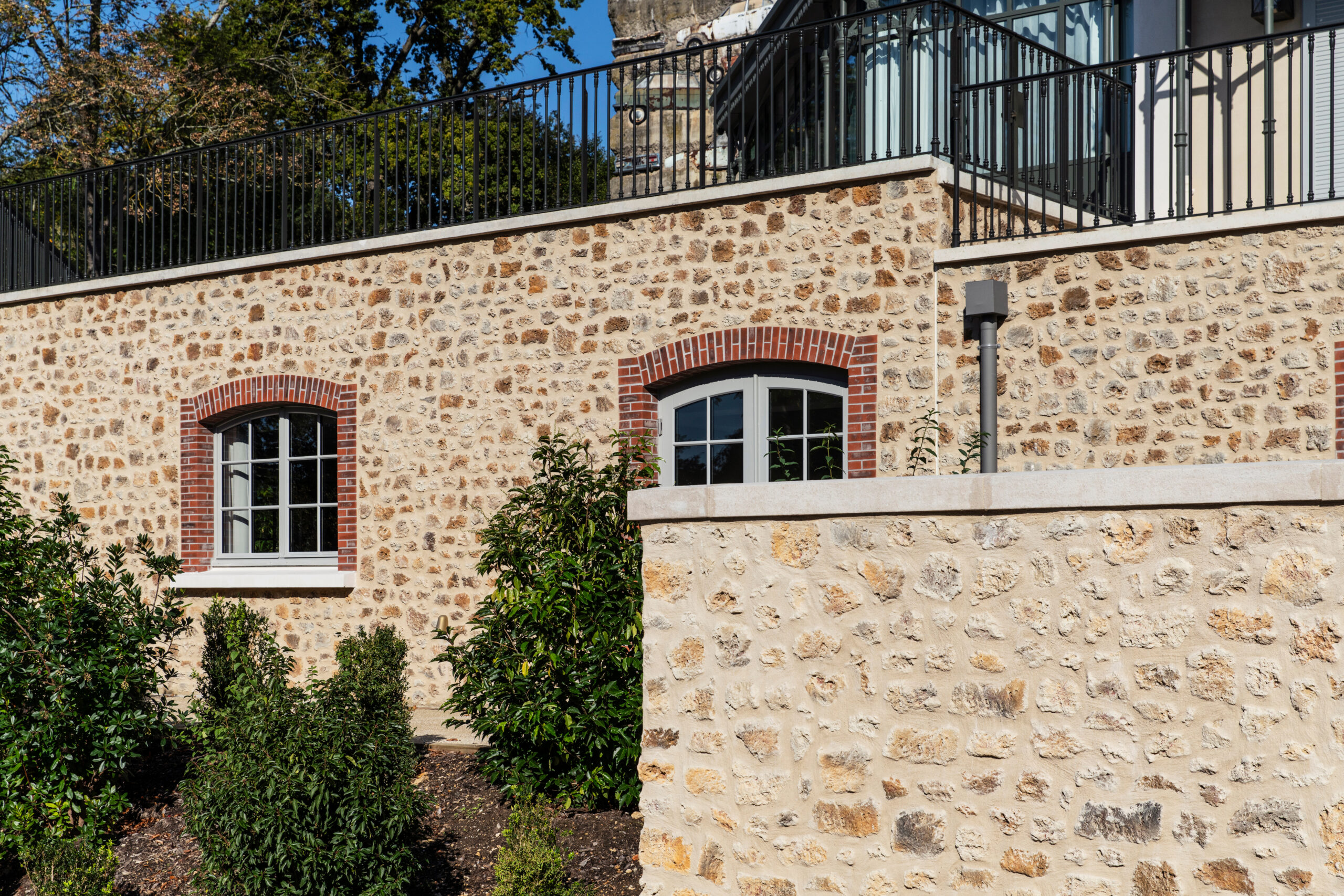
- Brick elements: Red or orange bricks accentuate window frames, corners, cornices, and certain bands.
- Architectural details: ironwork, canopies, ornate woodwork, and contrasting frames complete the overall design.
It is, therefore, the combination of rough-hewn stone, mortar joints, and other materials that gives a millstone house its distinctive character. To recreate this style, you need to consider the facade as a whole rather than simply covering a wall with siding.
How can you replicate the style of a millstone house with cladding?
Milling stone-look cladding allows you to recreate the irregular appearance and color variations of the stone without using natural blocks. It is suitable for new construction projects as well as certain renovations, provided that the compatibility of the substrate and the installation system is verified.
To achieve a harmonious look, there are several choices that deserve special attention.
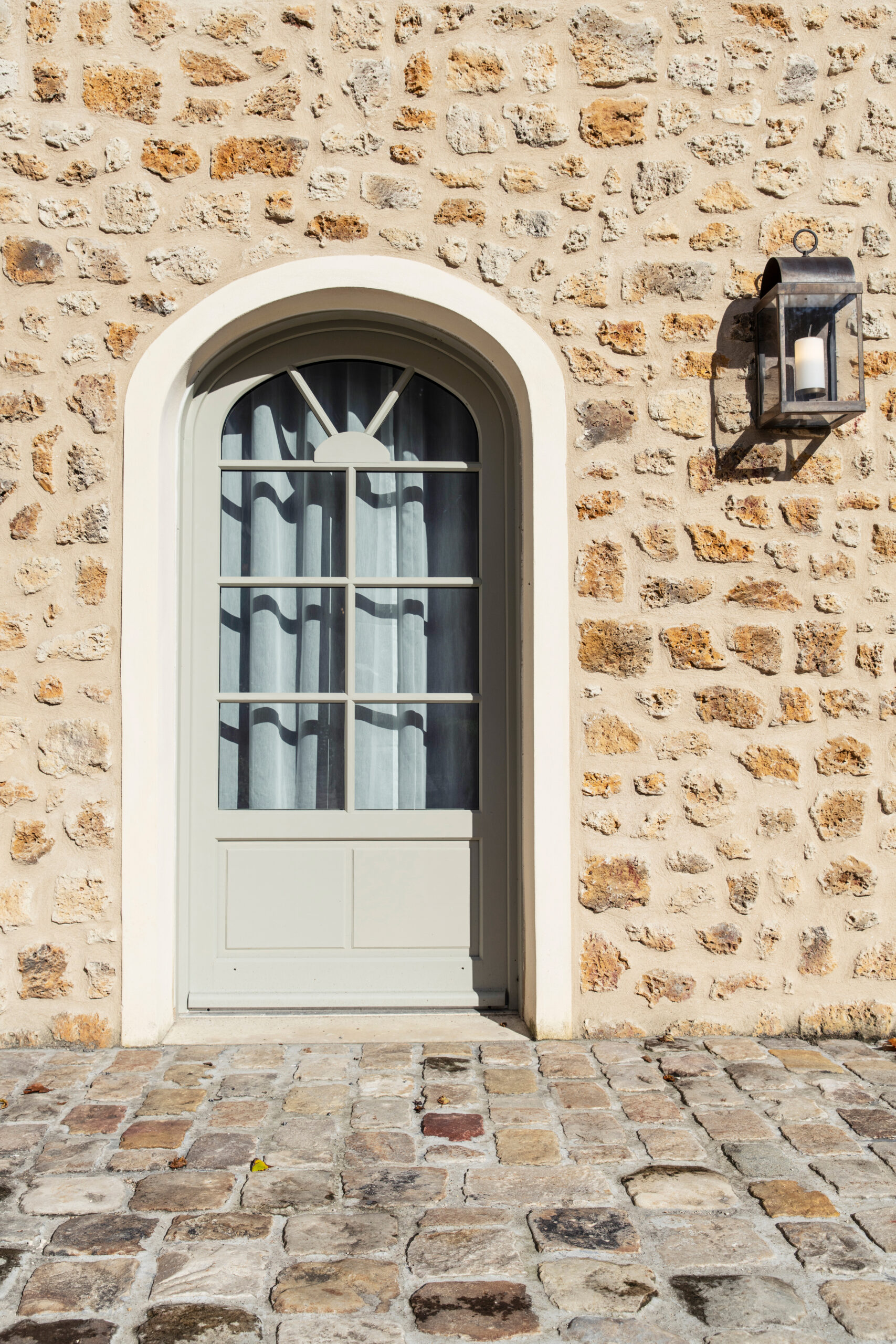
Opt for warm, nuanced shades. Ochre, brown, and beige tones evoke the traditional colors of millstone facades. They can be paired with off-white or cream-colored stucco to bring in light. The contrast with dark window and door frames also helps highlight the openings.
Focus on volumes and framing. Rather than systematically cladding the entire facade, the stone can be used on the base, around the entrance, or on a gable. Finishing elements at the corners and around the windows enhance the architectural character. It is also possibleto combine stone with white stucco or wood siding to create a more contemporary facade, without losing the mineral character of the cladding.
The Meulière ORSOL collection embodies these characteristics precisely. Its stones feature deep reliefs, a rough surface, and a cavernous, shell-like appearance. Three shades are available: yellow ochre, brown ochre, and natural. The shades are blended throughout the stone to ensure a uniform color.
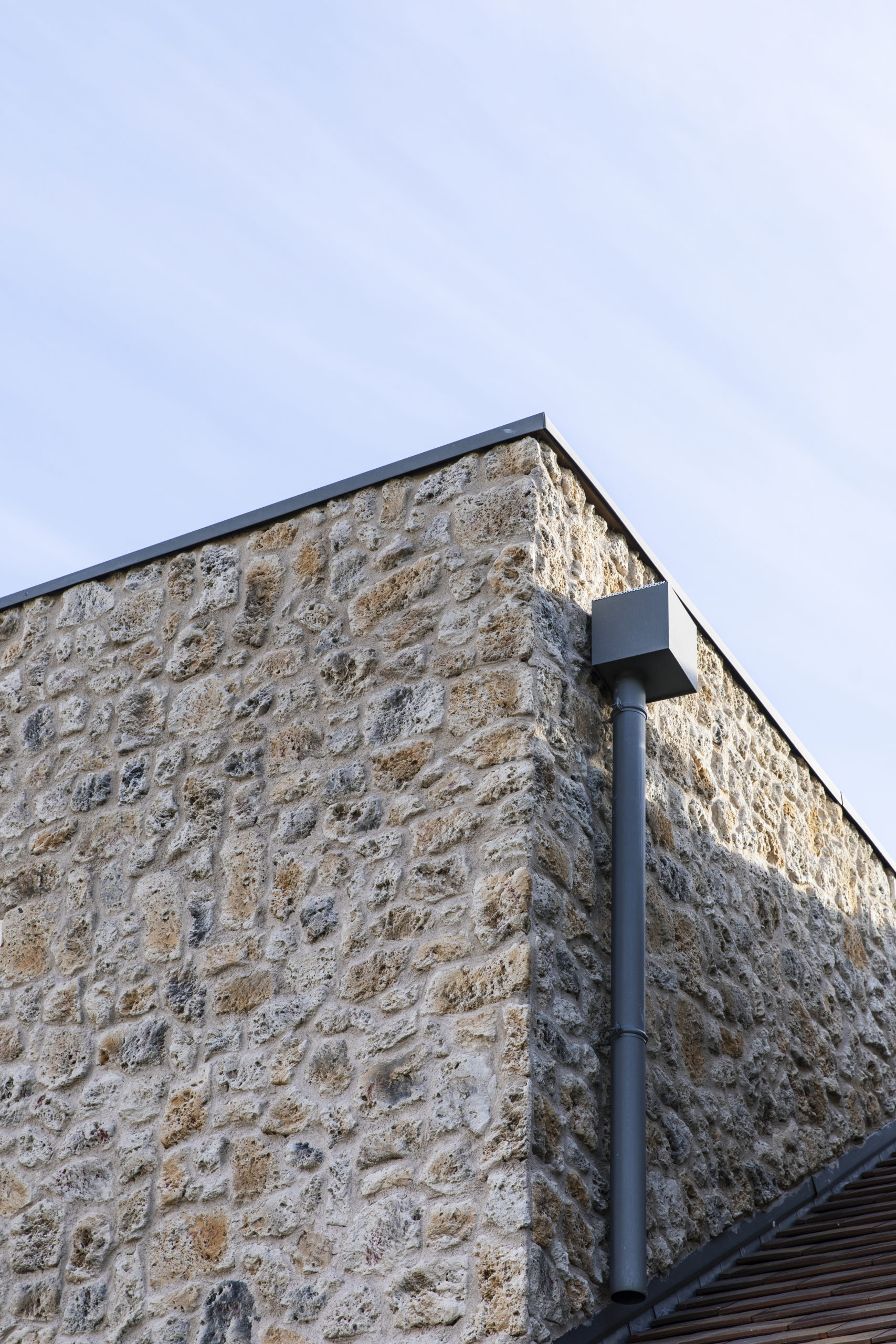
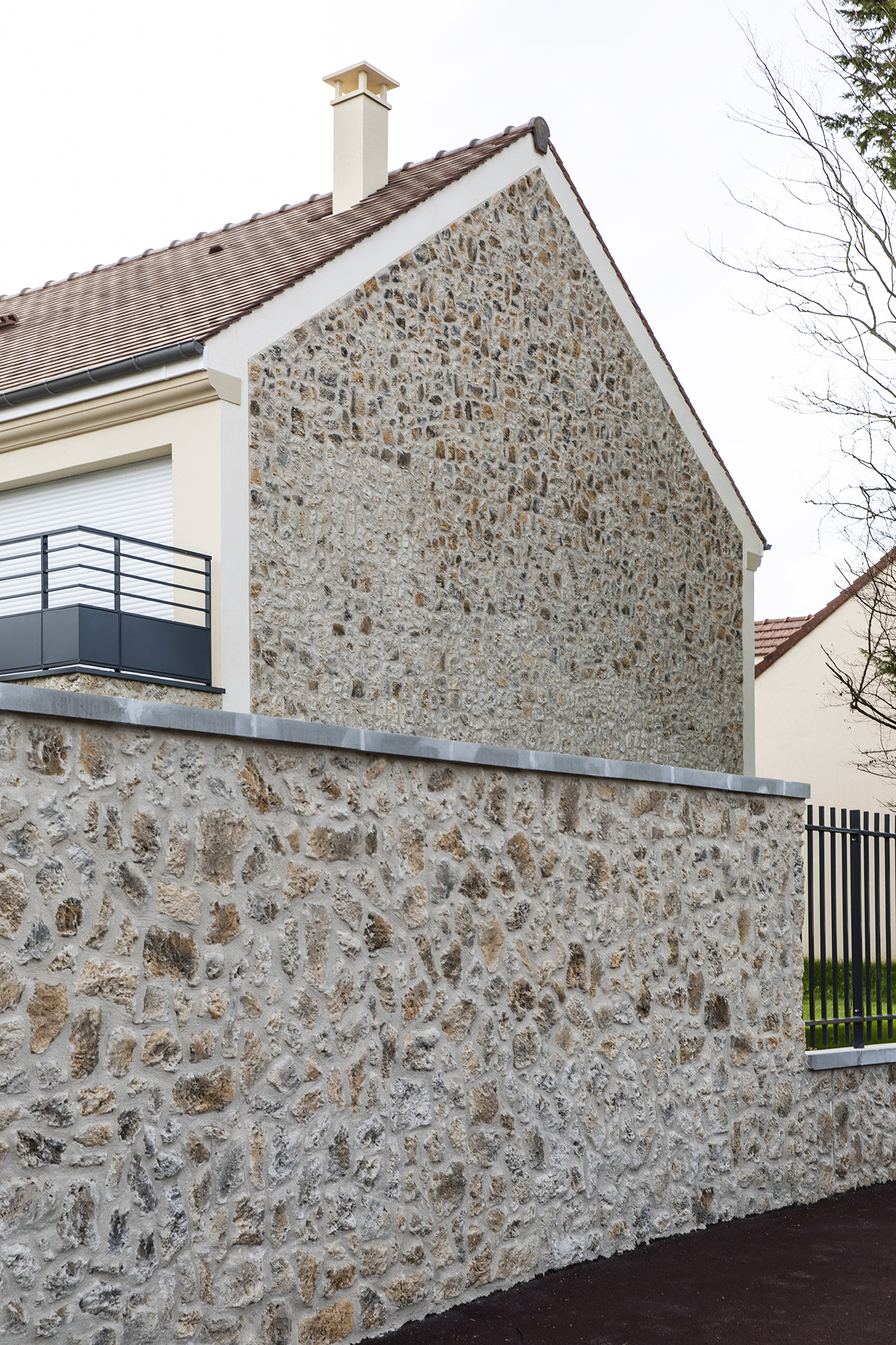
Made from NEOMINERAL, this decorative cladding replicates the appearance of millstone using an engineered mineral material, without the use of natural stone blocks. Its 3-cm-thick elements are installed stone by stone using adhesive, with grouting as a finishing touch. To complete the look, ORSOL also offers finishing elements from the MANOIR and BRECY collections: corners, lintels, and window sills.
A concrete example helps illustrate the result: during the renovation of the Domaine de Montcel, a castle-hotel in the Yvelines department, the Meulière collection in a brown ochre shade was chosen to clad the facades. Its textured surface and warm tones recreate the look of historic masonry while maintaining an elegant architectural aesthetic.
What is the budget for a facade with imitation millstone cladding?
The price depends on the material chosen, the surface area to be covered, and the complexity of the project. For ORSOL Neomineral stone cladding, the approximate price range is between €50 and €100 (including tax) per square meter for the cladding alone, depending on the collection.
For example, to cover a 20 m² surface, you should budget between €1,000 and €2,000 (including tax) for the cladding. This amount does not include installation materials, grout, finishing accessories, surface preparation, labor, or delivery. This is a general estimate for the Néominéral collections and does not apply specifically to the Meulière collection.
Corners, cutouts around openings, and irregularities in the facade can also increase the budget. It is therefore best to request a quote tailored to the building’s layout. To get a more accurate estimate, see our guide on the cost of wall cladding per square meter.
Finally, before starting the work, be sure to order a sample. This will allow you to compare shades and observe the texture of the cladding in natural light. However, for a genuine historic house built of millstone, prioritize preserving the original materials rather than systematically covering them up. A preliminary assessment will help determine the appropriate course of action.
Recapturing the charm of a millstone house depends above all on striking the right balance between the stone, the joints, and the decorative elements. With its textured surface and nuanced hues, the ORSOL Meulière cladding allows you to incorporate these architectural elements into both contemporary and traditional projects.