
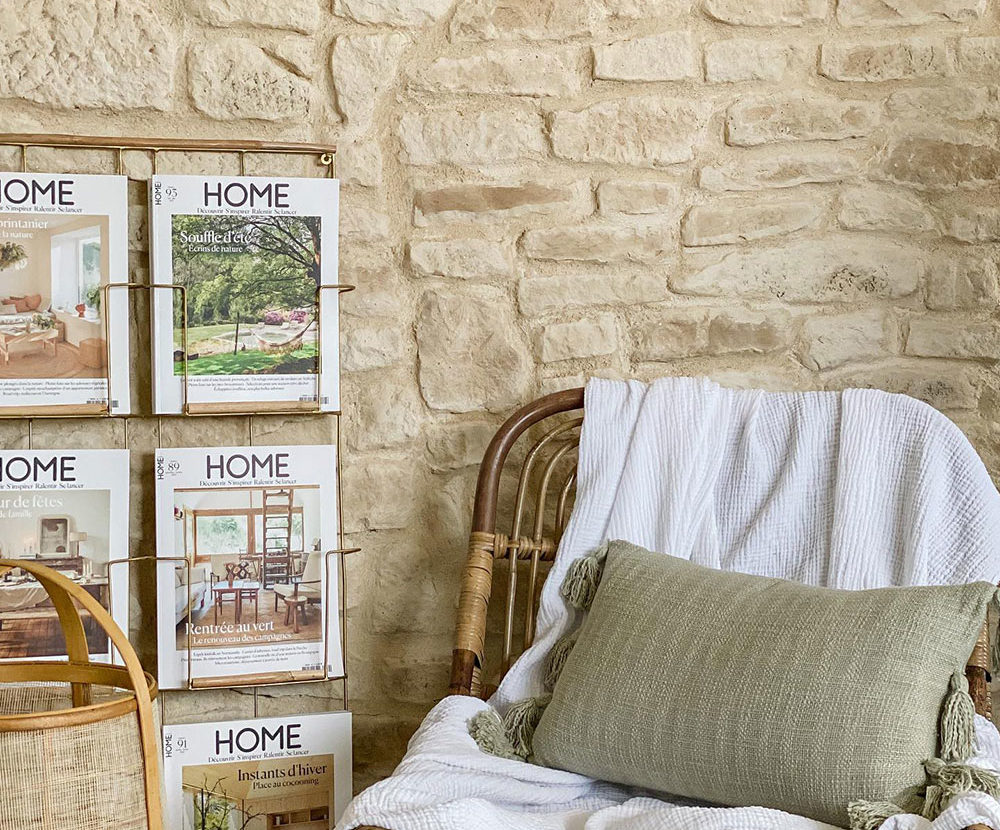
A stone-effect wall costs less than €5 per square meter with entry-level wallpaper and can reach €100 per square meter with a stone-effect panel, not including installation. This range reflects very real differences in texture, weight, and moisture resistance. Stone veneer, tile, decorative slabs, and concrete panels each occupy a specific place between these two extremes. The room being decorated, the nature of the substrate, and the expected lifespan therefore guide the choice well before the question of style comes into play.
What Sets Stone-Effect Coverings Apart
Some cladding materials rely on visual imitation, while others retain a genuine mineral composition. Their price, weight per square meter, and behavior when exposed to moisture vary significantly from one type to another.
Stone veneer: a thin, lightweight cladding
Stone veneer consists of a thin layer of natural stone—usually slate or quartzite—bonded to a fiberglass and resin backing. It can be applied to flat or slightly curved surfaces.
Its appearance closely resembles that of natural stone, with variations in color and veining. However, its shallow texture does not replicate the depth of a genuine exposed-stone wall. Installation also requires a clean, level, and stable surface, as well as the appropriate adhesive and finish. Some models are suitable for damp rooms, provided the manufacturer’s instructions are followed.
Stone-effect wallpaper: a quick decorative solution
Stone-effect wallpaper replicates the shapes, colors, and sometimes the shadows of a stone wall. Embossed designs, often made of expanded vinyl, provide more texture than a standard print.
Its main advantage is its ease of installation and generally affordable cost. It makes it easy to change the look and feel of a room without undertaking major renovations. However, the result is purely decorative: it lacks both the depth and the mechanical strength of a mineral-based flooring material.
In a kitchen or bathroom, it’s best to choose a washable vinyl wallpaper designed for damp areas. Even then, you should avoid areas directly exposed to water splashes.
Gypsum boards and concrete panels
Decorative plaster panels feature stone-like textures or three-dimensional patterns. They are relatively lightweight and easy to cut. However, plaster is susceptible to moisture and impact. You should therefore make sure the product is suitable for the room before installing it, especially in a bathroom.
Concrete or cement-based panels, on the other hand, offer a more pronounced mineral look. They add texture and a visual presence similar to certain raw materials. However, their weight can make them difficult to handle and install. You should also check the panel’s specifications and finish to ensure it is suitable for use in wet areas.
In summary:
- Stone-effect wallpaper: a natural material that is thin and lightweight, but with limited texture.
- Stone-effect wallpaper: quick to install and affordable, but primarily a visual effect.
- Plasterboard: decorative texture and easy to cut, but sensitive to moisture.
- Concrete panels: a mineral look and durability, but weight and installation constraints must be considered.
- Neomineral cladding: mineral texture, pronounced texture, and a design built to last.
How do you choose based on the room and the look you want?
The living room is a great place to create an accent wall. To achieve a chic look without breaking the bank, you can focus the wallpaper on a single wall section—behind a sofa or around a fireplace. Stone-effect wallpaper is ideal for a decor scheme that’s easy to update. For a more authentic look, a wall panel adds real depth thanks to its texture and subtle shades.
In a dark room, opt for light colors: beige, off-white, or natural stone. They help maintain a sense of brightness. If the wall gets a lot of light, also observe how the wall covering looks at different times of the day. A sample allows you to better appreciate the nuances and textural effects. For wallpaper, also check its UV resistance if the manufacturer lists this feature.
In a kitchen or bathroom, moisture resistance is a key consideration. Traditional wallpaper or unprotected drywall isn’t suitable for every situation. Before purchasing, check the conditions of use, any necessary treatments, and installation recommendations. To narrow down your selection, also check out our tips for choosing the right wall covering.
ORSOL Neomineral wall cladding to create an interior stone wall
To give an interior wall a genuine stone look, wall cladding offers a more authentic finish than a simple printed covering. Its texture, color variations, and relief create depth and play with the light. It can thus transform an ordinary wall into a focal point of the decor.
In a living room, it fits easily behind a sofa, around a TV stand, or on a section of wall designed to catch the eye. In an entryway or dining room, it adds a mineral-like touch and helps visually structure the space. You don’t need to cover all the walls—a single surface is often enough to give the room character.
The choice of design then depends on the desired ambiance. Irregularly shaped stone is well-suited to an authentic or rustic decor, while cleaner lines blend into a contemporary interior. In a room with limited natural light, light shades such as beige or natural tones help maintain a bright atmosphere. Deeper shades, on the other hand, create an interesting contrast with solid-colored walls and understated furniture.
With its collections of wall coverings, ORSOL offers a variety of textures and finishes to personalize interior spaces. Made from NEOMINERAL®, these wall coverings combine a predominantly mineral-based composition with a look reminiscent of natural stone. They thus offer a sustainable alternative to stone-effect wallpaper, featuring genuine texture and a material that feels pleasant to the touch.
Unlike a decorative solution that can be easily replaced, wall cladding is part of a long-term design project. The choice of model must therefore take into account the style of the room, the surface to be covered, and the constraints of the substrate.