How can you make a hotel room feel cozier with a stone wall?
Inspiration 20 Oct 2026
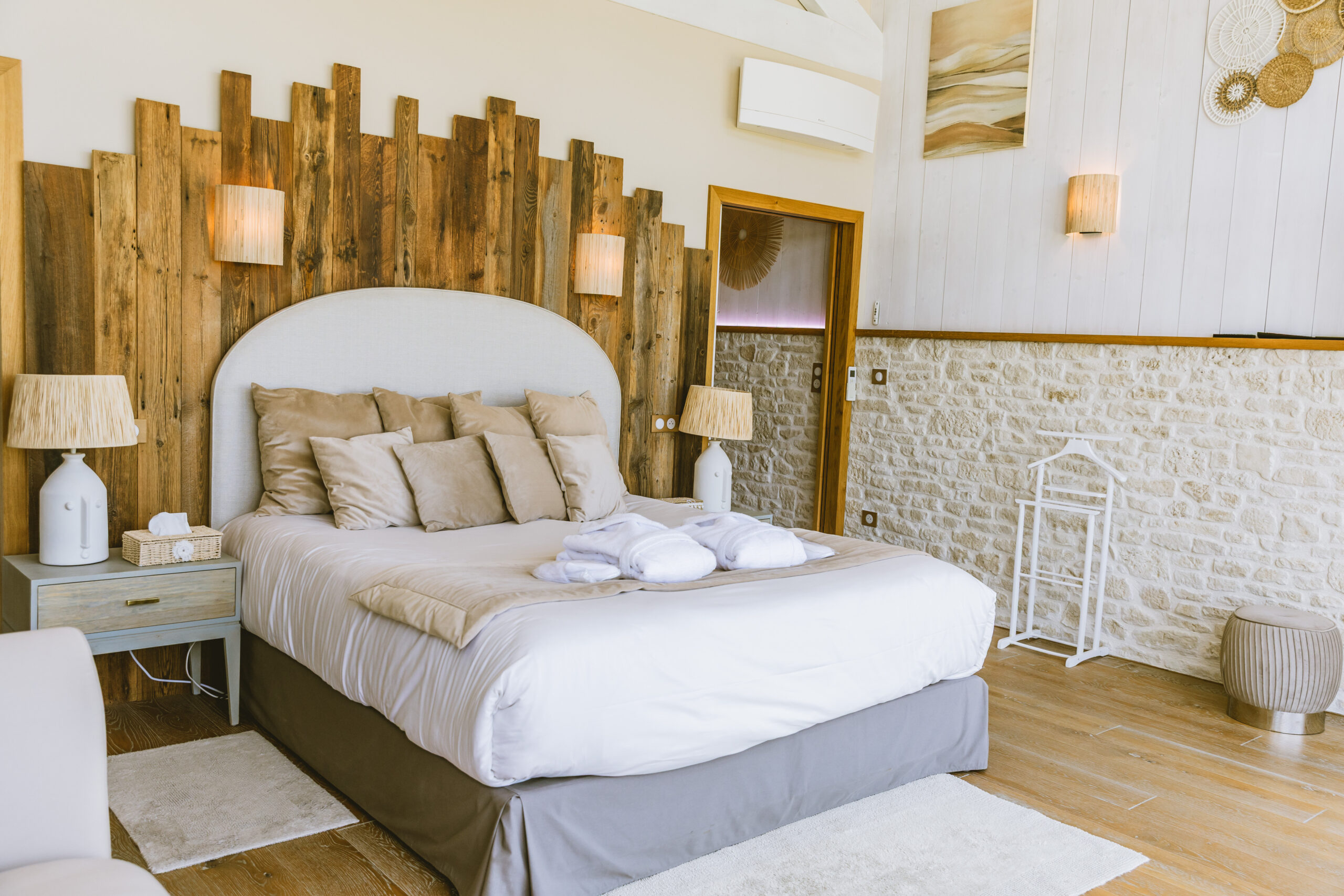
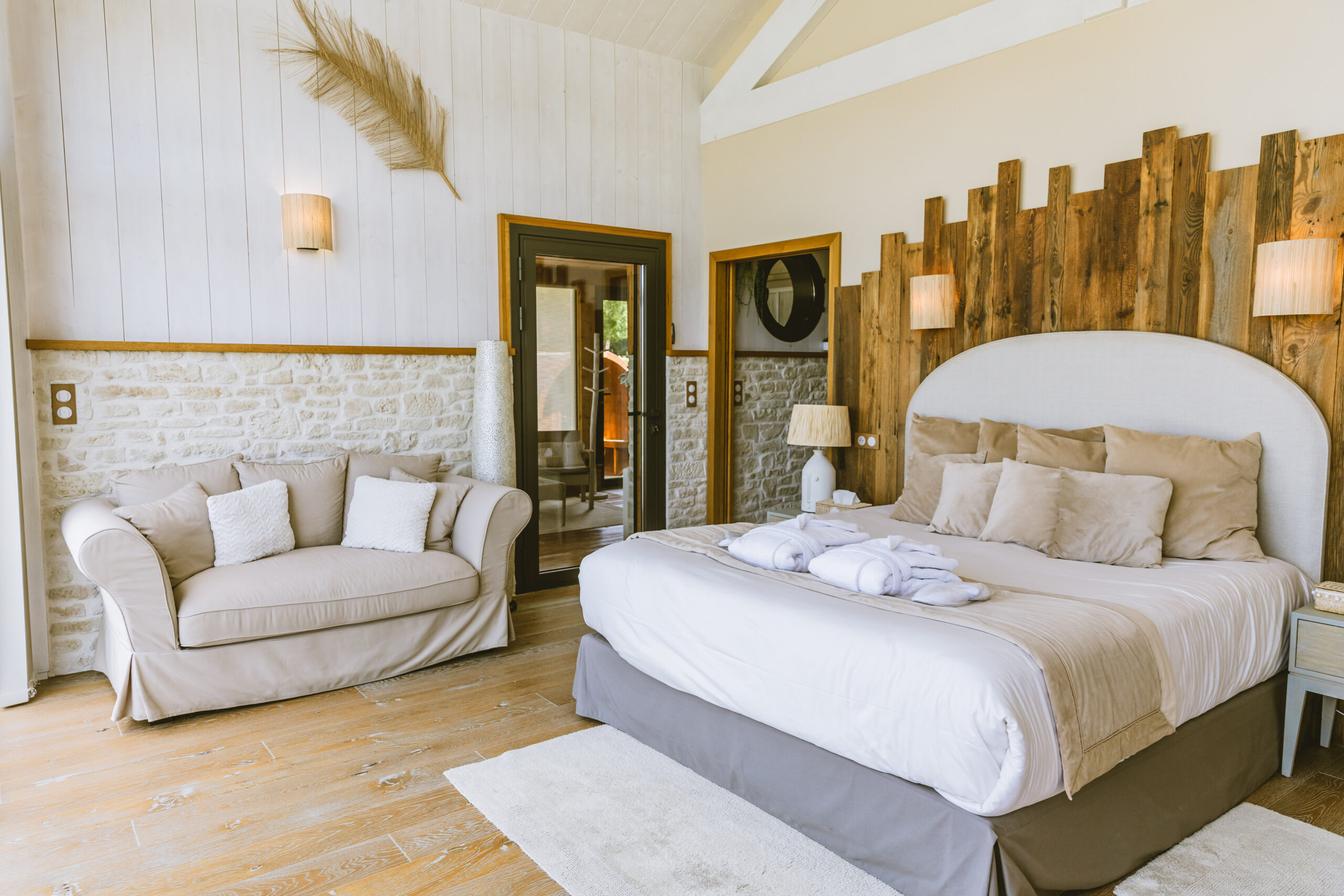
In a hotel, the decor directly contributes to the guest experience. Beyond the comfort of the bedding and the quality of the amenities, the atmosphere of the room contributes to a sense of well-being. To create a welcoming setting, stone cladding adds a natural touch, texture, and character. Whether incorporated behind the headboard or on an accent wall, stone transforms the decor of a hotel room without adding too many decorative elements.
Why choose a stone wall in a hotel room?
Stone adds a mineral element that contrasts with the smooth surfaces and clean lines of contemporary bedrooms. Its textured surface creates a play of light and shadow that lends depth to the room. It also helps define a specific area—such as the sleeping area—without partitioning off the bedroom.
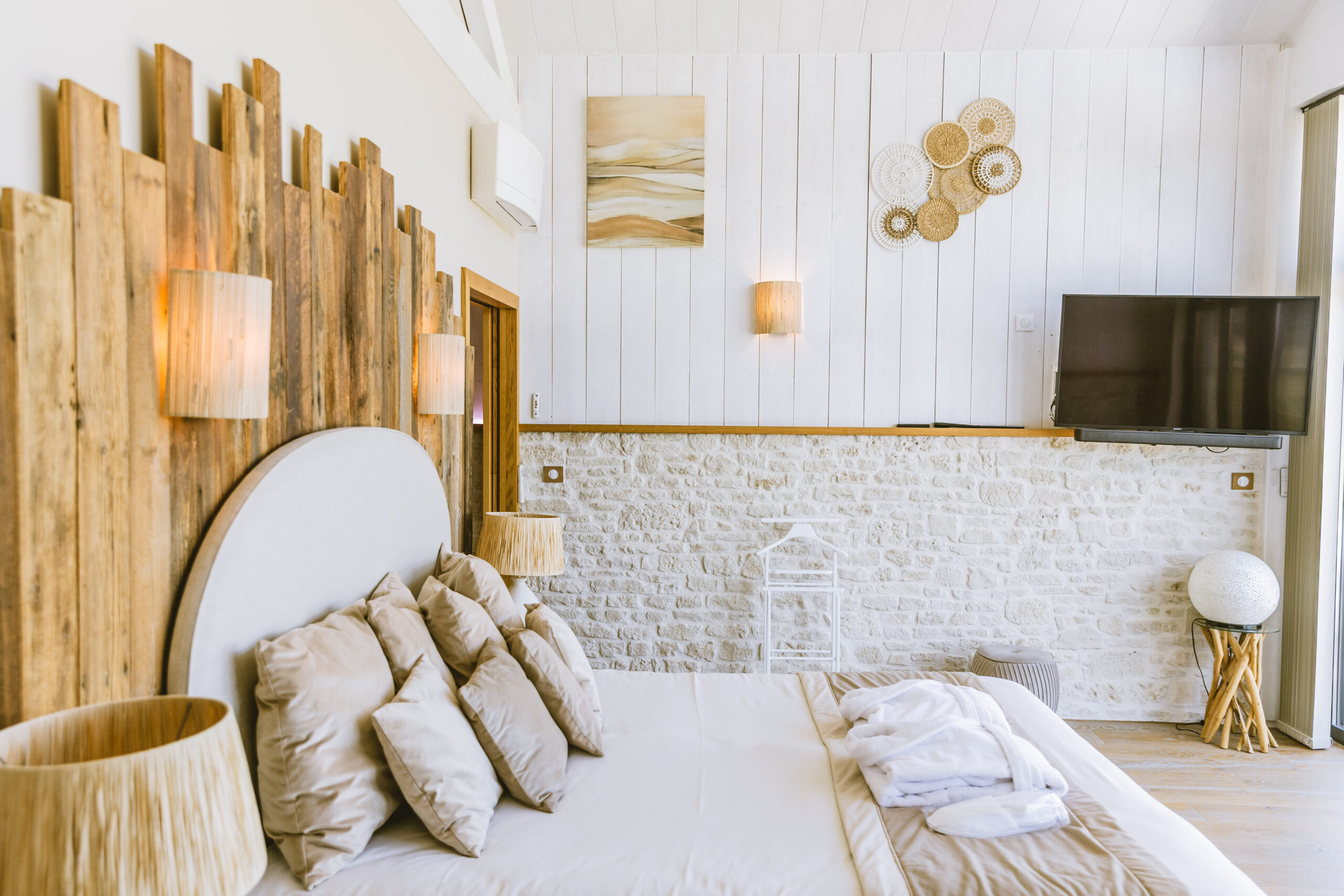
The wall behind the headboard is a prime spot. It catches the eye as soon as you enter and frames the decor around the bed. A stone or brick accent wall can thus become the centerpiece of the design, while minimizing the need for accessories.
This choice works equally well for boutique hotels and urban properties seeking a strong visual identity.
Which stone should you choose for a warm hotel room design?
The choice of cladding depends on the atmosphere the establishment wishes to create.
Natural tones for a soothing atmosphere
Beige, sand, and light stone tones enhance the brightness and create a soft, soothing atmosphere. Paired with white bedding, wood, and natural textiles, they come together to create a setting that promotes rest.
Deeper shades, such as gray or earth tones, add contrast and highlight the wall’s character. To maintain the room’s balance, it’s best to pair these shades with more neutral colors.
Brick for an Urban and Industrial Style
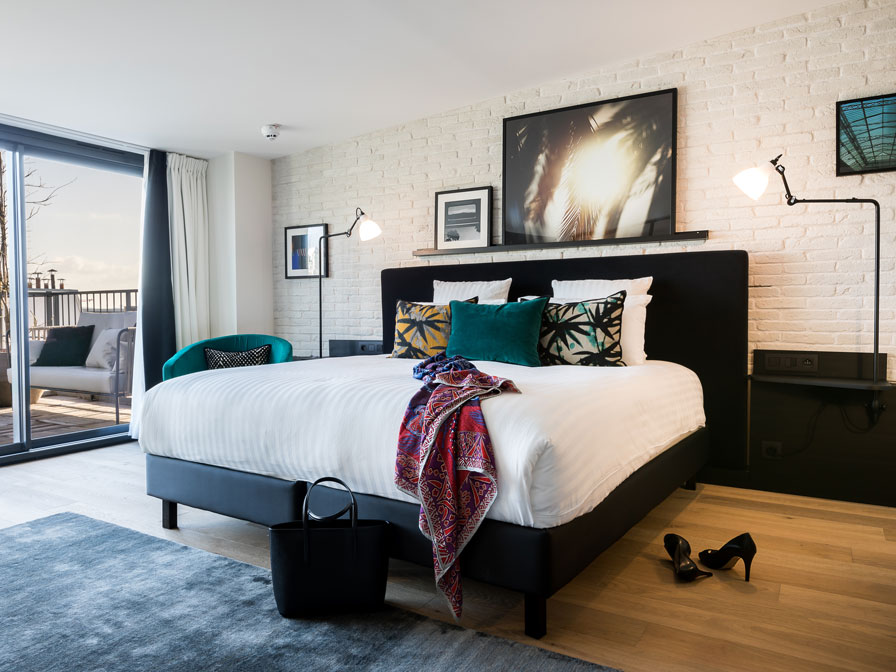
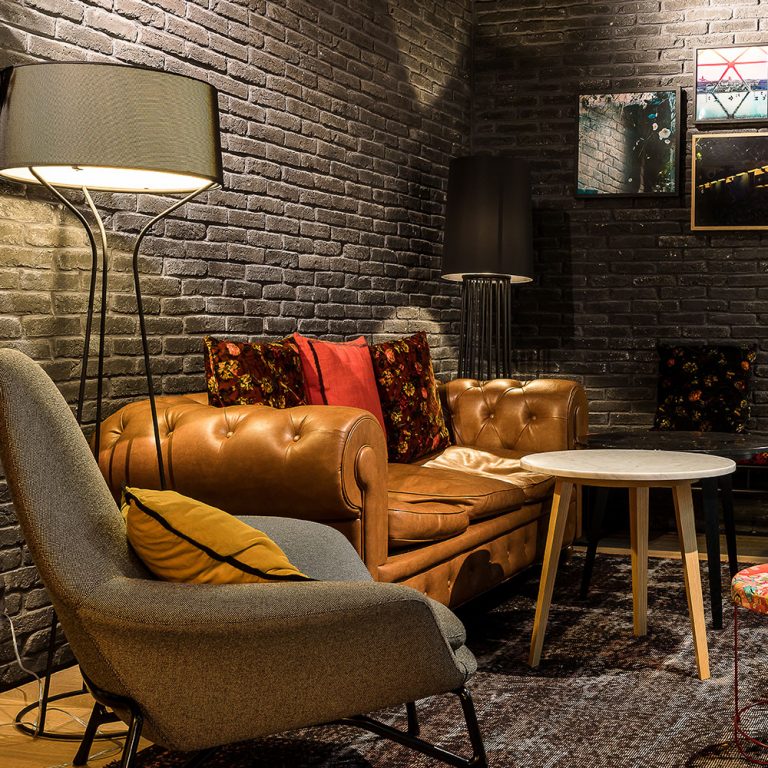
Exposed brick creates a more distinctive look. In an industrial-style hotel, it pairs well with black metal, wood, and lighting fixtures with clean, geometric lines. A white finish creates a brighter, more contemporary look, while dark brick adds depth to the decor.
The Laz’ Hôtel project—an urban, industrial-style hotel—illustrates these possibilities. Interior designer Stéphanie Cayet chose black bricks for the bar and lounge areas, and white bricks for the guest rooms and meeting room.
BRIQUE WHITE Collection
How can you combine stone with other materials?
To successfully decorate a hotel room, the combination of materials is just as important as the choice of finish. Wood softens the mineral look of stone, while heavy fabrics, curtains, and rugs enhance the feeling of comfort.
Lighting also plays a key role. Wall sconces on either side of the bed or lamps with warm light highlight the wall’s contours and create a more intimate atmosphere. However, it’s important to maintain functional lighting for reading and moving around.
It’s best to avoid using too many bold textures. A stone wall is often enough to give a room its own character: the other surfaces can remain understated to maintain a cohesive design.
ORSOL Wall Cladding to Customize Hotel Rooms
To tailor the decor to the establishment’s style, stone wall cladding is available in a variety of textures, sizes, and colors. Depending on the collection chosen, it can be used to create classic, contemporary, or industrial atmospheres.
Using them on an accent wall offers a way to personalize guest rooms and reinforce the hotel’s visual identity. Before selecting a model, it is essential to verify its compatibility with the substrate, installation conditions, and the specific requirements of the project.
Stone thus becomes a true decorative asset: it adds depth to the room, highlights its architecture, and helps create an atmosphere in which guests feel at ease.
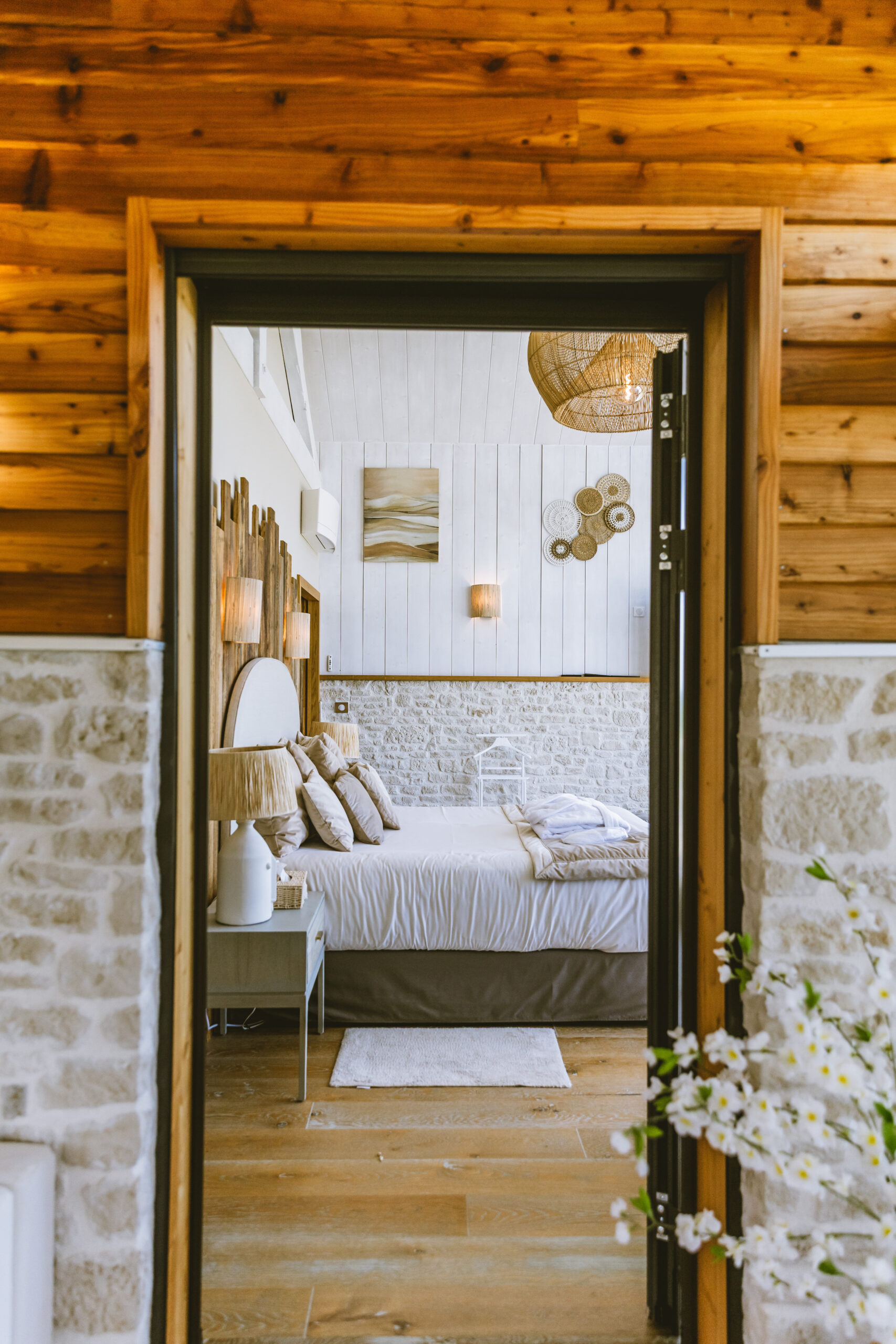
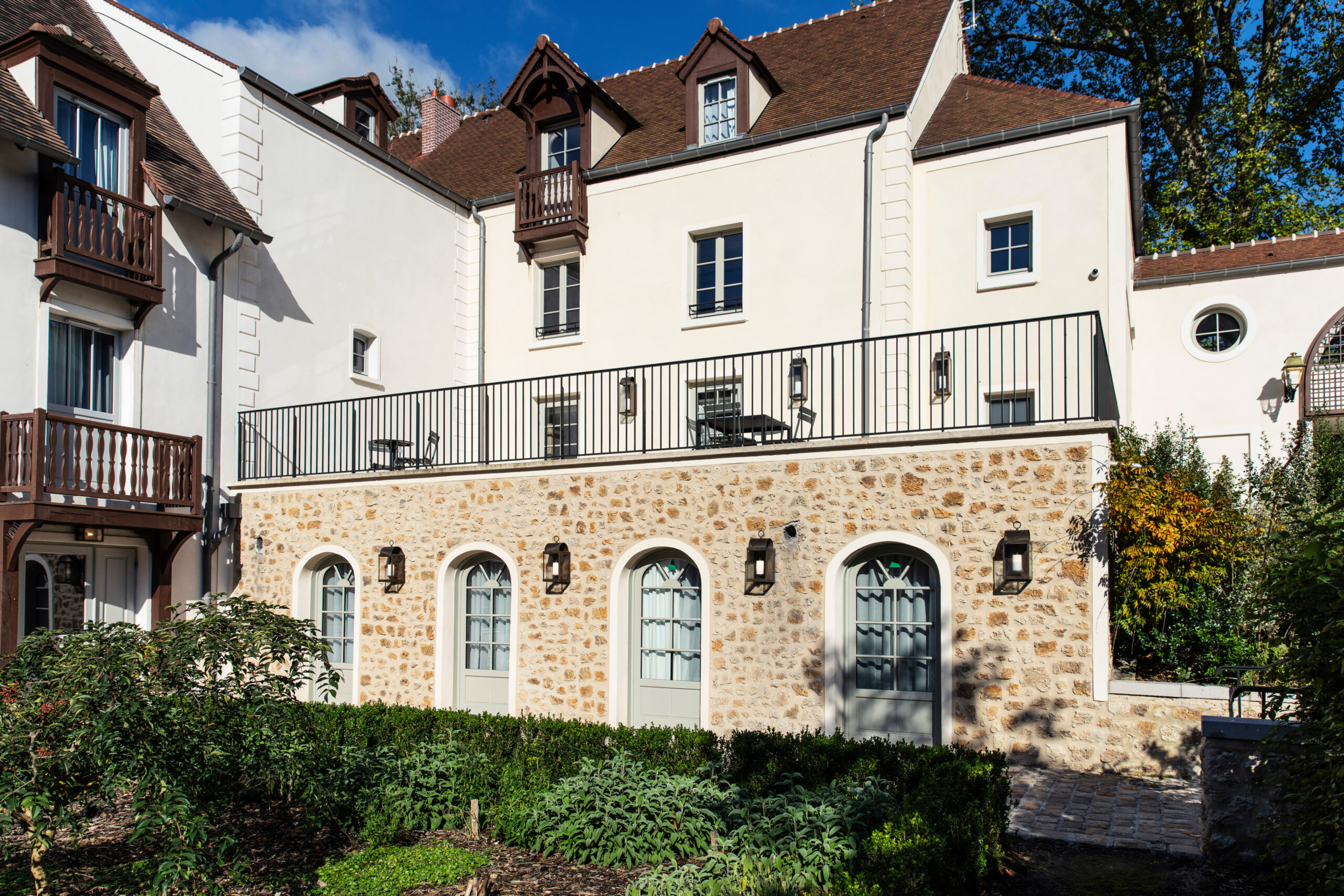
Vacation rental and bed-and-breakfast in the Périgord (Eymet) with a stone-clad facade from the CAUSSE ORSOL collection
Vacation rental and bed-and-breakfast in the Périgord (Eymet) with a stone-clad facade from the CAUSSE ORSOL collection
Share
The 4 Must-Haves for a Mediterranean Pool House with a Natural Vibe
Inspiration 19 Oct 2026
A Mediterranean pool house is instantly recognizable, with its warm-toned stone, light-colored lime plaster, arched openings, and the generous shade of a trellis. More than just a pool shelter, this small structure extends the home and is enjoyed from morning to night, in tune with the southern light. Its charm lies in a few deliberate choices made during the design or renovation phase, and it is often near the water that the difference is made between an annex that ages well and a structure that becomes overgrown with vegetation as the seasons change.
Four Choices That Give the Pool House Its Southern Charm
The Mediterranean spirit arises from the harmony between light, materials, and the way we live around the pool. Each of the four must-haves below influences one of these elements, from the color of the walls to the placement of the lunch table.
A warm color palette, tailored to the orientation
The bright southern light brings out colors with an intensity that dulls cool grays and enhances warm tones. Golden beige, ochre, and sienna capture the low-angled light of morning and evening, when shadows stretch across the terrace and the walls take on an almost golden glow.
For a pool house, the color palette works best when built around three levels. A light shade dominates the stucco and reflects light; a beige or ochre accent highlights the stonework; and a few touches of lavender blue or olive green enliven the woodwork, shutters, and textiles in the relaxation area. This subtle interplay of contrasts adds depth to the overall design.
On a south-facing facade, rich colors remain harmonious because the sun softens them as the day goes on. A north-facing wall quickly appears dull and calls for lighter shades to maintain a bright atmosphere.
What texture should you choose for facing stone near the water?
Under the midday sun, the irregular masonry is covered with shadows that shift throughout the day, much like the terraces and dry-stone walls that line Provençal gardens. These raw textures find their place on the large, light-drenched walls, at the back of the terrace or facing the pond.
Right next to the pool, a very uneven surface traps water, chlorine, and limescale in its crevices. These areas dry slowly and promote the growth of moss or greenish stains, especially in the shade. A smoother stone with fine joints requires only a simple rinse to maintain and retains a clean appearance from one summer to the next.
Surfaces that are touched or get wet—such as an outdoor shower, a low beach wall, or the countertop of an outdoor kitchen—are therefore given a smooth finish, while rougher textures are reserved for walls that won’t get splashed. As for the shower, a smooth mineral wall and brass faucets are all it takes to create a space worthy of a hotel—provided it’s installed on the sunny side, where it dries quickly.
ROCA Collection, Corsican Rosé
The alternation of smooth plaster and exposed masonry, from the facade to the arcades
In Provençal farmhouses, the facade alternates between smooth lime-washed surfaces and masonry sections. On a pool house, the stone cladding is concentrated on the elements that anchor the structure to the ground—such as the foundation, pillars, corners, and window and door frames—while the intermediate sections remain plastered. Cladding in soft hues blends naturally with light-colored plaster.
A single clad section facing the pool creates a focal point visible from the water, whereas full cladding would make the annexe appear heavy, darken the spaces, and blur the contrast between smooth and textured surfaces. This balance allows the light to reveal the material’s character.
An arcade on the facade, a semicircular opening, or a vault above the entrance are hallmarks of the Mediterranean style and cast curved shadows on the ground that change from hour to hour. A niche carved into the masonry holds a lantern or a pottery vessel. To emphasize these lines, the use of stone is limited to the framing, with regularly shaped stones that precisely define the arch.
INCERTO Collection in bronze tones
How can you arrange the living spaces around the pond?
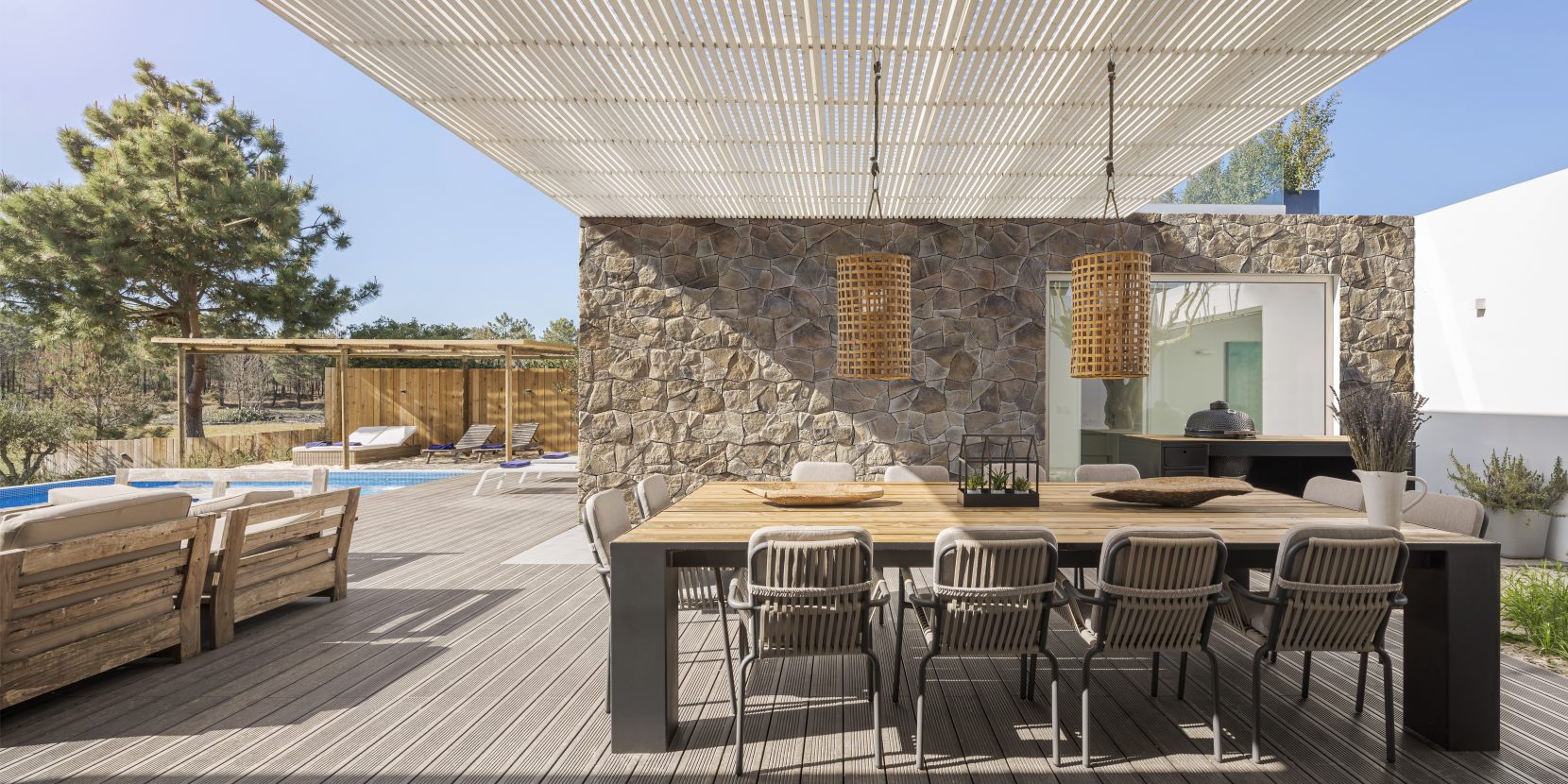
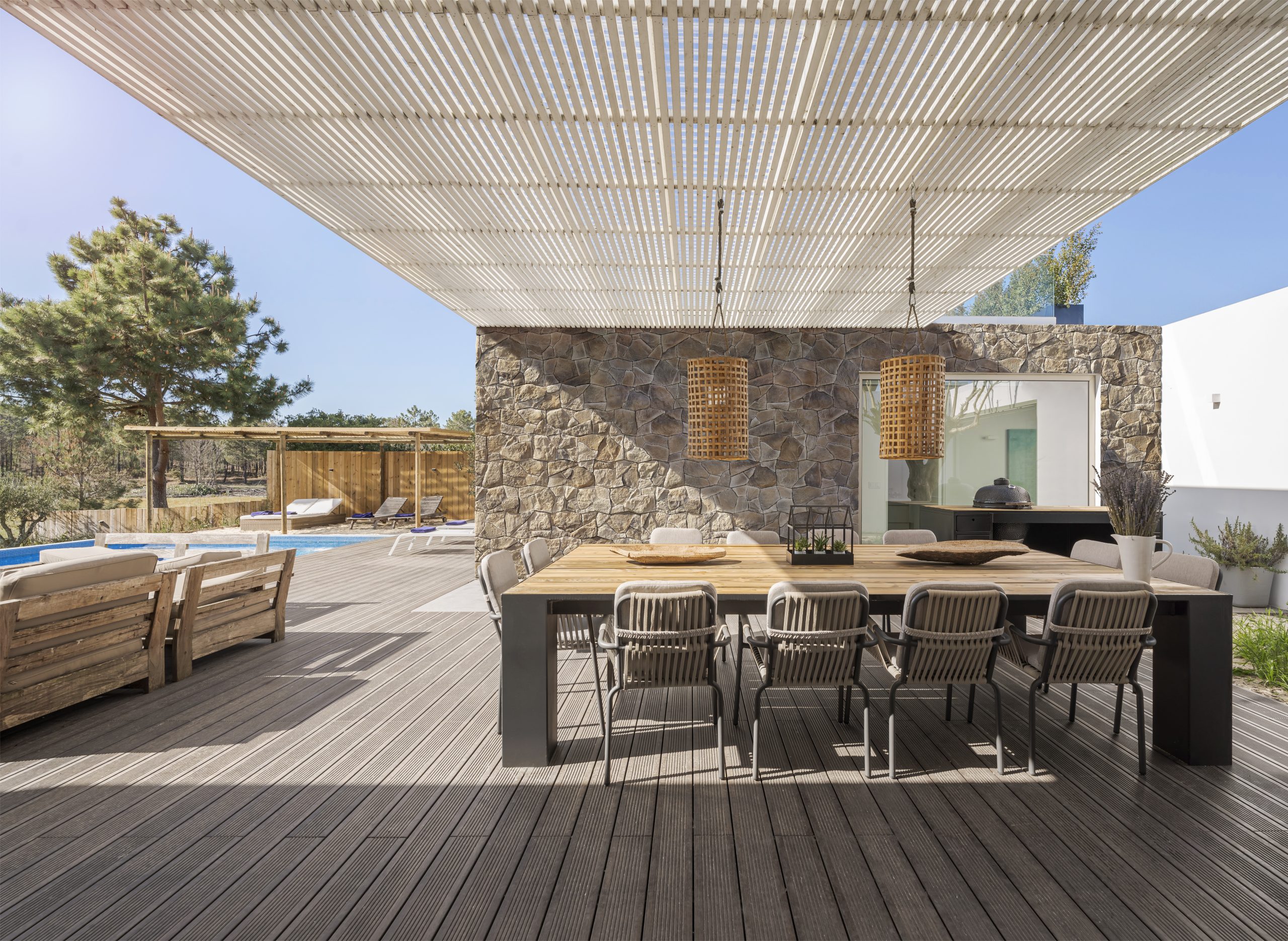
Adorned with bamboo screens, wisteria, or Virginia creeper, a rough-hewn wooden pergola transforms the covered patio into a relaxing retreat during the hottest hours of the day and casts a dappled shadow on the ground—a sight typical of the South. Facing west, it provides protection from the scorching late afternoons. Its posts can rest on masonry pillars topped with caps that protect them from water seepage.
The dining area is situated in the shade, near an outdoor kitchen designed to match the foundation to maintain a consistent look, with a smooth, easy-to-clean countertop. When the layout of the lot allows, a small patio enclosed on two or three sides provides shelter from the wind and offers welcome privacy. The flow between the house, the pond, the shower, and the annex is designed upstream, with clear, level pathways that avoid detours with wet feet.
PORTLAND Collection in Natural Shade
Olive trees, lavender, rosemary, and cypress trees define the surroundings; jasmine perfumes the pergola; and low walls delineate the flower beds. At dusk, the outdoor lighting takes over with lanterns in the niches, wall-mounted spotlights that highlight the contours of the landscape, and discreet lighting along the paths.
How do you install a retaining wall around a pool?
A properly installed cladding will last for years near a pool as long as four key points are followed.
A sound, clean, and level surface made of cinder block, concrete, or plaster in good condition.
An exterior-grade adhesive mortar suitable for wet areas.
A texture suited to each area, with a raised surface to prevent splashing and a smooth surface where water runs off.
A water-repellent treatment, to be reapplied approximately every 5 years.
Your Questions About the Mediterranean-Style Pool House
What materials go well with stone siding in a pool house?
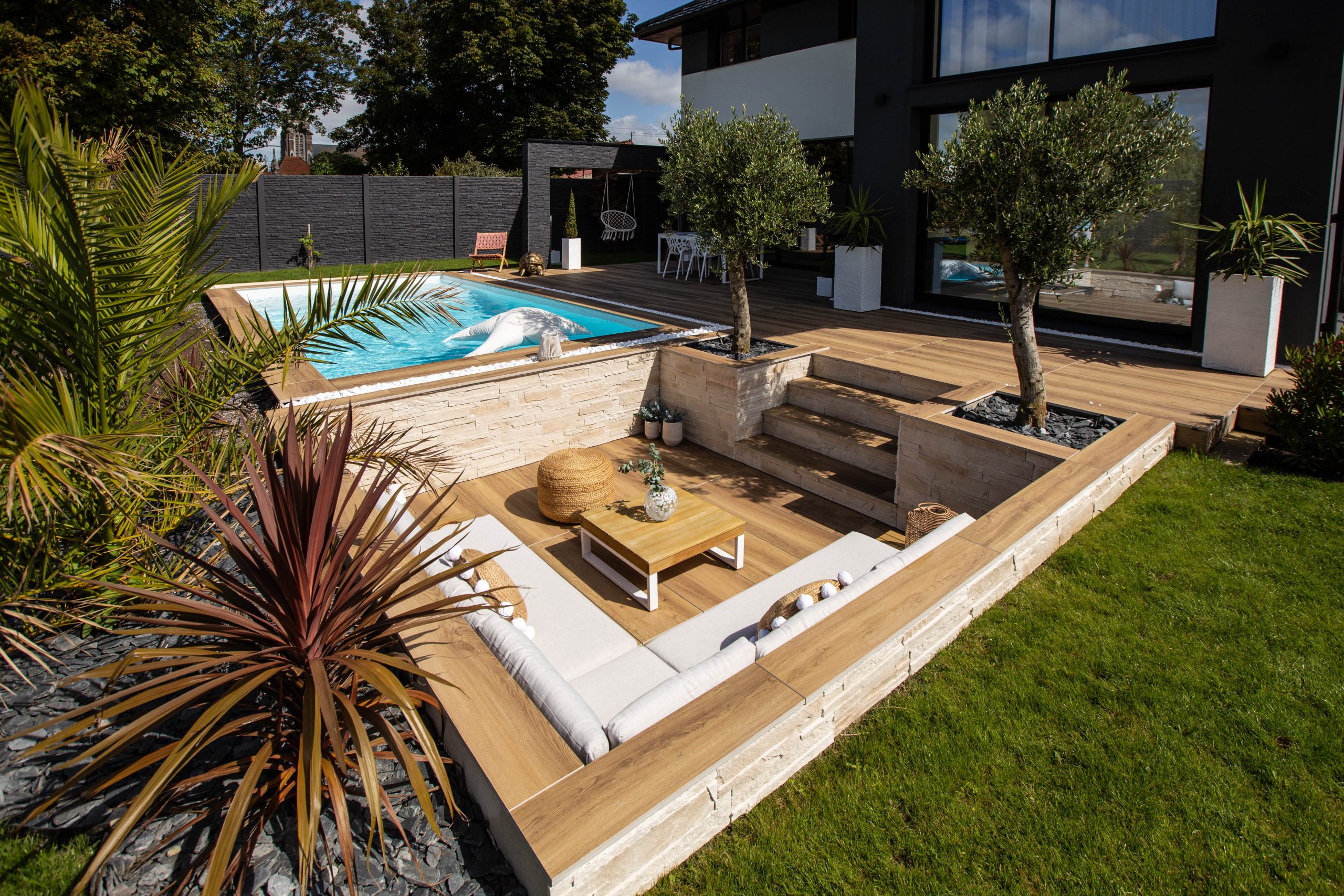
Reconstituted stone complements traditional southern materials. Lime plaster, the raw wood of a pergola, terracotta floor tiles or pottery, and brass faucets all share the same warm color palette and develop a beautiful patina when used outdoors. Around the pool’s edge, paving in shades similar to the walls extends the continuity of the material all the way to the water.
What budget should you plan for when building a stone pool house?
The cost depends primarily on the surface area to be clad and the collection chosen. ORSOL reconstituted stone cladding ranges from 39 to 100 € per m² depending on the line, with most collections falling between 56 and 80 € per m². In addition to this material cost, you’ll need to factor in adhesive mortar, a water-repellent treatment, and, if necessary, the labor of an installer. Limiting the cladding to a single wall, the base, and the window and door frames significantly reduces the area to be covered and, therefore, the total cost.
Can an existing pool house be renovated with cladding?
Yes, and this is often the simplest way to give a mundane addition a Mediterranean feel. The cladding panels, a few centimeters thick, are glued directly onto the existing facade, eliminating the need for major structural work. Any plaster that sounds hollow or is crumbling should be removed before installation to ensure a sound substrate. The renovation is an opportunity to repaint the window and door frames in blue or olive green, add a pergola, or redesign an opening with a semicircular arch.
What type of cladding should you choose for a facade that is heavily exposed to the sun?
Light colors—such as beige, sand, or off-white—reflect more sunlight and limit the wall’s temperature rise, a significant advantage for south- or west-facing exposures. ORSOL reconstituted stone is dyed throughout and retains its color when exposed to UV rays. Its moderate texture creates beautiful cast shadows. When it comes to installation, it’s best to work during the cool morning hours, as adhesive mortar applied to a hot surface dries too quickly and adheres less effectively.
An extension that expands the house
A successful Mediterranean pool house depends more on the overall coherence of the design than on the amount of decor. A warm color palette tailored to the orientation, materials chosen for their resistance to water, an architectural design that alternates between smooth surfaces and stone, and spaces designed to provide shade are all it takes to bring the spirit of the South to the poolside. Before making a decision, placing a sample in direct sunlight helps you assess the shade at different times of the day.
Share
See you at EquipHotel 2026, the hospitality and restaurant trade show
Meet Up 08 Oct 2026
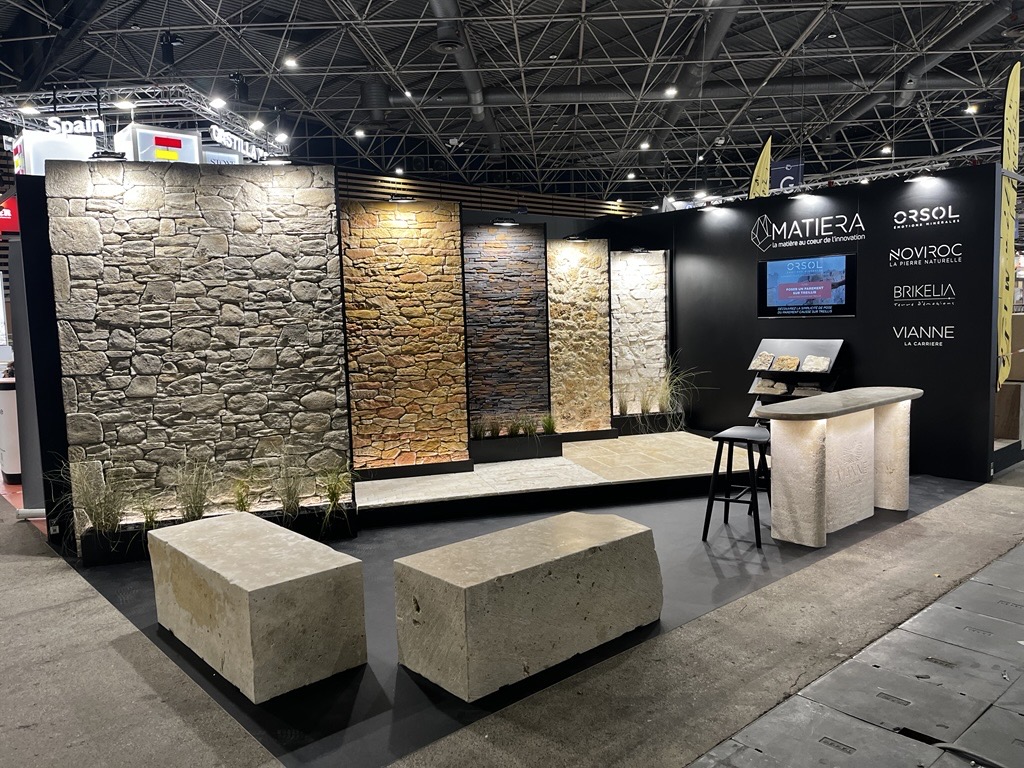
From November 2 to 5, 2026, ORSOL and the MATIERA Group brands will be exhibiting at EquipHotel at Paris Expo Porte de Versailles. This is your chance to discover our stone and brick cladding solutions for the hospitality and restaurant industries, and to discuss your projects with our teams.
EquipHotel 2026: the leading trade show for hospitality and restaurant industry professionals
Every two years, EquipHotel brings together key players in the hotel, restaurant, and hospitality design industries: hoteliers, restaurateurs, architects, interior designers, decorators, and distributors. We will be showcasing our latest products and wall covering solutions for facades, guest rooms, lobbies, and dining areas.
Paris Expo Porte de Versailles. Booth P7.1 – G021 Sunday, November 2–Wednesday, November 5, 2026
Three brands, three materials for hotel design
A hotel, restaurant, or bed-and-breakfast stands out first and foremost for the atmosphere it creates. Our materials add character to both exteriors and interiors, with installation methods tailored to the specific requirements of establishments open to the public:
ORSOL: Stone-look cladding made of Neomineral material: the look of stone with simplified installation, for both renovation and new construction.
BRIKELIA: Terracotta brick tiles: a warm or industrial aesthetic for the walls of bedrooms, bars, and restaurants.
NOVIROC: Natural stone from a French quarry: an authentic, locally sourced material for high-end projects.
They chose our materials for their hotel projects
Le Dolce by Wyndham Versailles: An Exceptional Facade Restoration
This prestigious hotel is located on the former Domaine du Montcel estate. It has regained its full charm thanks to the brown-ochre Meulière cladding installed on the facade. The solution was approved by the Architectes des Bâtiments de France, confirming its suitability for the renovation of historic buildings.
Bricks from the Black and White collection have been installed in the guest rooms and common areas. They give this Parisian hotel an aesthetic that is both urban and warm, blending an industrial vibe with the distinctive character of ORSOL brick.
Wall made of brick tiles from the Black and White collection
Wall made of brick tiles from the Black and White collection
Exceptional vacation rentals in Périgord
For these high-end lodges, the Causse collection adorns both the exteriors and interiors. The same material thus creates a natural continuity between the buildings and the landscape of a protected site in the Dordogne. The project was also approved by the Architectes des Bâtiments de France.
Facade renovation, opening a restaurant, or remodeling guest rooms: come talk to us about your project. We’ll show you the materials that are right for it. We look forward to welcoming you in Paris and sharing our passion for materials with you.
See you soon at our booth!
Share
Vintage Bricks in a Restaurant: When the Decor Tells the Story of the Place
Architextures 01 Oct 2026
Photo credits: Antoine Person
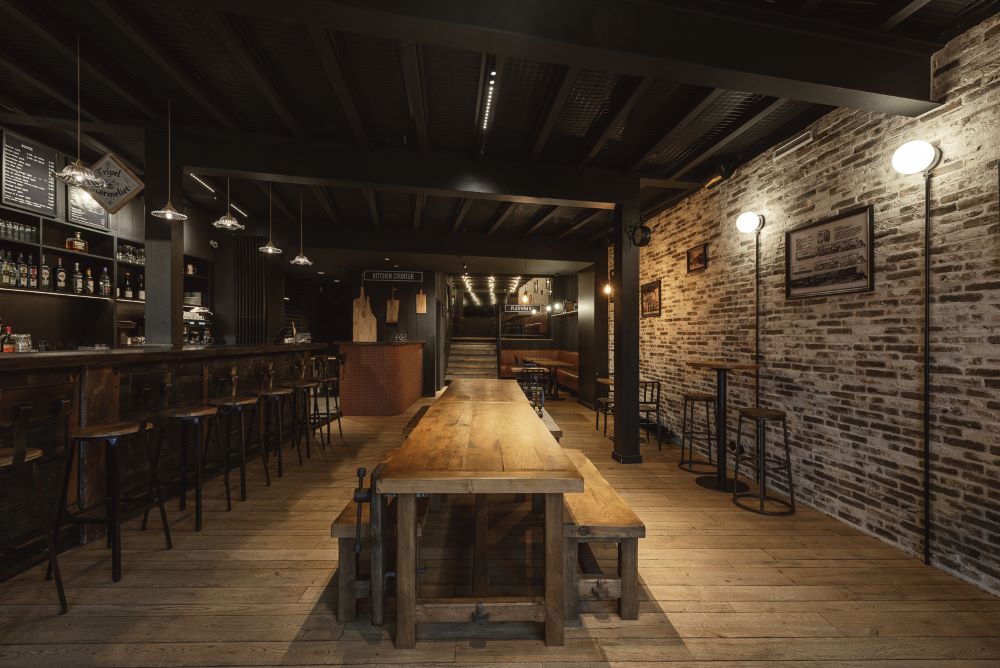
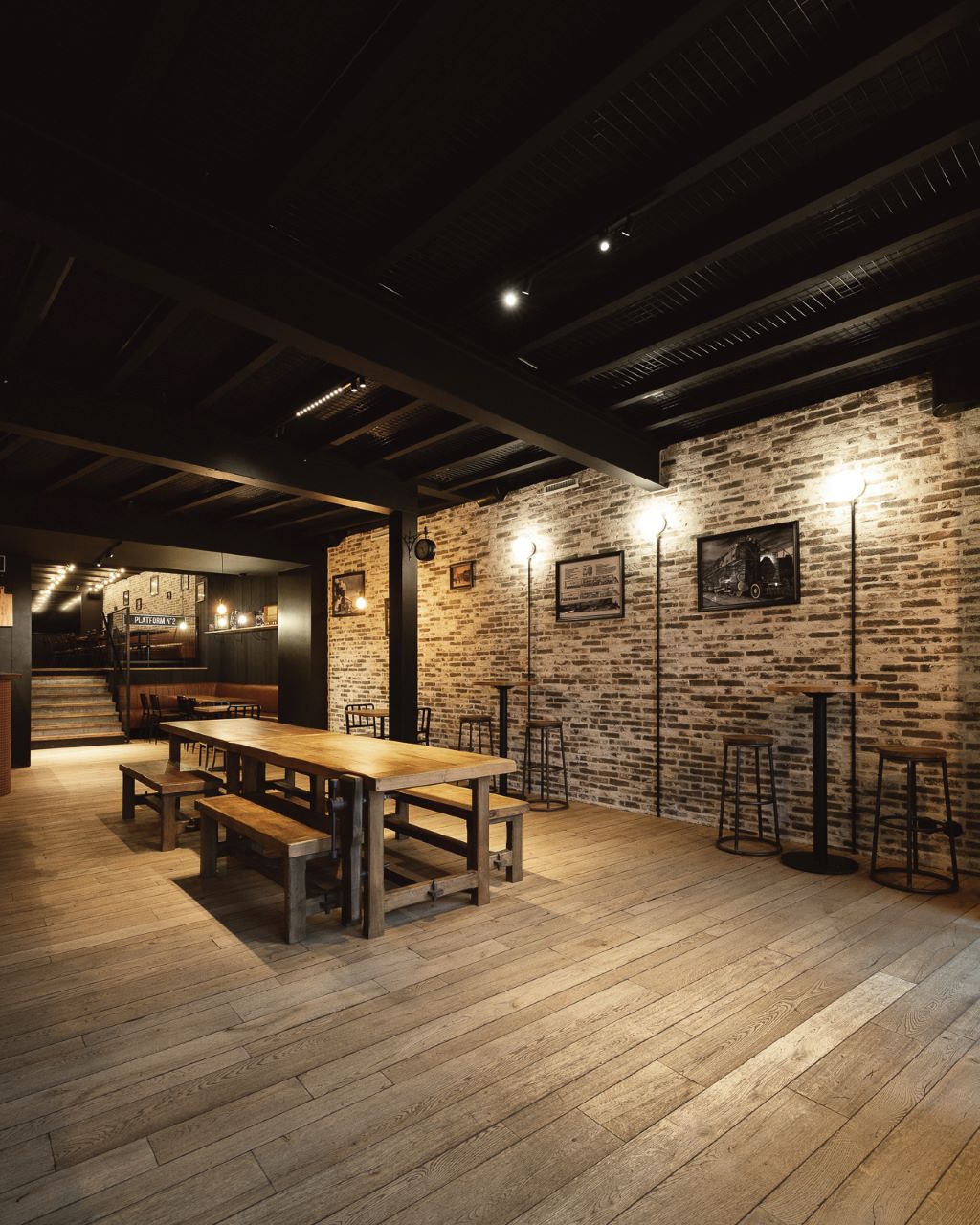
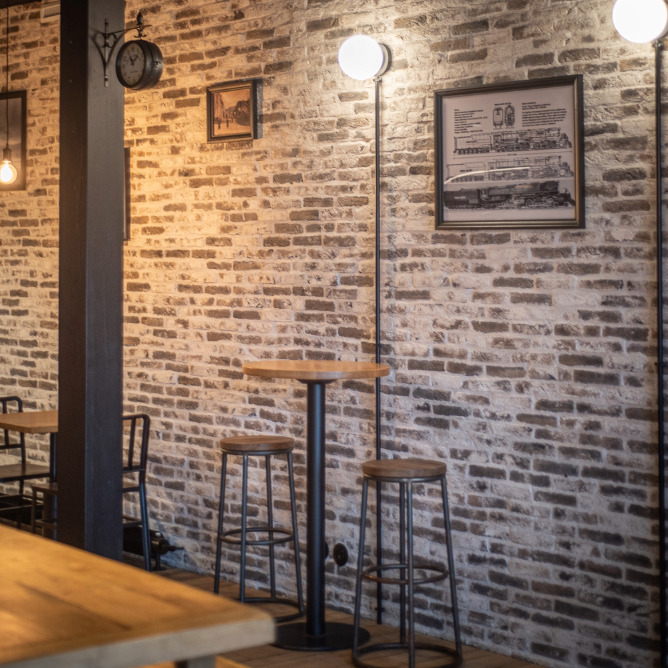
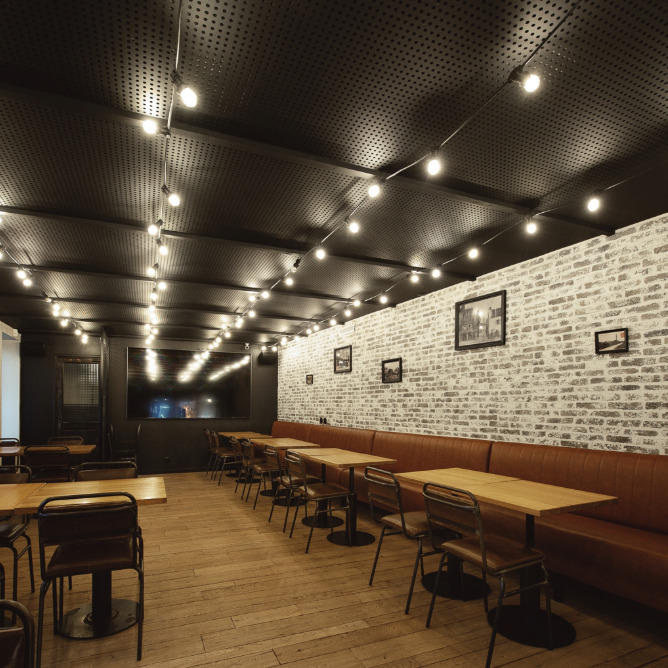
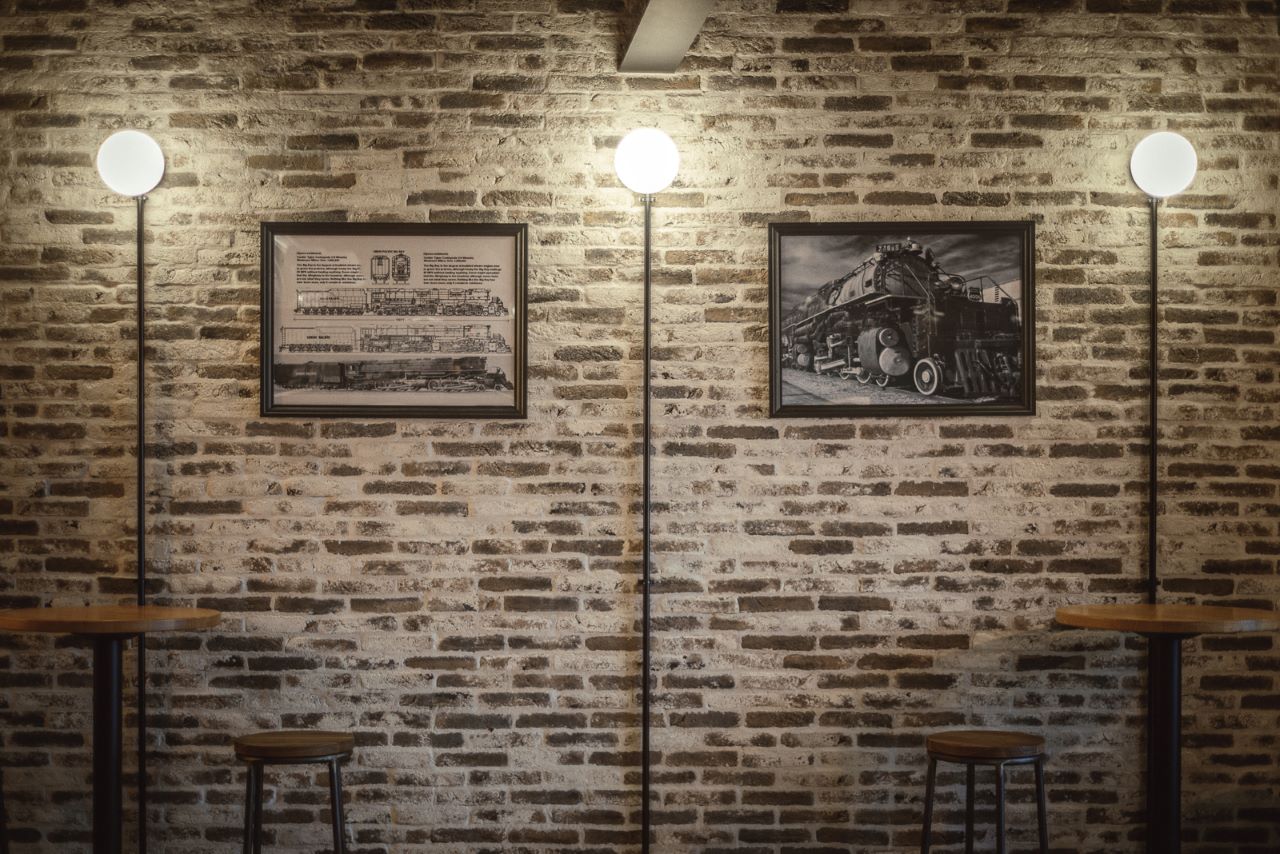
Just a stone’s throw from the Landerneau train station, the bar-restaurant Le Big Boy has been given a makeover. At the helm is the Finistère-based firm UNIK – Architectes d’Intérieur, which designed a welcoming space where industrial, vintage, and contemporary styles come together. The highlight of the project is a brick wall covering nearly 50 m², constructed using ORSOL Old School brick veneer, which pays homage to the town’s history as a brick-making center.
Founded three years ago by Caroline Proy and Cynthia Pelleau, UNIK – Interior Architects works with both private clients and businesses in Finistère. The firm specializes in the renovation of apartments, houses, and commercial spaces.
Recently, the new owner of the Big Boy in Landerneau (29) entrusted them with the renovation of an old building. His goal was clear: to create a warm and welcoming space designed for socializing and sharing.
A bar-restaurant to be modernized without losing its soul
The specifications called for two distinct spaces, separated by a few steps: a bar area and a dance floor.
“We wanted to modernize the space while preserving the spirit of the place and highlighting its history.” — Caroline Proy and Cynthia Pelleau, UNIK – Interior Architects
Beyond the code compliance required for a public-access facility (ERP), the two interior architects made a bold choice: to blend industrial, vintage, and contemporary styles. This design approach gives the Big Boy a unique identity—one that is both new and steeped in history.
An industrial and vintage bar design, inspired by the railroad
The building is located right next to the Landerneau train station. This proximity directly influenced the design project.
A counter made of reclaimed wood: the bar was crafted from reused structural lumber, reminiscent of railroad ties.
A railroad-car-style floor: The aged-looking hardwood floor resembles the floor of a railroad car.
Mood lighting: Retro pendant lights hang over the counter, while string lights lend a festive air to the dining area.
We wanted to recreate the warm atmosphere of a Parisian bistro, while paying tribute to local history
An ORSOL Old School brick wall paying homage to the Landerneau brickworks
In the 19th century, Landerneau was home to a brickworks. To pay homage to this heritage, UNIK chose to clad the entire length of the entrance wall with bricks.
Nearly 50 m² of ORSOL Old School brick tiles, in the Graphite Cérusé shade, were installed by Salaum Carrelage. Their aged texture, raised surfaces, and weathered edges recreate the look of an antique brick. The graphite shade, enhanced by a ceruse effect, blends naturally with the raw wood and retro light fixtures.
OR SOL bricks give a very authentic vintage look. Many customers think they’ve always been there—that’s how naturally they blend in. We’re completely satisfied not only with the aesthetic result but also with the quality of the installation.
Share
Renovation of a farmhouse: How ORSOL Granite siding enhances the blend of modern and traditional styles
Non classifié(e) 25 Aug 2026
Photo credits: Léa Hallereau
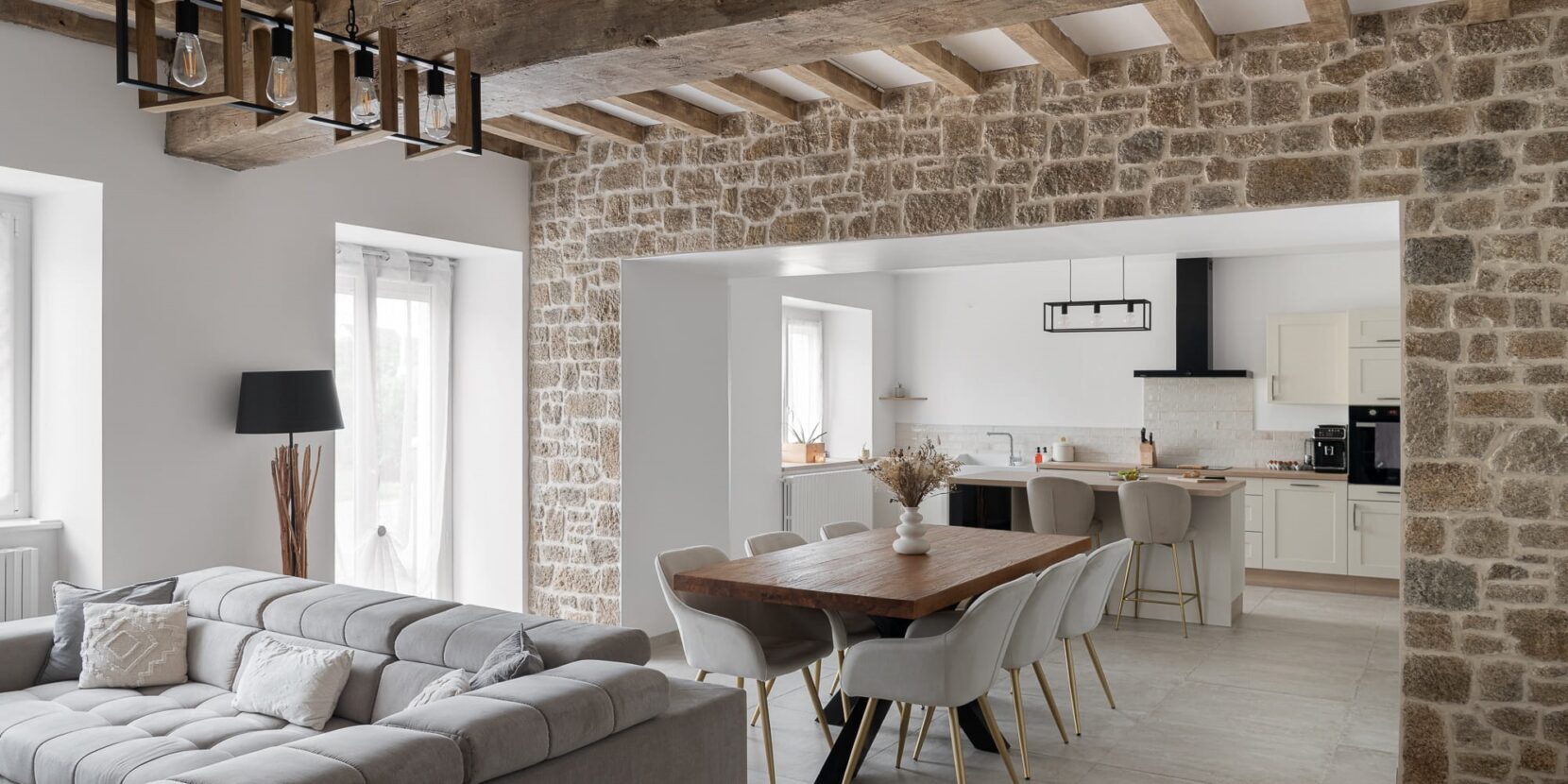
Blending the charm of historic architecture with the elegance of contemporary design is a common challenge in renovation projects. When they purchased an old farmhouse, Alicia and Erwan successfully rose to this challenge. To enhance their living spaces and highlight the original architectural elements, they chose ORSOL reconstituted stone cladding , Granit collectionaged. Let’s take a look back at a successful project where authenticity and modernity come together in perfect harmony.
A renovation project inspired by the charm of the existing structure
In September 2023, Alicia and Erwan became the owners of their farmhouse. Although the house was immediately move-in ready, the couple wanted to infuse it with their own style while preserving its character.
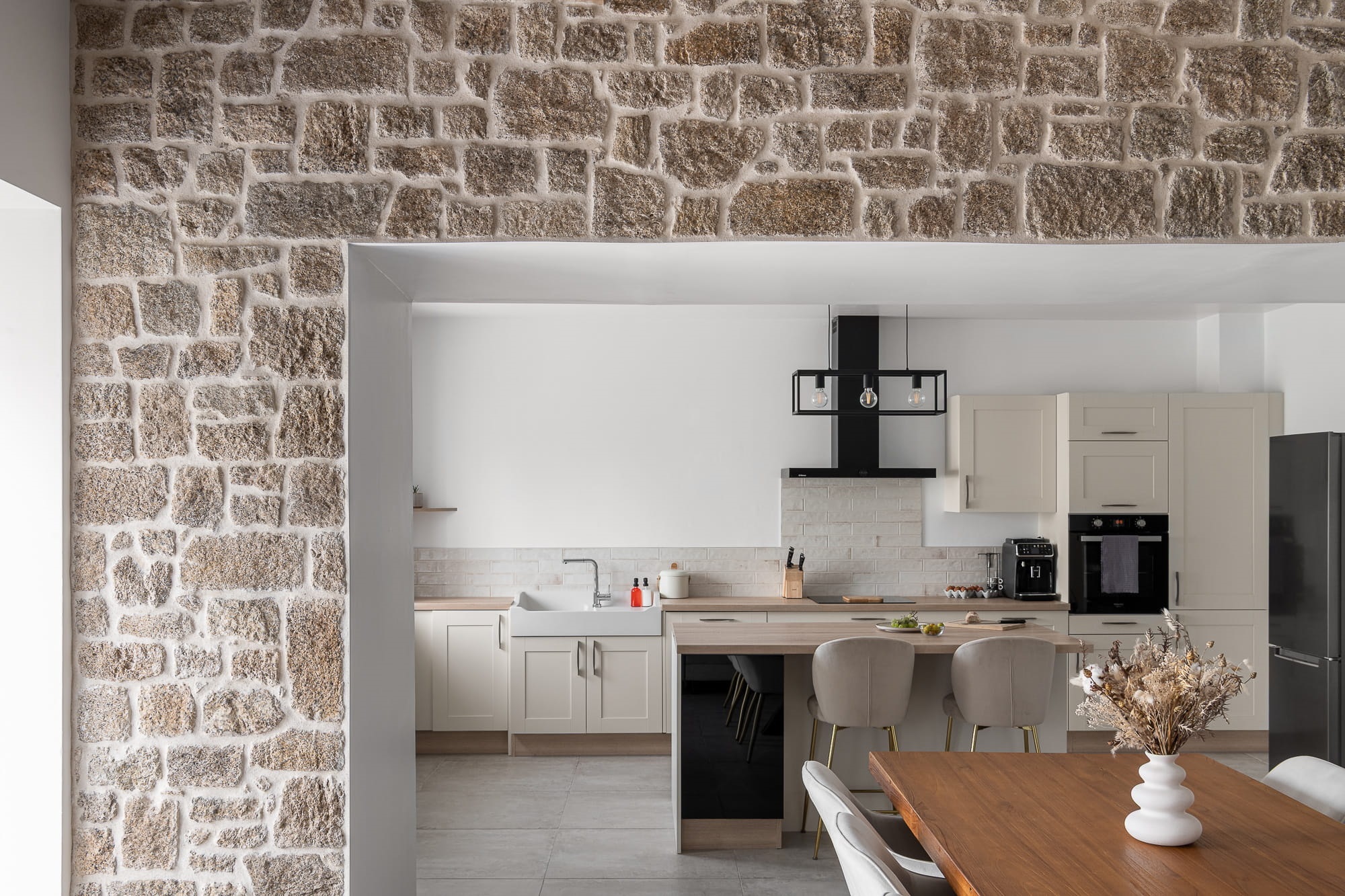
Plans include: repainting, refinishing the floors, and, most importantly, opening up the kitchen to the living room to create a bright and inviting space.
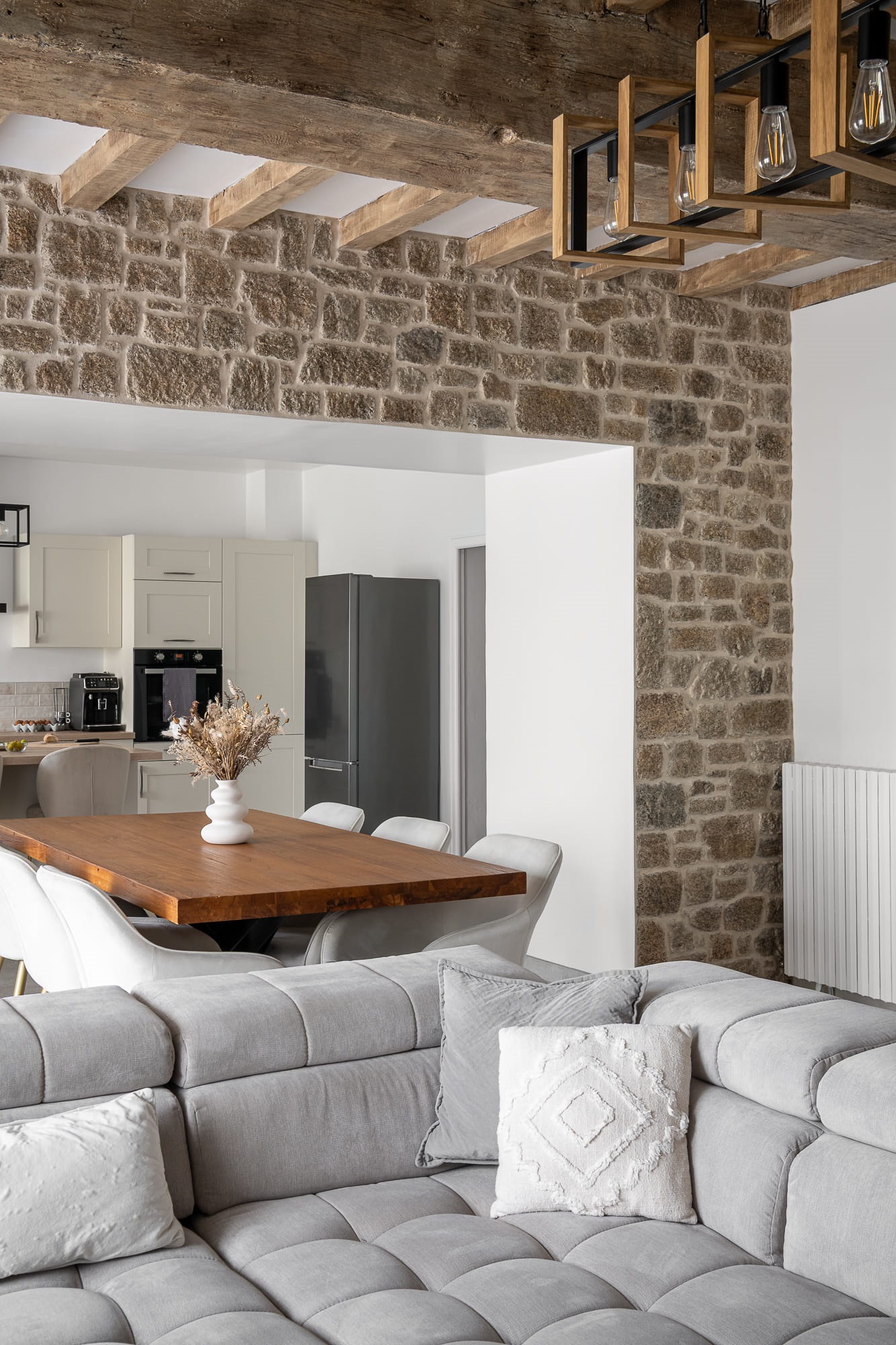
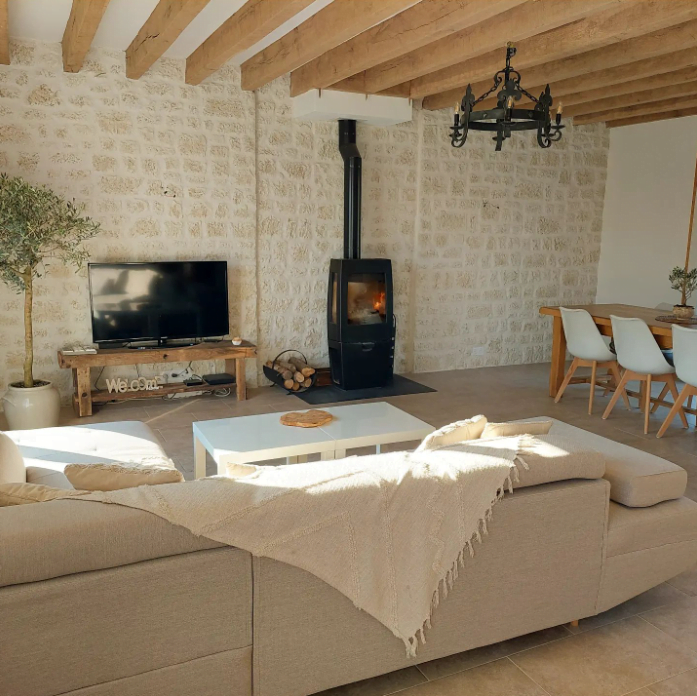
In this new open-concept space, one standout feature captures everyone’s attention: an imposing granite fireplace, surrounded by magnificent exposed beams. To harmonize the decor and echo this heritage, the idea of refinishing the stone comes naturally.
The dining room has exposed beams and a granite fireplace. We wanted to evoke the look of natural stone with a stone-clad wall. — Alicia and Erwan
This collection quickly established itself as the ideal solution for their home:
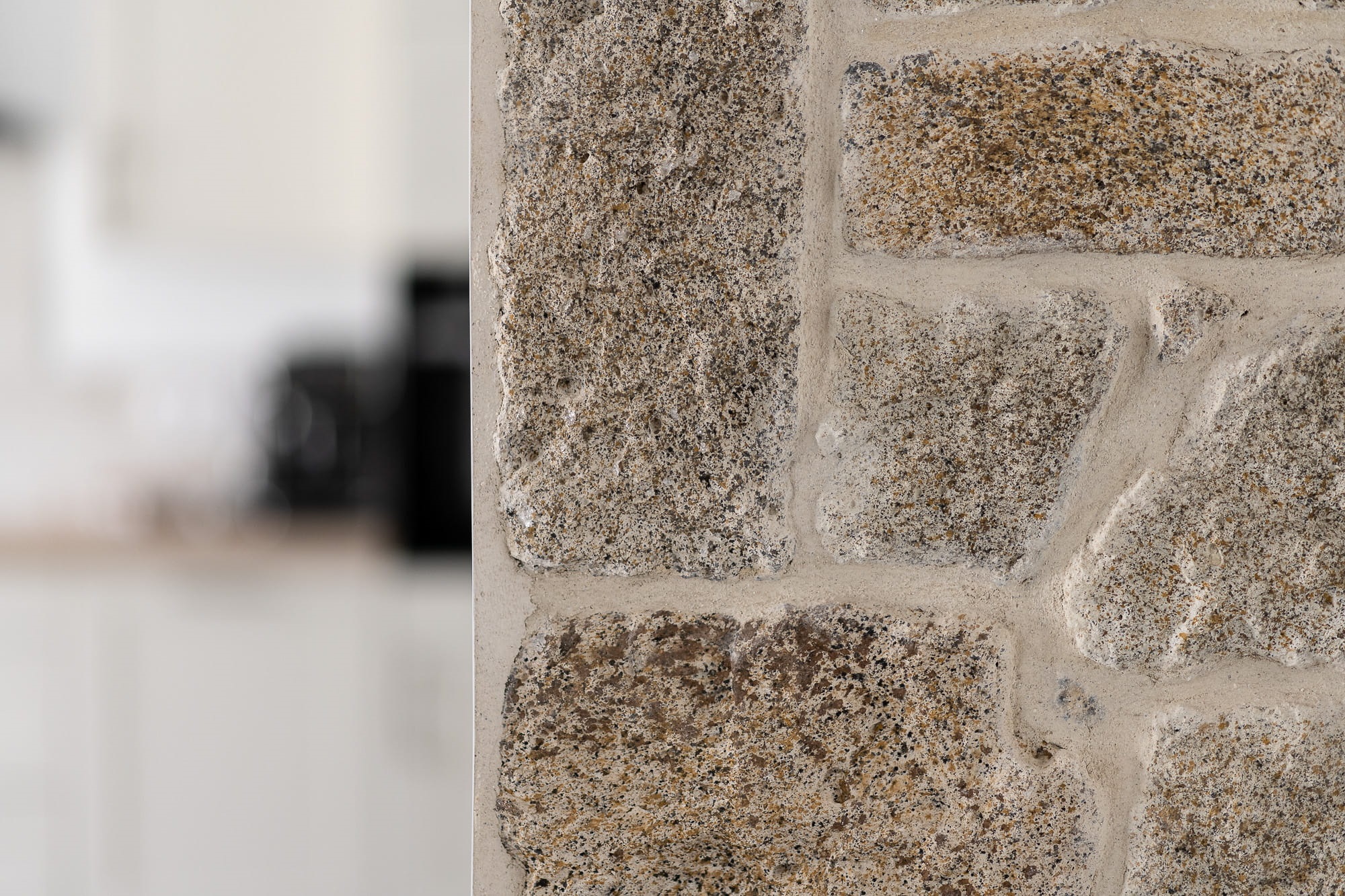
A perfect aesthetic echo: The grainy texture and pronounced relief of the facing echo the characterful stone of their fireplace.
A successful visual transition: The beige tone adds a touch of softness and helps define the space, naturally separating the very modern kitchen from the living room with its warm atmosphere.
A technical challenge successfully overcome: The thinness of the cladding panels makes it possible to cover a wall without losing valuable space or adding weight to the structure.
A professional installation for a look that’s more lifelike than life itself
To bring their cladding wall to life, Alicia and Erwan entrusted the project to the company Espace Vert Design. This choice proved to be crucial in achieving a flawless result.
The installation was carried out by Espace Vert Design, and the result is quite impressive! The more we saw the work progress, the more satisfied we became. We don’t regret hiring a professional, because the finished wall looks so realistic. Sometimes people even ask us if it was the original wall.
Thanks to the precision of the jointing and the craftsman’s expertise, the facing blends in so naturally that it seems as though it has always been part of the building.
Share
MATIERA Wins an EcoVadis Bronze Medal for Its CSR Performance
New 24 Aug 2026
MATIERA Recognized by EcoVadis for Its Commitment to Sustainable Development
In July 2026, MATIERA received the EcoVadis Bronze Medal with a score of 70/100, placing it in the 35th percentile of the top-performing companies assessed worldwide. This distinction recognizes the group’s commitment to four areas of corporate social responsibility: environment, social issues and human rights, business ethics, and responsible sourcing.
Recognition for the efforts made
This bronze medal recognizes months of teamwork and confirms the strength of our CSR approach. It is a step forward, not an end in itself: we continue to move toward even more responsible practices. Igor Solart, CEO
For all of you—architects, builders, craftsmen, distributors, and homeowners—who place your trust in us for your interior and exterior design projects, this award serves as an additional guarantee:
A Responsible Supply Chain: Our responsible purchasing policy, implemented in collaboration with our suppliers, ensures enhanced traceability regarding the origin and manufacturing of your wall coverings.
A controlled and monitored carbon footprint; the development of products that emit fewer greenhouse gases; and more environmentally friendly manufacturing processes
Prioritizing workplace well-being while striving for continuous improvements in our employees’ working conditions.
A reliable partner for your bids: whether you’re responding to public or private tenders that include CSR criteria, MATIERA’s EcoVadis certification strengthens your own compliance record.
Committed to French manufacturing: ORSOL, NOVIROC, and BRIKELIA remain committed to short supply chains and the craftsmanship of southwestern France—a factor that is increasingly sought after in your construction and renovation projects.
EcoVadis is an international platform for evaluating companies’ sustainability practices. Its methodology now covers tens of thousands of organizations across all sectors and countries, with a particular focus on the supply chain, which is often the most significant factor in a company’s environmental footprint.
Wall Cladding Prices: What Is the Cost Per Square Meter for ORSOL Neomineral Stone Cladding?
Inspiration 12 Jun 2026
Are you thinking aboutcladding an interior wall, a facade, or an outdoor space with stone siding? One of the first questions that naturally comes to mind is the budget. The cost of the material, installation expenses, and necessary products… this article provides a clear and honest overview of what a high-end ORSOL Neomineral stone cladding project entails.
What is the ORSOL Neomineral stone?
Before we talk about price, here’s an important point: Neomineral stone is not natural stone. It is a cladding material manufactured in France’s Southwest region that faithfully replicates the appearance and texture of stone, while offering technical advantages that raw stone cannot always guarantee: lightness, uniformity, ease of installation, and a low carbon footprint.
This is a carefully considered choice for projects where aesthetics and durability are non-negotiable: ventilated facades, distinctive interior walls, communal spaces, hotels, high-end residences, and historic renovations.
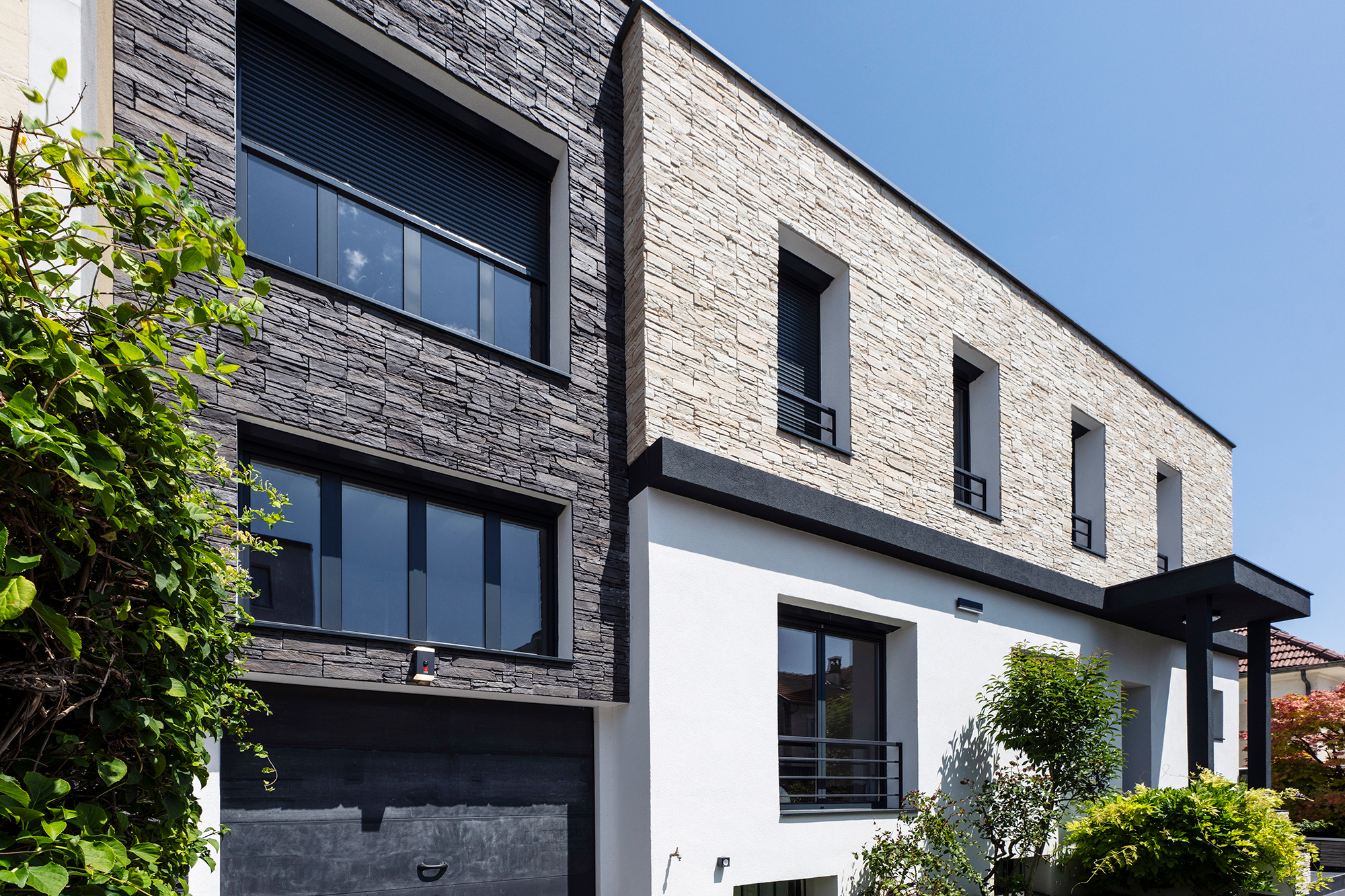
Modern House with a Rocky Mountain-Style Façade by ORSOL
What is the price per square meter of ORSOL siding?
The price of ORSOL Neomineral stone wall cladding ranges from 50 to 100 € (including tax) per m², depending on the collection chosen.
What causes the price to vary?
Several factors influence the final cost of a siding project:
The type and format of the cladding: cladding types with or without joints
The area to be covered
The complexity of the project—including angles , cutouts, irregular surfaces, and ventilated facades—requires more material and more installation time.
The installation method— adhesive installation or ventilated facade, interior or exterior—affects the technical requirements and influences the overall cost of the project.
For these reasons, a customized quote remains essential for accurately estimating the cost of your project.
Installation materials: Don’t overlook them in your budget
In addition to the cost of the cladding, you’ll need to factor in the products required for installation. ORSOL offers a range of products specifically designed to facilitate the installation of its cladding:
Mortars and tile adhesives: formulated to ensure optimal adhesion depending on the substrate and application (interior, exterior, ventilated facade).
Grout: Available in colors that match the facing materials for a uniform and polished finish.
Finishing and protective products: water-repellent treatments and surface treatments designed to preserve the material over time, particularly when used outdoors.
We strongly recommend using ORSOL application products: they are specifically designed to work with our coatings and ensure long-lasting results. Your dealer can advise you on the quantities needed based on your project.
Installation: Technical data sheets and tutorials are available
The cost of the siding and installation materials accounts for only a portion of the total budget. You must also factor in the cost of installation, which depends on the contractor you choose, the region, and the complexity of the project.
To make the job easier for installers and to help homeowners who want to install the system themselves, ORSOL offers:
Detailed technical data sheets : product specifications, technical characteristics, media compatibility, installation recommendations according to the configuration.
Installation tutorials : step-by-step guides for the main configurations (glued installation indoors, ventilated facade, external corner…), available on our Youtube channel .
Technical support: Our team is always available to answer technical questions from both professionals and individuals.
The ORSOL Neomineral stone is designed to make installers’ jobs easier: the material is lightweight, the sizes are precise, and it is compatible with standard installation techniques.
Investing in High-End Siding: Why It Makes All the Difference
Wall cladding is not a choice you make every five years. That’s why it’s worth investing in a material that will stand the test of time, won’t fade, won’t crack at the first sign of bad weather, and will retain its aesthetic appeal year after year.
When considered over the material’s lifespan, the actual cost per square meter is often much lower than it appears at the time of purchase. Not to mention the added value that high-quality siding brings to a property.
Start with a sample: the best decision before buying
Before any cost estimate or quote, there’s one step we always recommend: ordering a sample. In our line of work, you have to see the material in person. A photo doesn’t do the texture justice. A screen can’t capture the nuances of a color in natural light.
Our samples allow you to:
Test how a color looks in your actual space, under your lighting
Appreciate the build quality and level of finish
Compare several options before making a decision
Show the material to your architect, project manager, or installer to confirm its technical feasibility
Order your samples directly at matiera.com, with delivery to your address. It’s the easiest and safest way to get your project off to a good start.
Where can I buy ORSOL siding?
ORSOL cladding is available exclusively through our authorized dealers in France. This network of selected professionals can advise you on choosing a model, provide you with technical data sheets, give you a quote, and refer you to a qualified installer if needed.
To find the retailer nearest you, contact us: our team will connect you with the right person for your project.
The prices listed in this article are approximate ranges, including tax, for the product only; they do not include installation materials, installation labor, or shipping costs. For an accurate quote, contact your authorized ORSOL dealer.
Share
Facing Stones and the Neo-Rustic Style: The Trend That Blends Modernity and Authenticity
Inspiration 11 Jun 2026
Facing stones are part of the resurgence of the neo-rustic style in interior design. In a living room, entryway, or open-concept kitchen, they add texture to spaces that are often white, smooth, or very minimalist. This trend reflects a clear goal: to recapture the warmth of natural materials without replicating the decorative styles of older homes.
What is the neo-rustic style?
The neo-rustic style, or new rustic style, adds a contemporary decorative touch to the traditional charm of rural homes. This modern approach reinterprets the material palettes found in 19th-century barns and old farmhouses.
From decor featuring elegant furniture to the choice of cotton, linen, or wool fabrics to drape over the sofa, the neo-rustic style reimagines the distinctive lifestyle that once animated spaces of yesteryear, infusing it with modern, brighter, and softer elements.
Where should you install a stone accent wall in a neo-rustic interior?
A stone accent wall makes a stronger statement when it serves a specific purpose. In a neo-rustic interior, it can define the living room, add character to an entryway, or bring warmth to an open-concept kitchen. Its placement should reflect how the room is used on a daily basis.
Stone works best when it remains visible from the main thoroughfares. A wall placed opposite the entrance, behind a seating area, or near a table immediately catches the eye. It serves as a focal point in the space and prevents the material from being scattered across several secondary areas.
In the living room to define the space
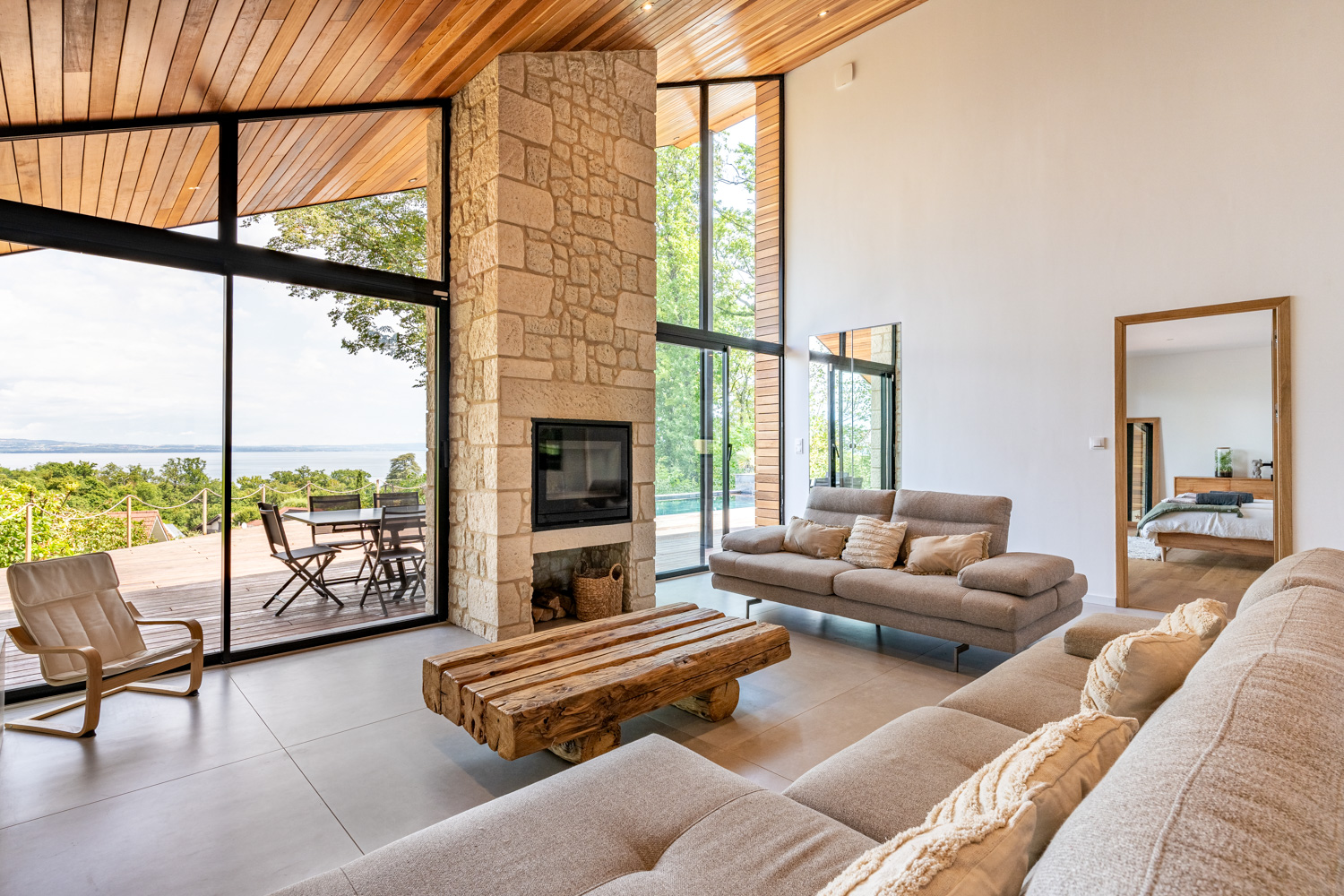
The living room remains one of the best places for a stone accent wall. Behind a sofa, around a stove, or on the main wall of the living room, stone creates a sense of depth that paint alone cannot achieve. It also provides a warmer backdrop for low-profile furniture, light-colored textiles, and lighting fixtures made from natural materials.
In an open-concept living area, wall finishes can help define different zones without using partitions. A textured wall behind the relaxation area defines the living room, while the kitchen and dining room feature smoother surfaces. This layout works well in contemporary homes, where open floor plans sometimes call for stronger visual anchors.
In an entryway to highlight the home’s identity
A stone entryway sets the tone right from the threshold. Whether on a side wall, around a door, or near a staircase, the stone cladding makes an immediate impact in a space that is often narrow and functional. The rustic style becomes more apparent here, as the material catches the eye even before you enter the living areas.
The stone should be well lit in this area. Low-angle lighting, a wall sconce, or a pendant light placed near the textured surface helps highlight its texture. In a dark entryway, light-colored stone or subtle grout helps prevent the space from feeling too dark.
In a kitchen or dining room to create a warm, inviting atmosphere
Stone wainscoting can also be incorporated into a kitchen or dining room, provided it’s used in a specific area. A wall behind a table, a feature wall in an open-concept kitchen, or the back of a niche can accommodate this material without interfering with daily use. The stone cladding then creates a cohesive backdrop for mealtimes, in a space where wood, ceramic, and metal already come together.
Around a fireplace or stove, stone further enhances this feeling of warmth. ORSOL has dedicated an article to fireplace surrounds, a design that fits perfectly with the neo-rustic style. Here, stone serves as a mineral backdrop that complements the light of the fire and adds depth to the space.
Why do facing stones fit so naturally into this trend?
Facing stones lend the neo-rustic style a visible yet controlled material quality. They add depth to a wall, capture the play of light, and introduce a mineral texture into interiors that are often designed around simple lines. Their appeal lies in their ability to warm up a room without making it feel cluttered.
In a modern rustic design, stone serves as a focal point, placed in a specific location. This choice helps keep the room bright while creating a visual anchor that is immediately noticeable.
Add depth without making the space feel cluttered
Wall cladding adds depth to a room when the other surfaces are kept more understated. On a white wall, stone cladding creates a contrast in texture. Paired with a wood floor or furniture with clean lines, it introduces a more raw material that brings the space to life.
The balance is key. In a living room, a stone wall behind the sofa is often enough to change the feel of the room. In a dining room, a stone feature behind a large table creates a warm backdrop, especially when paired with a low-hanging pendant light and natural materials.
Incorporating a mineral material into a contemporary design
Stone wainscoting adds depth to contemporary interiors. It balances large windows, light-colored floors, low-profile furniture, and white walls. Its texture prevents the space from looking too sterile, especially in newly built homes or open-concept renovations.
This mineral quality also works well with more modern materials. Black metal, glass, sleek light fixtures, and anthracite-colored woodwork give the stone a more contemporary feel. The neo-rustic style lies precisely in this interplay between an expressive material and a more understated architectural setting.
Which ORSOL collections are best for a neo-rustic interior?
The choice of an ORSOL cladding depends on the level of texture, the dominant color, and the desired interplay with other materials. A neo-rustic interior might call for a light, luminous stone, a more traditional stone, or a more contemporary dry-stone look.
Collections should therefore be chosen based on the room’s ambiance. A living room with white walls and light wood flooring does not call for the same wall covering as a renovated historic home or a contemporary living room with black metal accents and large picture windows.
More pronounced contours for a bold look
A more textured finish immediately adds character to a room. The irregular texture, visible joints, and more contrasting shades evoke the look of old walls, while still fitting into a modern interior when used in a specific area.
The Manoir wall panel fits this description perfectly. Its look, inspired by character stones, is well-suited to renovated homes, living rooms with fireplaces, or rooms seeking a more traditional feel. Paired with furniture featuring clean lines, it adds a striking visual interest without making the overall decor feel too cluttered.
Mineral-inspired designs suited to contemporary interiors
The neo-rustic style can also take on a more contemporary look. In this case, dry-stone walls, grayish tones, or more graphic textures help give the space a modern feel. The natural materials remain prominent, but the room’s lines retain their simplicity.
Roca cladding fits perfectly into this aesthetic. Its dry-stone look and installation on mesh allow for a textured wall with a more uniform appearance. It is particularly well-suited to interiors where stone complements light wood, black metal, mineral flooring, or large glass windows.
How can you avoid the traditional rustic look?
The traditional rustic look emerges when stone is the dominant element or when it is paired with overly predictable materials. In a neo-rustic interior, stone should retain its texture, but the overall design benefits from a understated approach: a limited color palette, furniture with simple lines, and well-designed lighting.
Limit the stone to a wall or a specific area
A single stone wall is often enough to transform the atmosphere of a room. In a living room, the stone cladding can cover the main wall, the fireplace area, or a feature wall visible from the entryway. In a kitchen, it can be placed behind a table or in a niche, rather than covering all available surfaces.
This concentration makes the stone stand out more clearly. It also prevents the space from appearing smaller, especially in medium-sized rooms. The neo-rustic style works best when the material draws the eye without overwhelming the space.
Combine stone with more understated materials
The understated materials give the stone a more contemporary look. The anthracite woodwork creates a striking contrast with the texture of the stone cladding. The stone remains striking, but the room retains a modern feel.
The neo-rustic style offers an interesting direction for contemporary interiors: rediscovering the power of materials without reverting to a rigid design aesthetic. Facing stone plays a specific role in this style. It adds texture, captures light, and gives the room a tangible sense of grounding—provided it is paired with clean lines, subdued tones, and materials chosen with care.